Ljuds

Ljuds™ wood wool acoustic panels are made from recyclable wood fibers, cement, and water, offering a sustainable and formaldehyde-free solution. These acoustic panels improve sound absorption while complementing any space with natural facade materials. Ideal for acoustic treatment these sustainable wall panels elevate both acoustic design and performance in various environments.

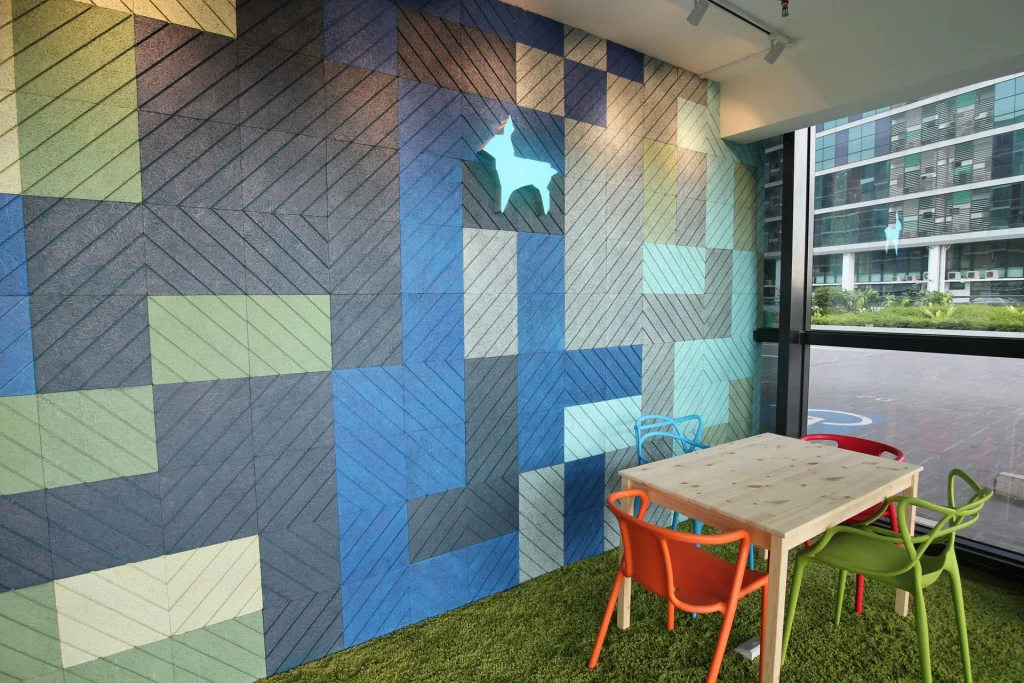
A small table with four colorful chairs sits on green carpet next to a window. The wall is covered in geometric blue and green panels with a glowing animal silhouette decoration.

Products

Diagonal 300

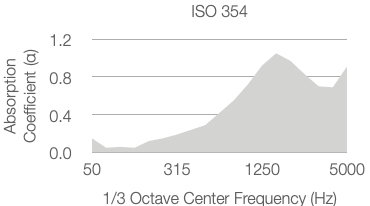
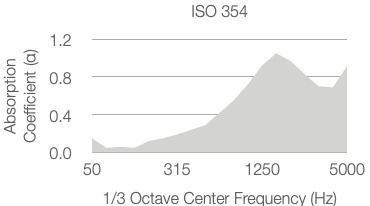
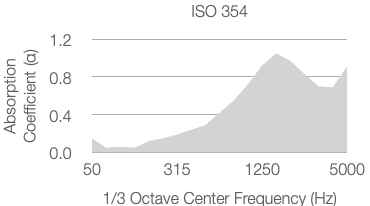
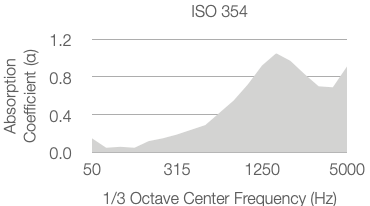
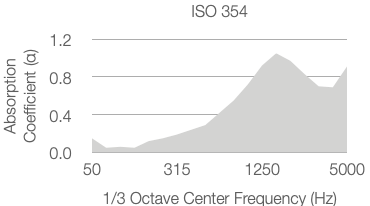
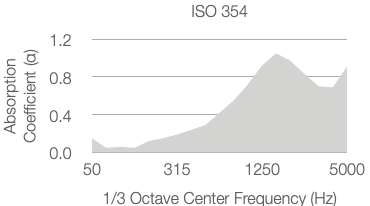
Line graph showing absorption coefficient (α) versus 1/3 octave center frequency (Hz), ranging from 50 to 5000 Hz. The absorption coefficient peaks between 1250 and 5000 Hz, following ISO 354 standards.

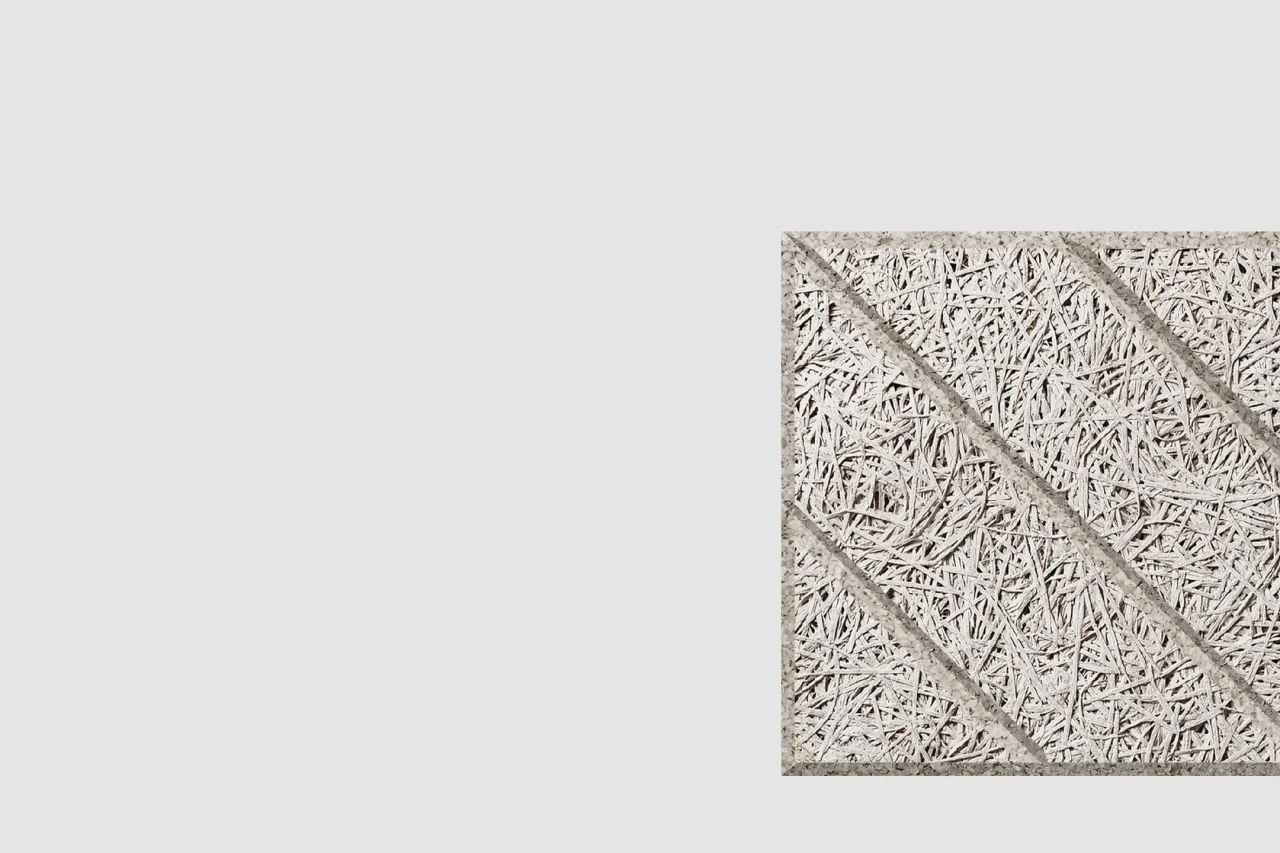
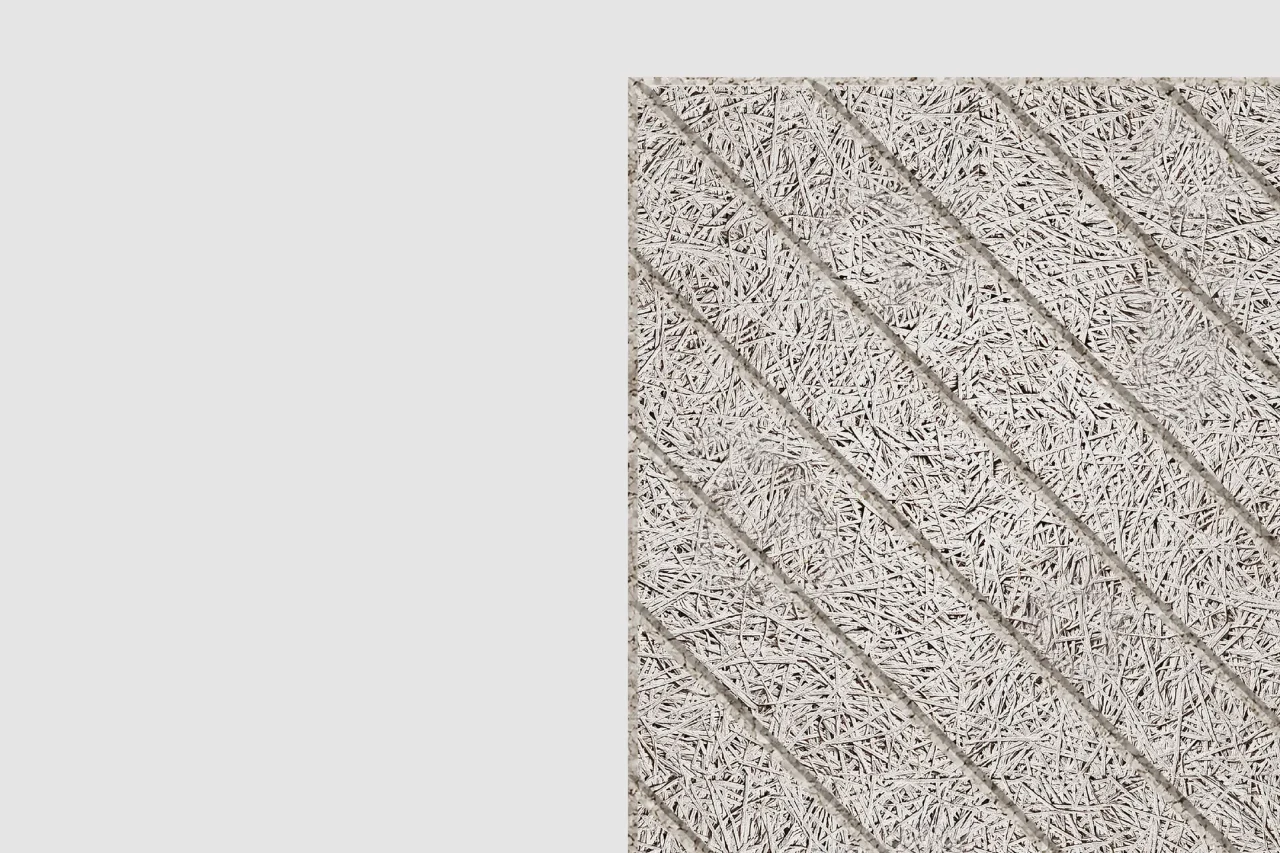
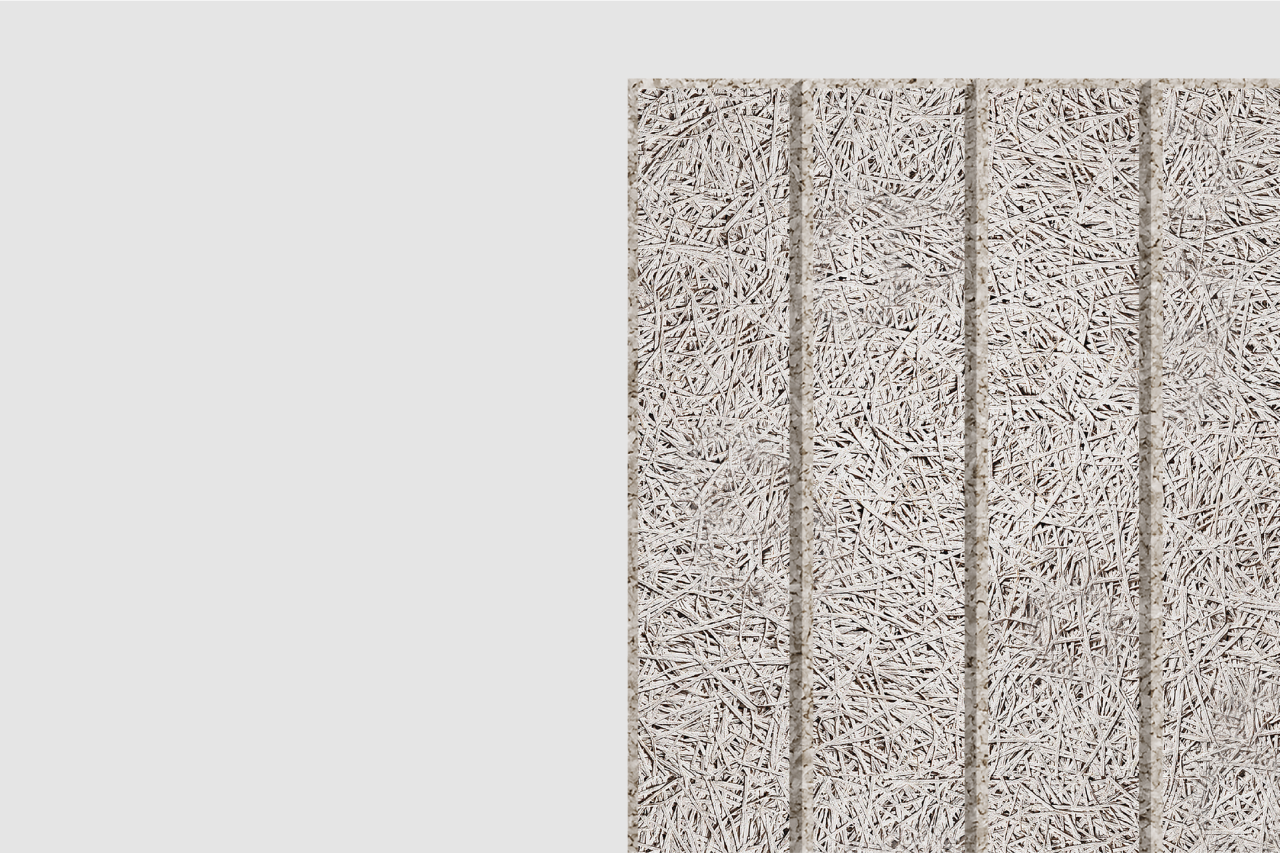
Ljuds™ Diagonal 300 panels, 300mmW x 300mmH, feature grooved lines for dynamic geometric patterns, providing sound absorption and moisture regulation.

Diagonal 600

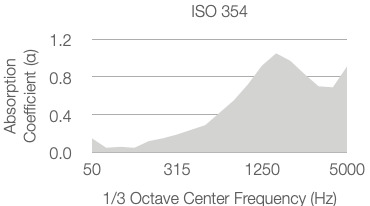
A line graph showing absorption coefficient (α) versus 1/3 octave center frequency (Hz), with values rising from about 0.2 at 50 Hz to above 0.8 at 5000 Hz, peaking near 1250 Hz.

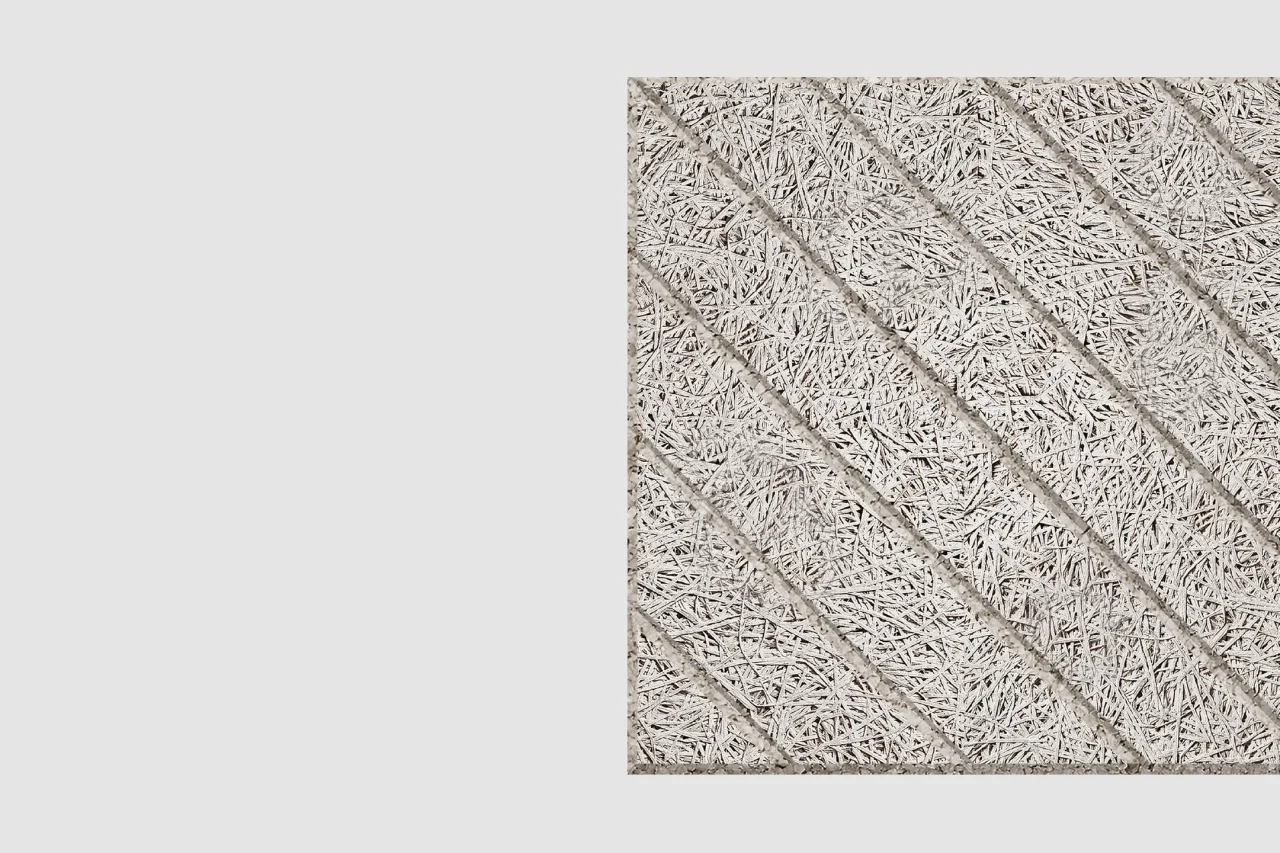
Ljuds™ Diagonal 600 panels, 600mmW x 600mmH, feature grooved lines for dynamic geometric patterns, providing sound absorption and moisture regulation.

Diagonal 1200

Line graph showing absorption coefficient (α) rising from about 0.2 at 50 Hz to peaks around 0.9 near 2500 Hz and 5000 Hz, per ISO 354, with frequency range 50–5000 Hz on the x-axis.

Ljuds™ Diagonal 1200 panels, 600mmW x 1200mmH, feature grooved lines for dynamic patterns, offering sound absorption and moisture control in modern interior environments.

Loop 300

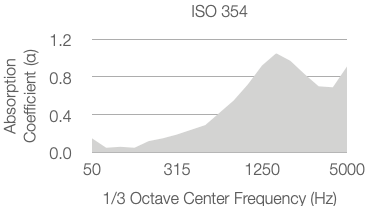
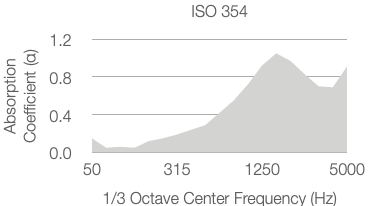
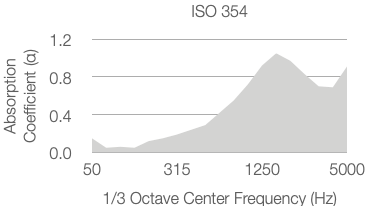
Line graph showing absorption coefficient (α) versus 1/3 octave center frequency (Hz), ranging from 50 to 5000 Hz. The absorption coefficient increases sharply after 315 Hz, peaking near 1250 Hz, and remains high.

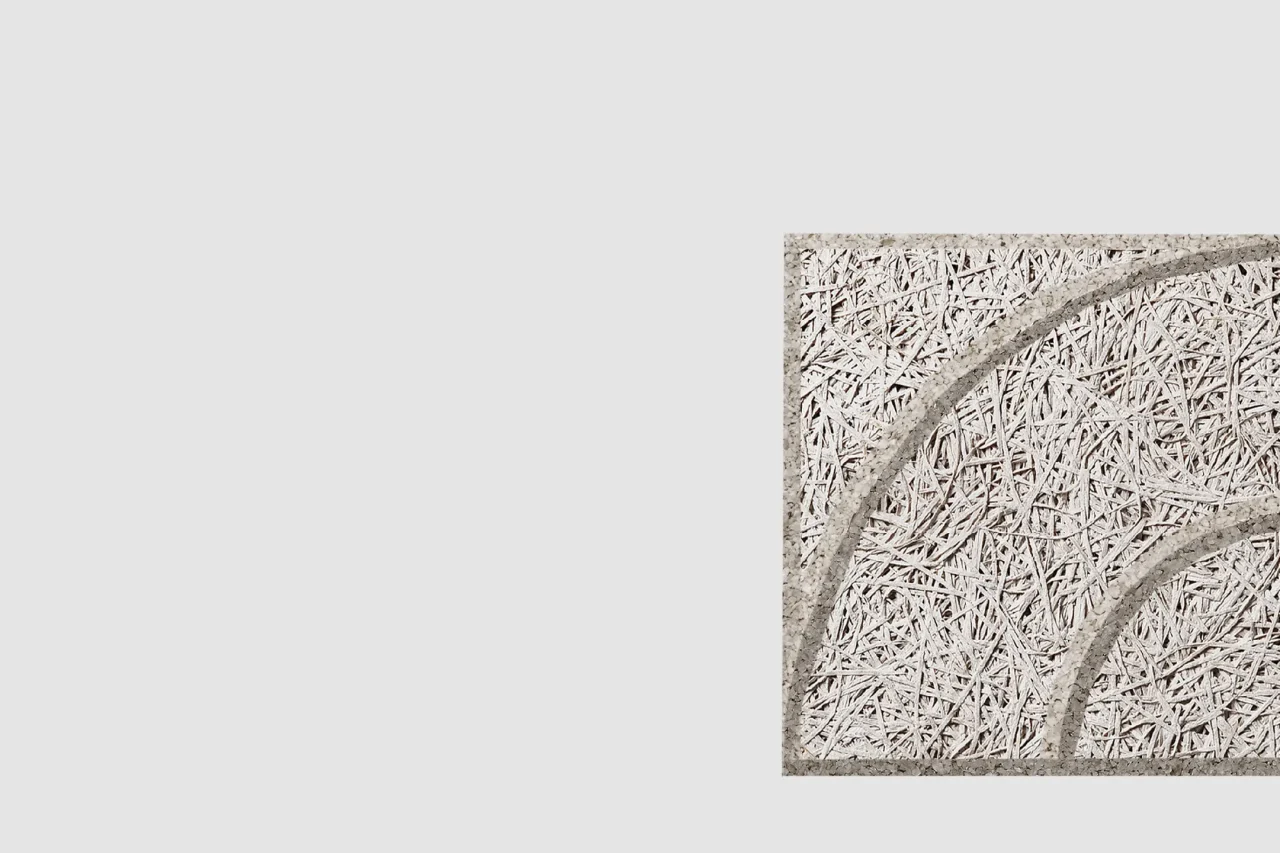
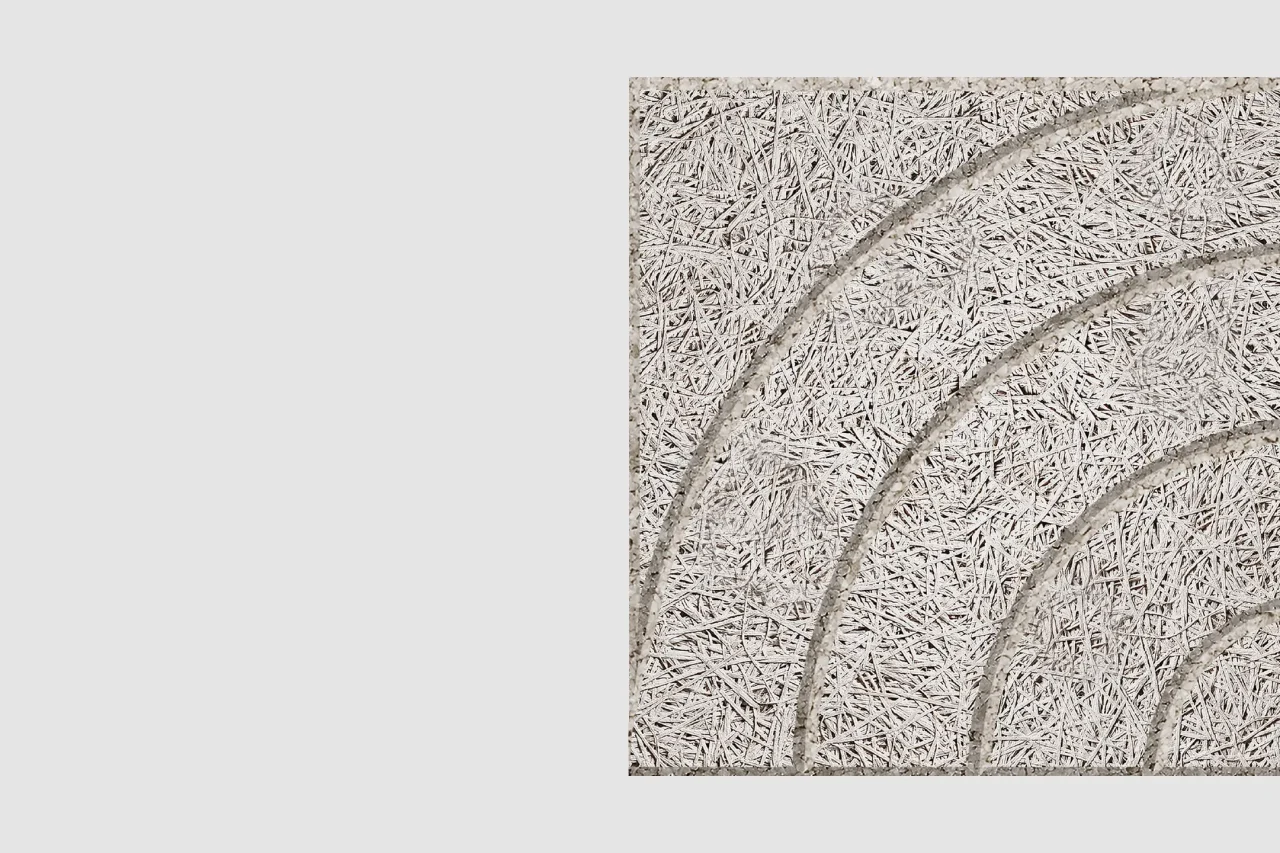
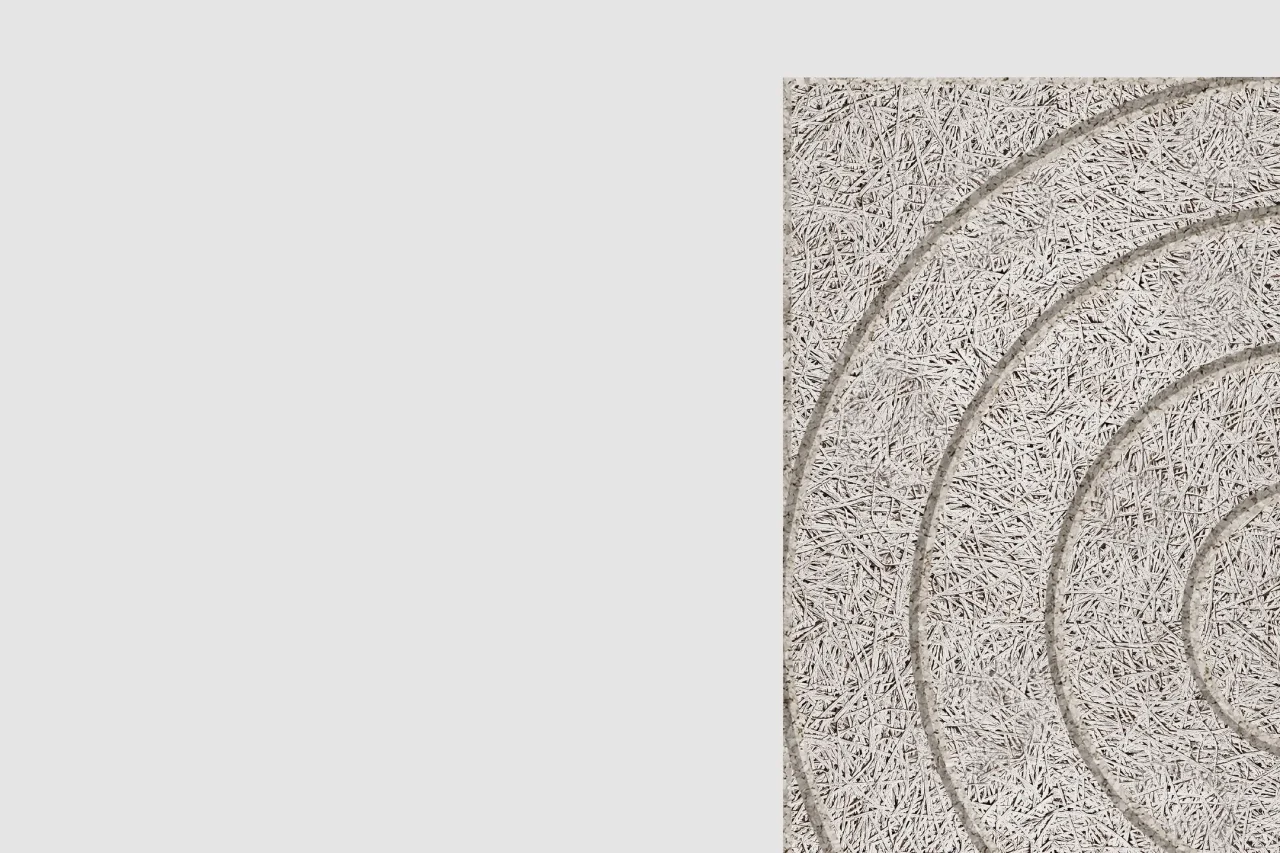
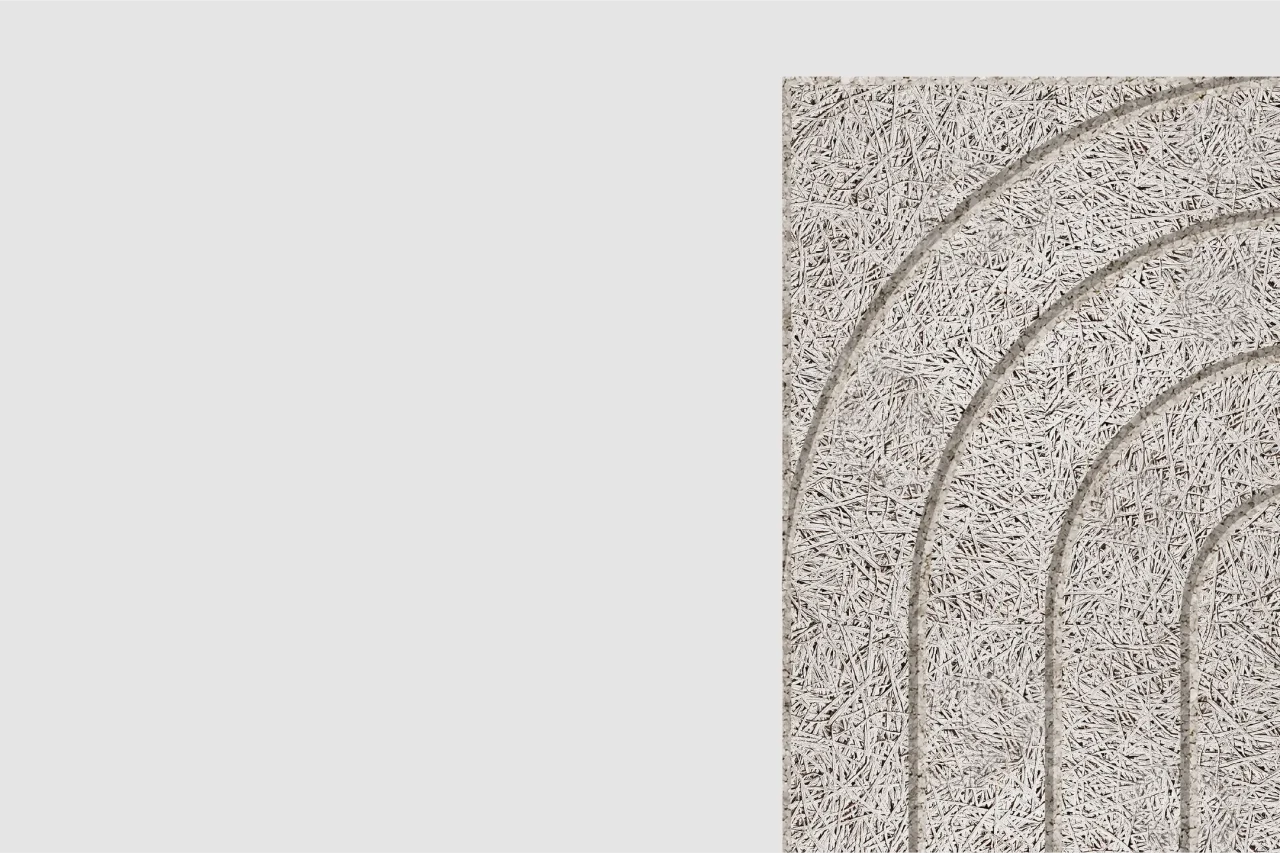
Ljuds™ Loop 300 panels, 300mmW x 300mmH, feature circular grooves for a textured design, providing sound absorption and moisture regulation.

Loop 600

Line graph showing absorption coefficient (α) versus 1/3 octave center frequency (Hz) from 50 to 5000 Hz. The coefficient rises gradually, peaking around 2000 Hz, then slightly decreases near 5000 Hz.

Ljuds™ Loop 600 panels, 600mmW x 600mmH, feature circular grooves for a textured design, providing sound absorption and moisture regulation.

Loop 1200

Line graph showing absorption coefficient (α) on the y-axis and 1/3 octave center frequency (Hz) on the x-axis, ranging from 50 to 5000 Hz. The coefficient rises notably after 315 Hz, peaking around 1250 Hz.

Ljuds™ Loop 1200 panels, 600mmW x 1200mmH, feature circular grooves for a textured design, providing sound absorption and moisture regulation.

Circuit

Line graph showing absorption coefficient (α) versus 1/3 octave center frequency (Hz) from 50 to 5000 Hz, with absorption increasing from around 0.15 to a peak above 0.8 between 1250 and 5000 Hz.

juds™ circuit wood wool panels, 600mmW x 1200mmH, are eco-friendly, sound-absorbing, and moisture-regulating for acoustic performance.

Horizon 75

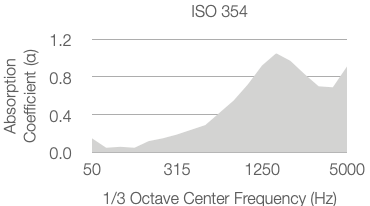
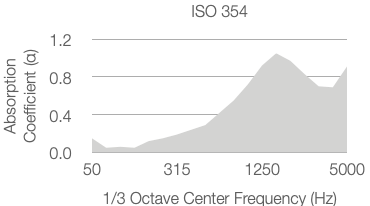
A line graph showing absorption coefficient (α) versus 1/3 octave center frequency (Hz), with values rising from 0.2 at 50 Hz to above 0.8 near 2500 Hz, then slightly dipping before rising again at 5000 Hz. Labels: ISO 354.

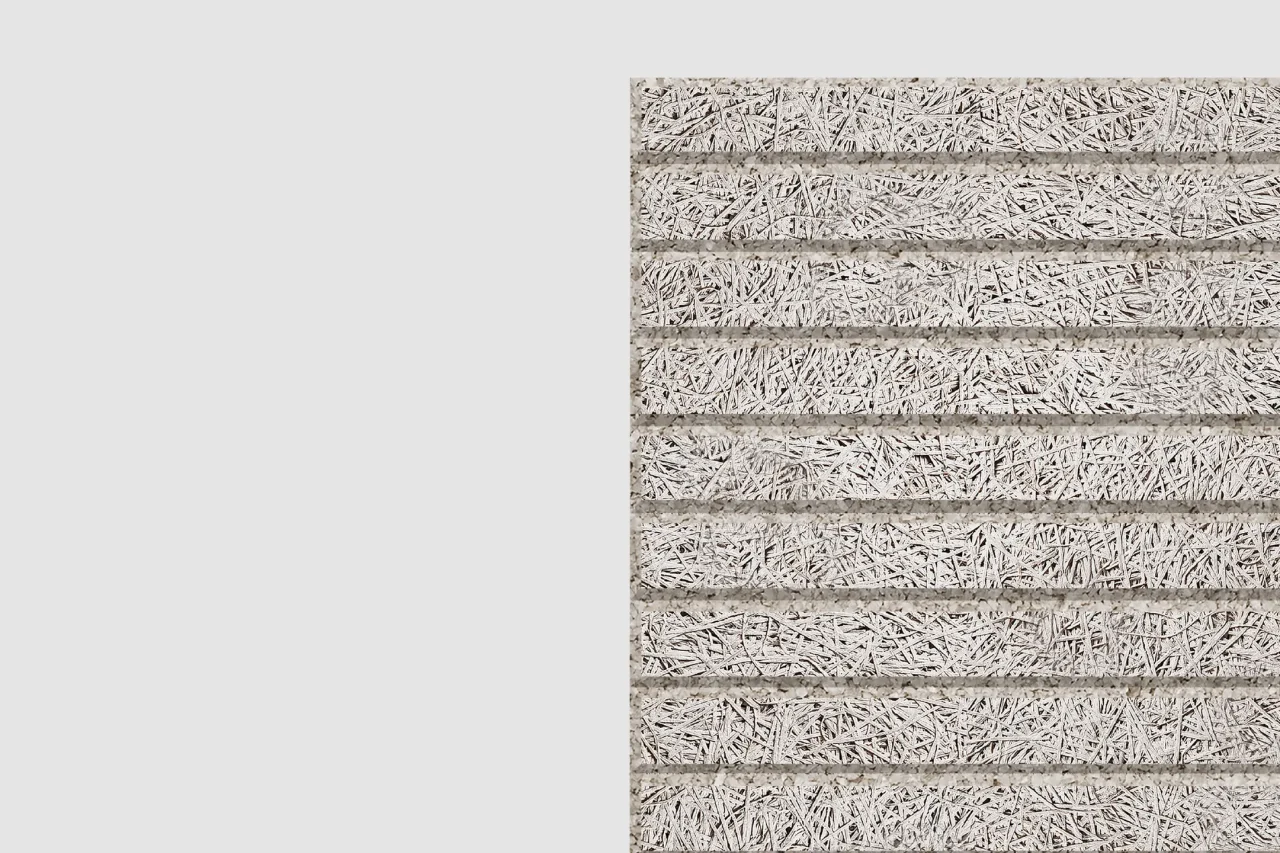
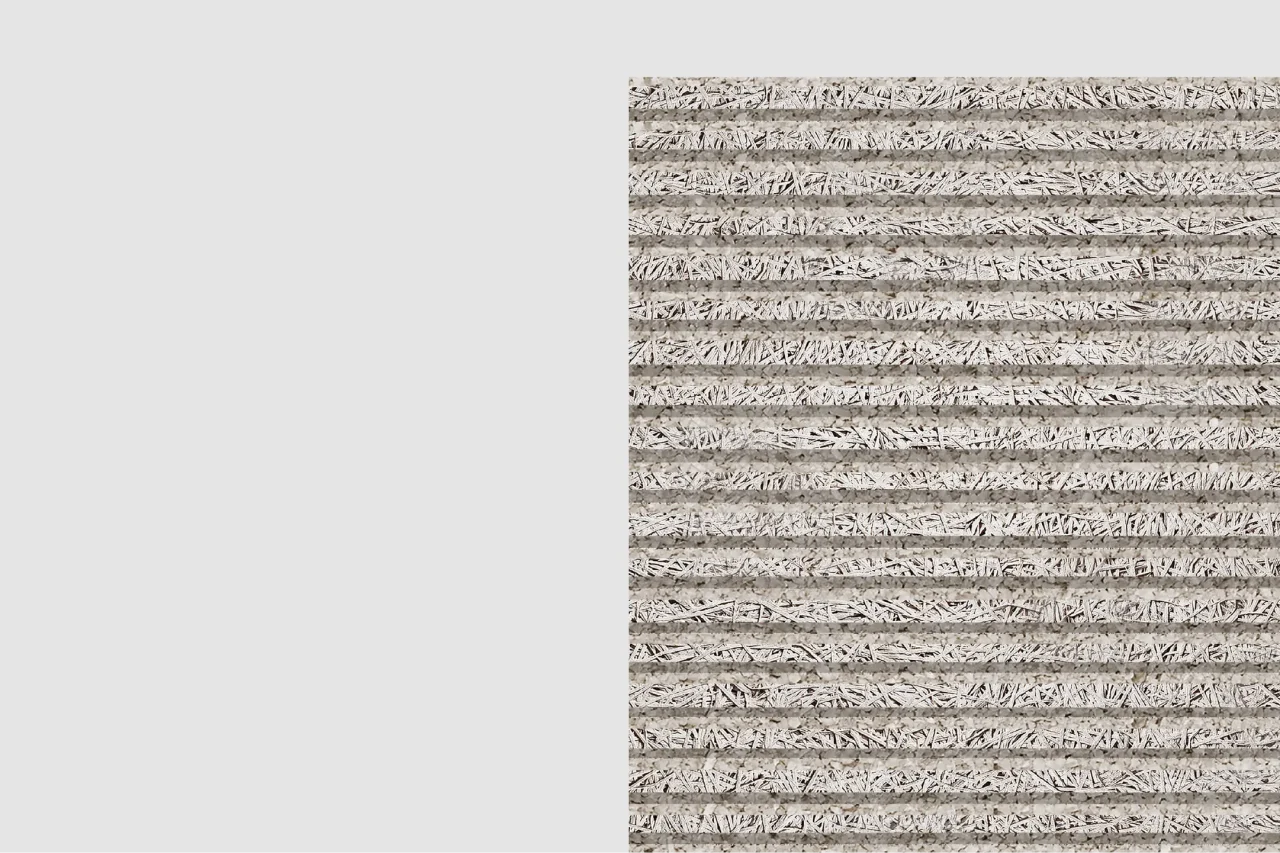
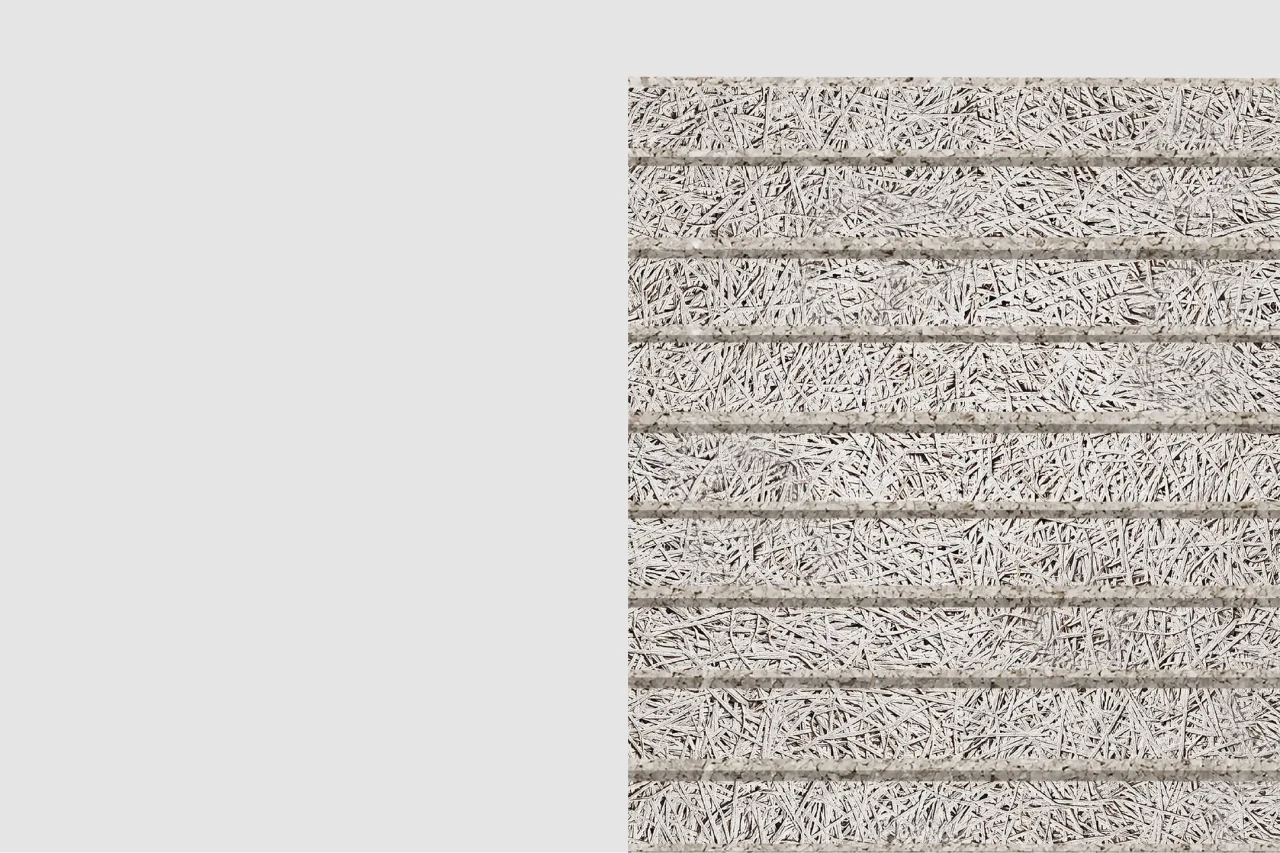
Ljuds™ Horizon 75 panels, 600mmW x 1200mmH, feature horizontal grooves for a sleek, expansive look, offering sound absorption and moisture control.

Horizon 75L

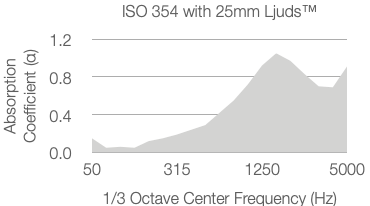
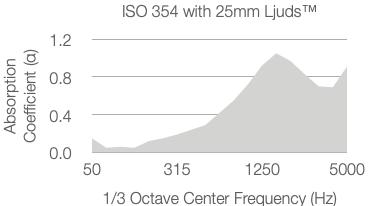
A line graph shows absorption coefficient versus frequency. The coefficient rises gradually from 50 Hz, peaks above 1.0 near 2500 Hz, then decreases slightly toward 5000 Hz. Data is for ISO 354 with 25mm Ljuds™.

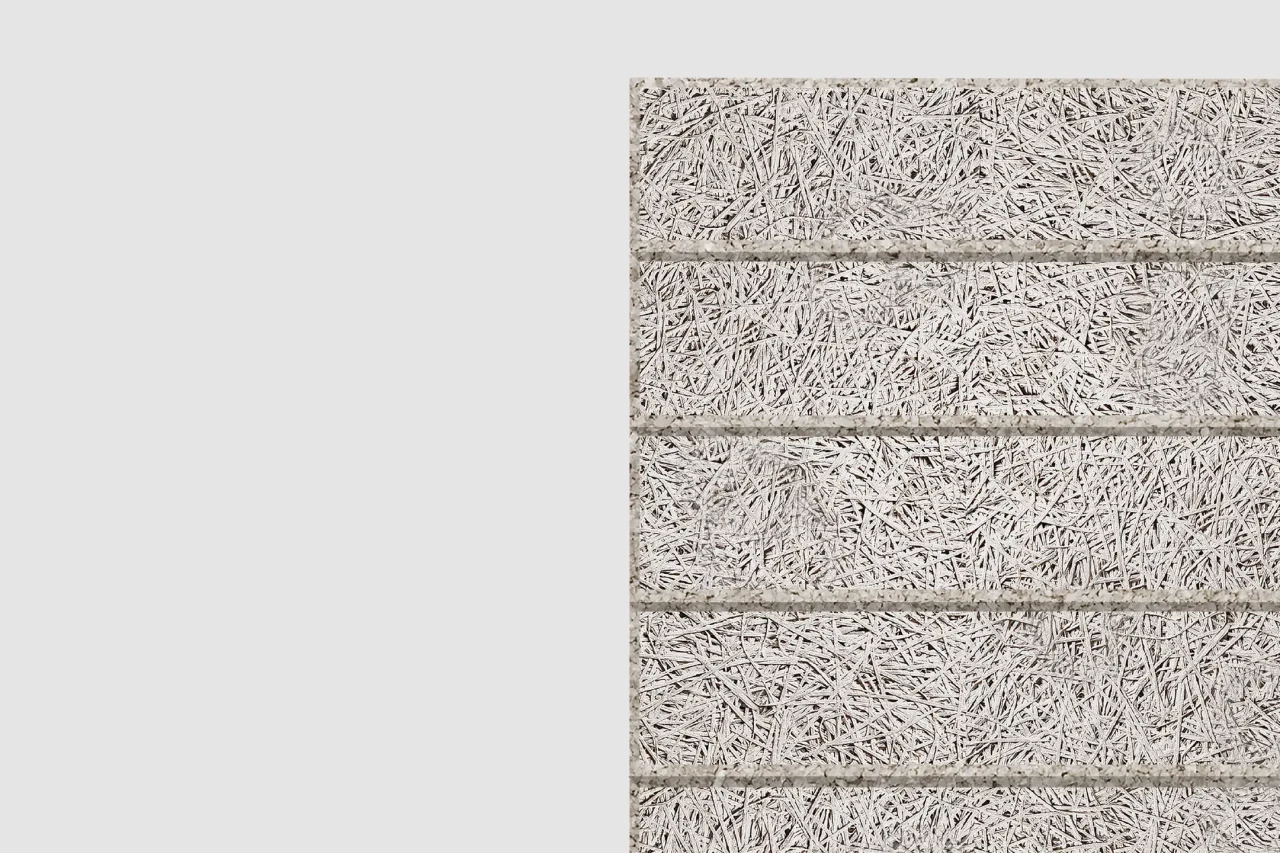
Ljuds™ Horizon 75L panels, 1200mmW x 2400mmH, feature horizontal grooves for a sleek, expansive look, offering sound absorption and moisture control.

Horizon 150

Line graph showing absorption coefficient (α) on the y-axis (0 to 1.2) vs. 1/3 octave center frequency in Hz (50 to 5000) on the x-axis, with values rising sharply after 315 Hz and peaking above 1 at around 2500 Hz.

Ljuds™ Horizon 150 panels, 600mmW x 1200mmH, feature grooved lines for dynamic patterns, offering sound absorption and moisture control.

Horizon 150L

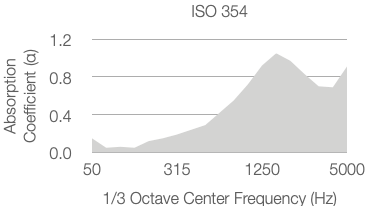
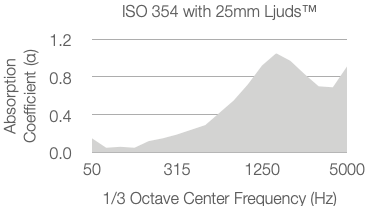
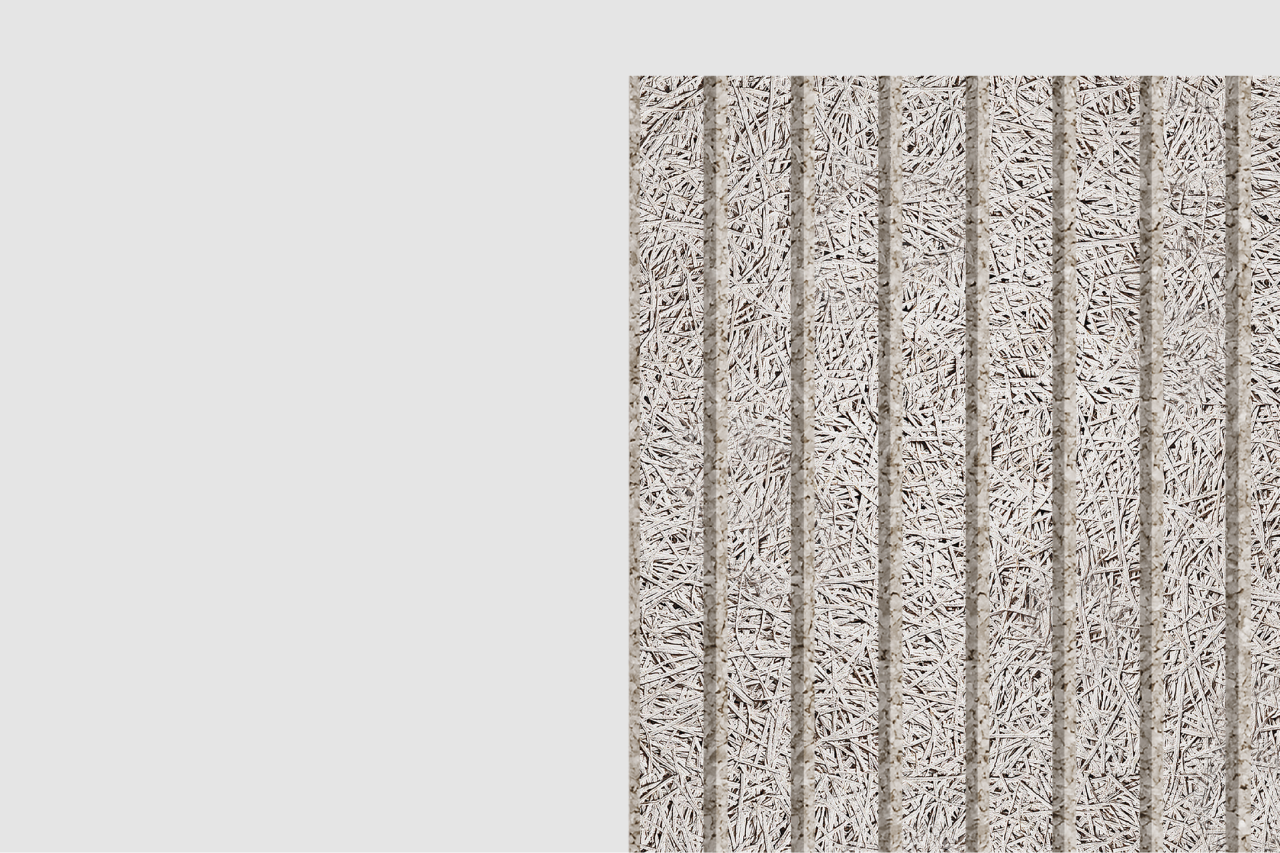
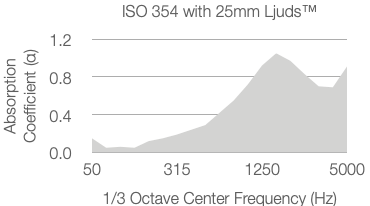
A line graph showing absorption coefficient versus frequency. The coefficient rises gradually, peaks between 1250 and 5000 Hz, and ends near 0.8. X-axis: 50–5000 Hz; Y-axis: 0–1.2. Title: ISO 354 with 25mm Ljuds™.

Ljuds™ Horizon 150L panels, 1200mmW x 2400mmH, feature grooved lines for dynamic patterns, offering sound absorption and moisture control.

Vertical 75

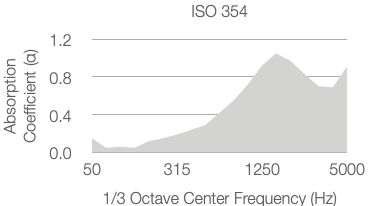
Line graph showing absorption coefficient (α) versus 1/3 octave center frequency (Hz) from 50 to 5000 Hz. The coefficient stays low at first, rises steeply after 315 Hz, peaking around 1250 Hz, then slightly decreases.

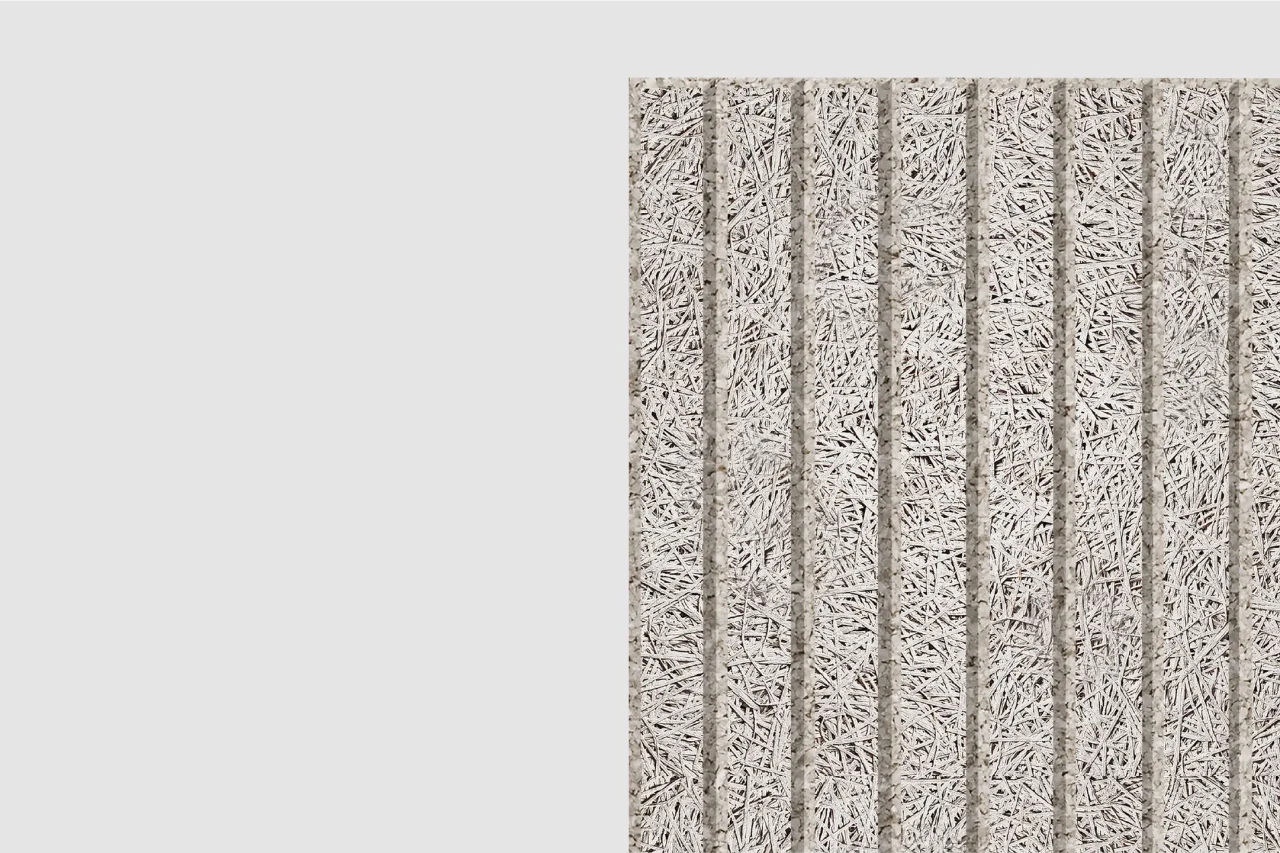
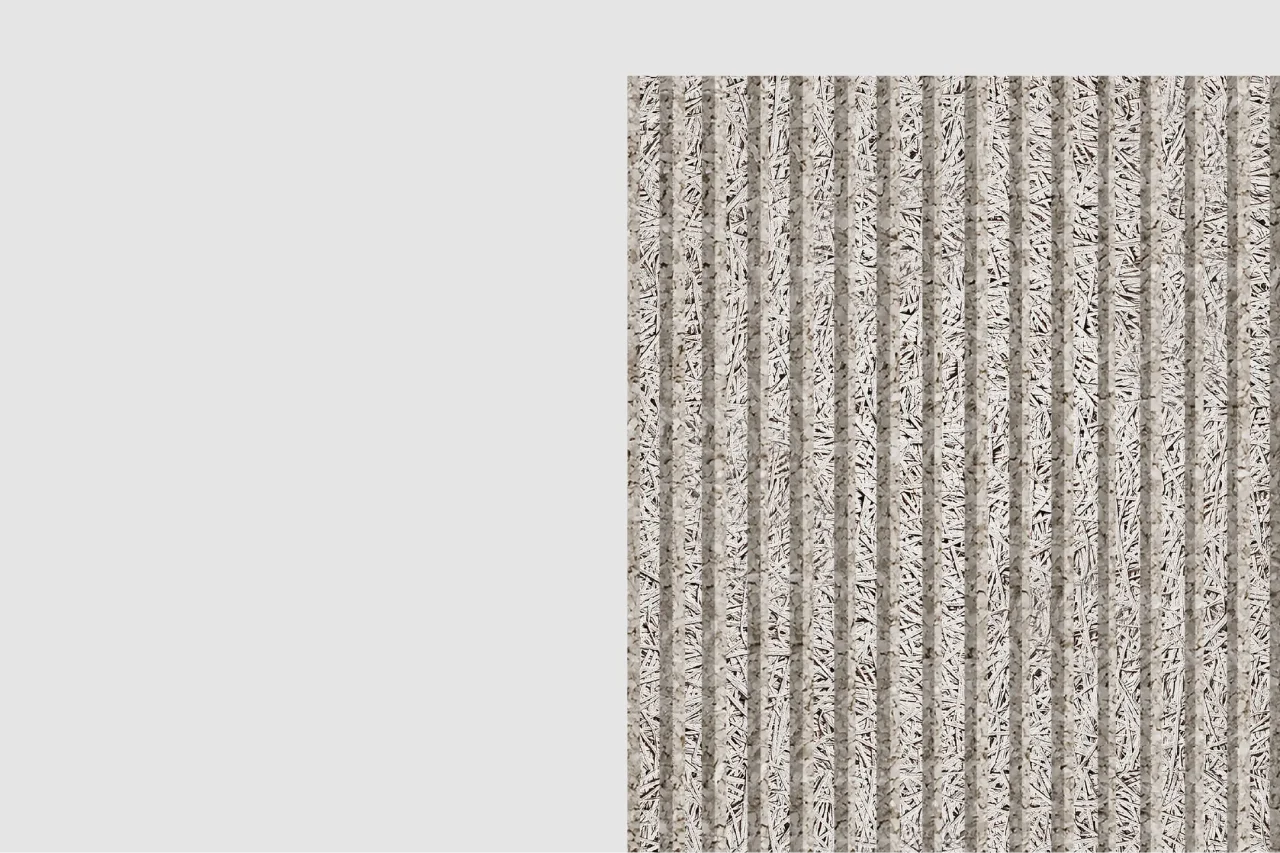
Ljuds™ Vertical 75 panels, 600mmW x 1200mmH, feature vertical grooves for added height, with sound absorption and moisture control.

Vertical 75L

A graph shows absorption coefficient (α) on the y-axis and 1/3 octave center frequency (Hz) on the x-axis. The shaded area peaks near 1250 Hz, indicating higher sound absorption at that frequency.

Ljuds™ Vertical 75L panels, 1200mmW x 2400mmH, feature vertical grooves for added height, with sound absorption and moisture control.

Vertical 150

Line graph showing absorption coefficient (y-axis, 0 to 1.2) versus 1/3 octave center frequency in Hz (x-axis, 50 to 5000). The coefficient increases steadily, peaking around 2000 Hz, then slightly decreases.

Ljuds™ Vertical 150 panels, 600mmW x 1200mmH, feature vertical grooves for added height, with sound absorption and moisture control.

Vertical 150L

A line graph showing absorption coefficient versus frequency. The absorption starts low, gradually increases, peaks between 1250 and 5000 Hz, and remains elevated. Title: ISO 354 with 25mm Ljuds™. X-axis: frequency, Y-axis: coefficient.

Ljuds™ Vertical 150L panels, 1200mmW x 2400mmH, feature vertical grooves for added height, with sound absorption and moisture control.

Circle

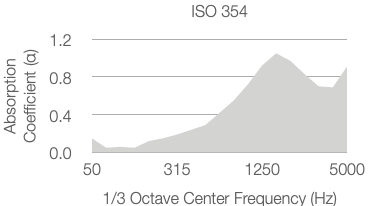
Line graph showing absorption coefficient (α) vs. 1/3 octave center frequency (Hz) from 50 to 5000 Hz. Absorption increases gradually, peaking above 0.8 near 1250 Hz, then slightly decreases.

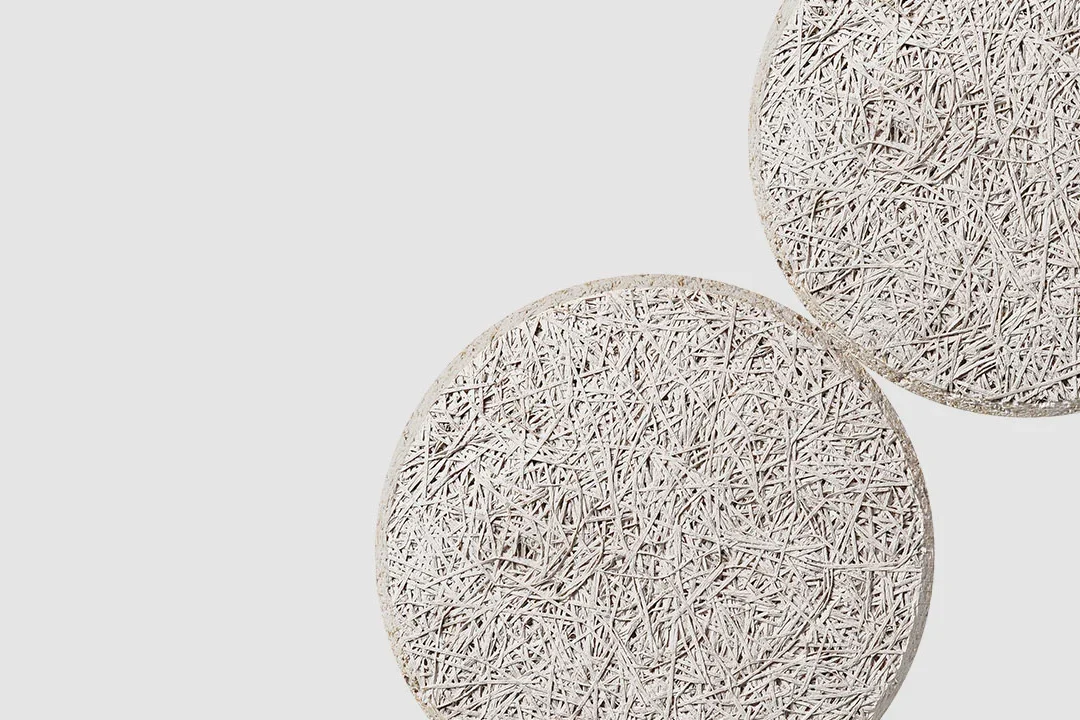
Ljuds™ circular wood wool panels, with a size of 300mmD, are eco-friendly, sound-absorbing, and moisture-regulating for enhanced acoustic performance.

Diamond

Line graph showing absorption coefficient (α) versus 1/3 octave center frequency (Hz) from 50 to 5000 Hz, with absorption increasing from around 315 Hz and peaking near 1250 Hz.

Ljuds™ diamond-shaped wood wool panels, 173mmH x 300mmW, are eco-friendly, sound-absorbing, and moisture-regulating for enhanced acoustic performance.

Hexagon

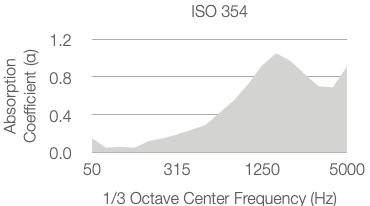
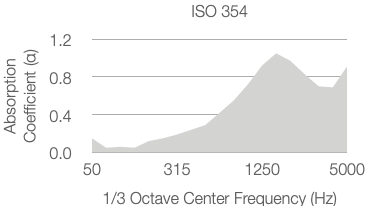
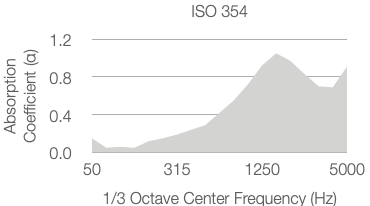
Line graph showing absorption coefficient (α) vs. 1/3 octave center frequency (Hz) from 50 to 5000 Hz. The coefficient rises gradually, peaks near 2500 Hz, then slightly decreases. Labeled ISO 354.

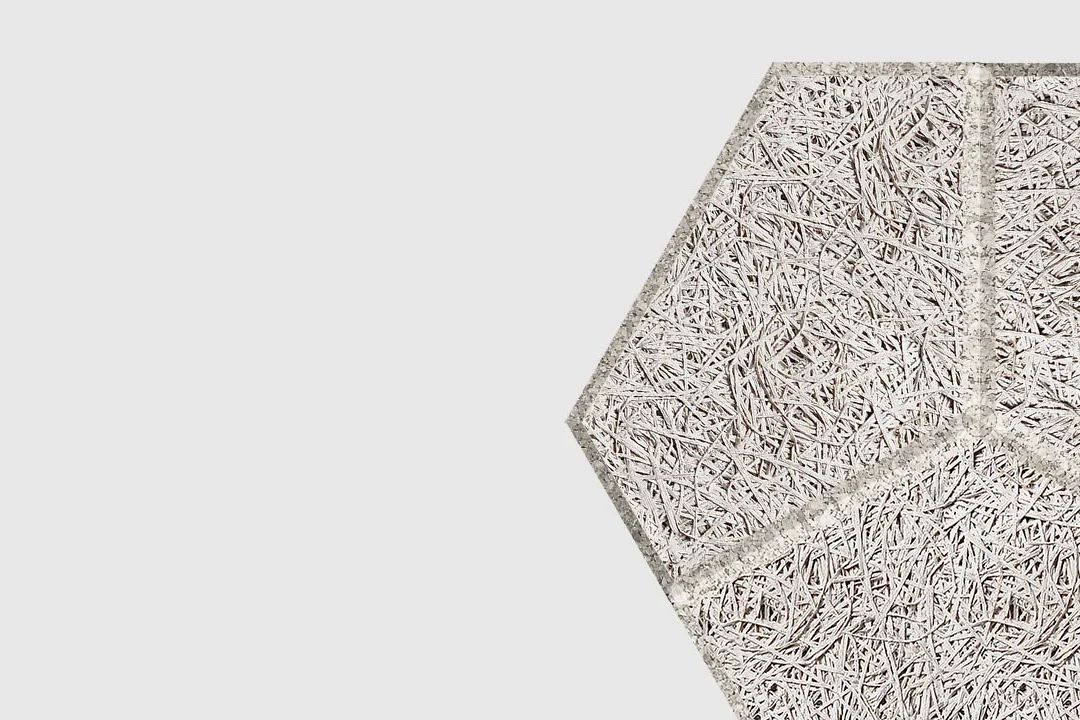
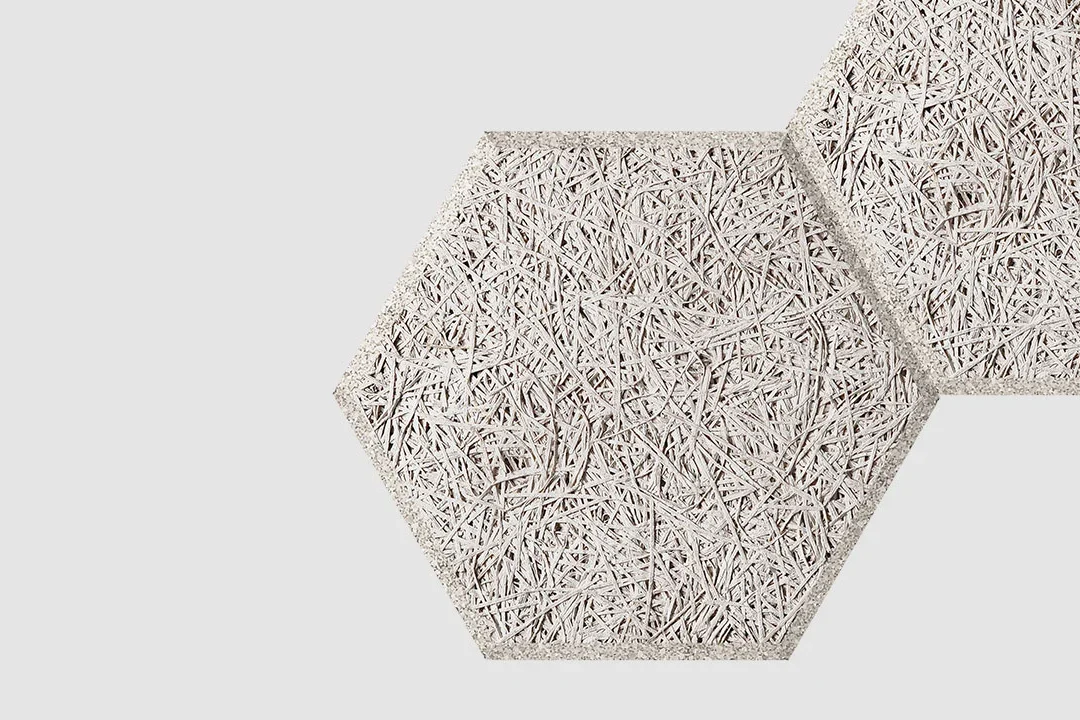
Ljuds™ hexagon-shaped wood wool panels, 259mmH x 300mmW, are eco-friendly, sound-absorbing, and moisture-regulating for enhanced acoustic performance.

Honeycomb

Line graph showing absorption coefficient (α) vs. 1/3 octave center frequency (Hz) from 50 to 5000 Hz. The coefficient rises gradually, peaks around 1250 Hz, then slightly drops but remains elevated at 5000 Hz.

Ljuds™ honeycomb-shaped wood wool panels, 176mmH x 300mmW, are eco-friendly, sound-absorbing, and moisture-regulating for enhanced acoustic performance.

Pentagon

Line graph showing absorption coefficient (α) on the y-axis (0 to 1.2) versus 1/3 octave center frequency (Hz) on the x-axis (50 to 5000). The curve rises after 315 Hz, peaking near 1250 Hz, then slightly decreases by 5000 Hz.

Ljuds™ pentagon-shaped wood wool panels, 173mmH x 300mmW, are eco-friendly, sound-absorbing, and moisture-regulating for enhanced acoustic performance.

Prism

Line graph showing absorption coefficient (α) versus 1/3 octave center frequency (Hz) from 50 to 5000 Hz; the coefficient rises, peaking around 2000 Hz, then slightly decreases toward 5000 Hz.

Ljuds™ prism-shaped wood wool panels, 173mmH x 300mmW, are eco-friendly, sound-absorbing, and moisture-regulating for enhanced acoustic performance.

Rectangle

A line graph showing absorption coefficient (α) versus 1/3 octave center frequency (Hz) from 50 to 5000 Hz. The coefficient increases, peaks near 2000 Hz, then slightly drops but remains high.

Ljuds™ rectangular wood wool panels, 300mmH x 600mmW, are eco-friendly, sound-absorbing, and moisture-regulating for enhanced acoustic performance.

Scale

Line graph showing absorption coefficient (α) rising from around 0.2 at 50 Hz, peaking near 1.0 at 2500 Hz, then slightly decreasing but staying above 0.8 at 5000 Hz. X-axis: frequency (Hz), Y-axis: absorption coefficient.

Ljuds™ scale-shaped wood wool panels, 253mmH x 300mmW, are eco-friendly, sound-absorbing, and moisture-regulating for enhanced acoustic performance.

Square

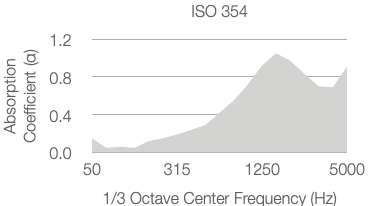
Line graph showing absorption coefficient (α) versus 1/3 octave center frequency (Hz) from 50 to 5000 Hz, following ISO 354. The absorption increases with frequency, peaking near 2000 Hz, then slightly decreases.

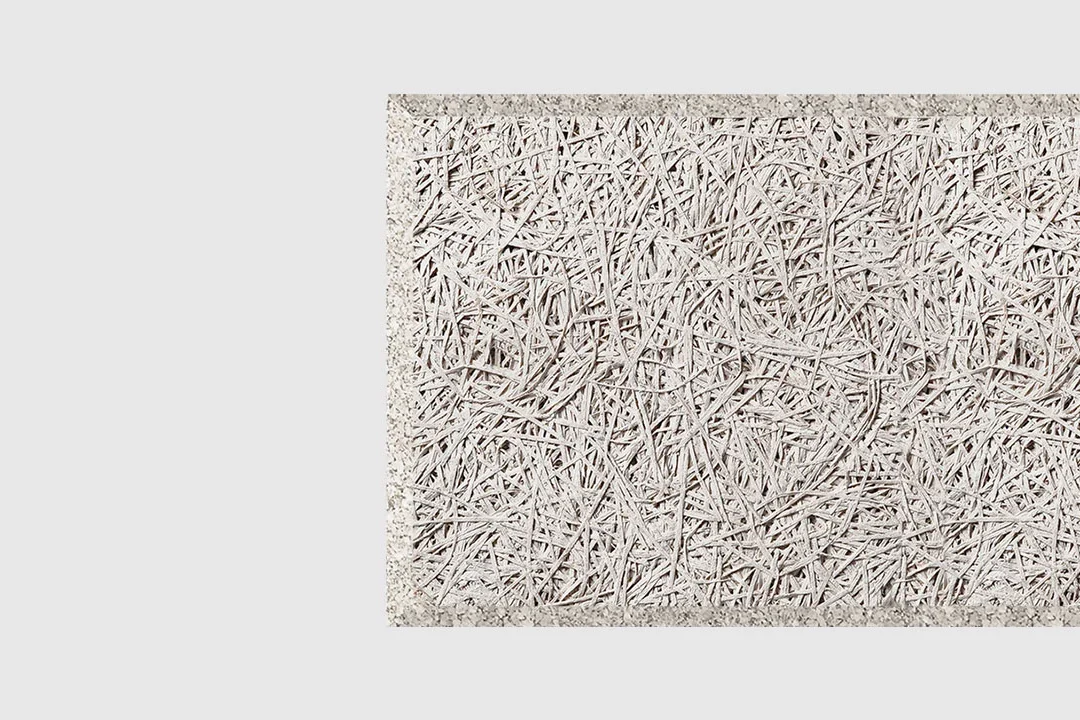
Ljuds™ square wood wool panels, 300mmH x 300mmW, are eco-friendly, sound-absorbing, and moisture-regulating for enhanced acoustic performance.

Triangle

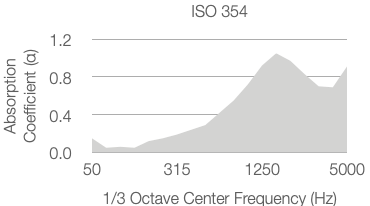
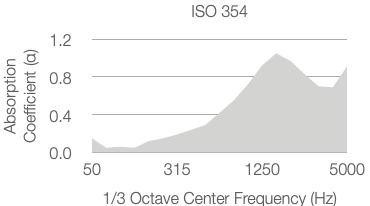
Line graph showing absorption coefficient (α) vs. 1/3 octave center frequency (Hz) from 50 to 5000 Hz. The coefficient rises gradually, peaks near 1250 Hz, and remains high toward 5000 Hz. Labeled ISO 354.

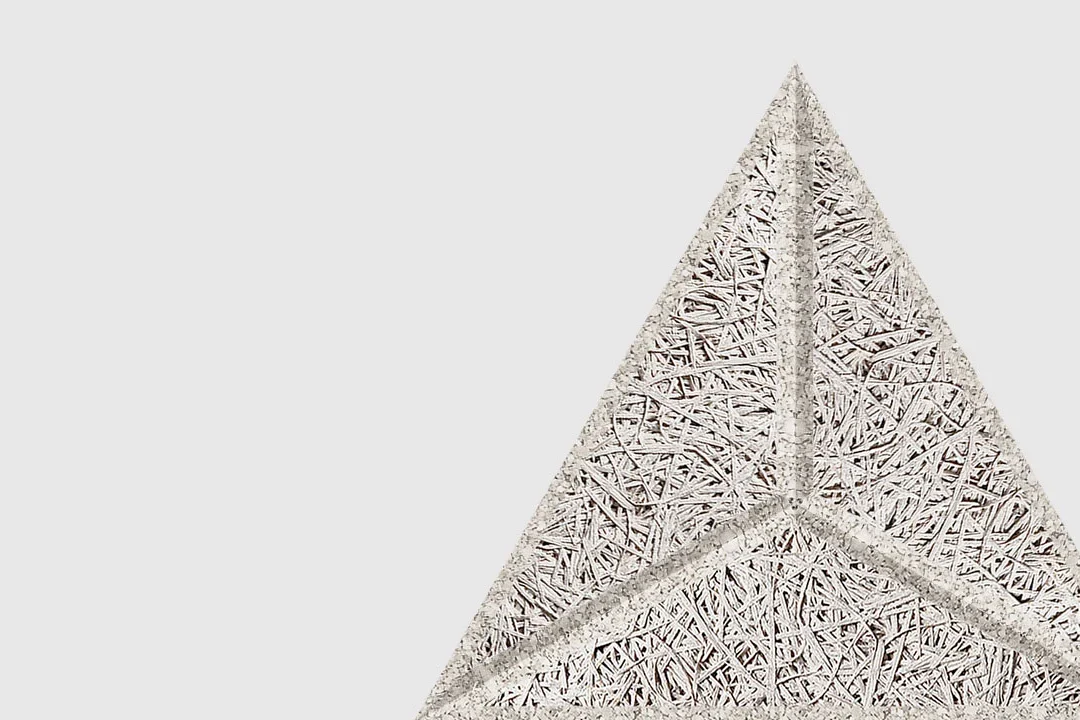
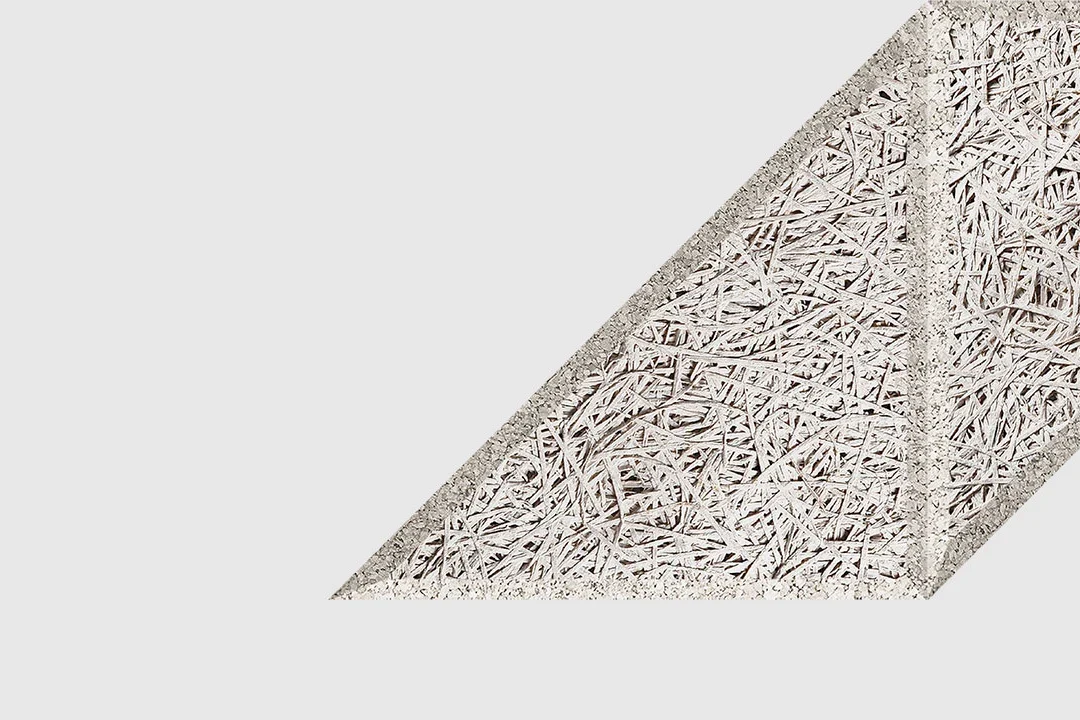
Ljuds™ triangular wood wool panels, 300mmH x 300mmW, are eco-friendly, sound-absorbing, and moisture-regulating for enhanced acoustic performance.

Board

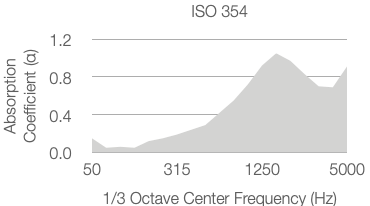
A line graph showing absorption coefficient (α) versus 1/3 octave center frequency (Hz), ranging from 50 to 5000 Hz. The absorption coefficient increases sharply above 315 Hz, peaking near 1250 Hz, then tapers off slightly.

Ljuds™ board-shaped wood wool panels, 1220mmH x 2440mmW, are eco-friendly, sound-absorbing, and moisture-regulating for enhanced acoustic performance.

Project Highlight

Ljuds™ Board

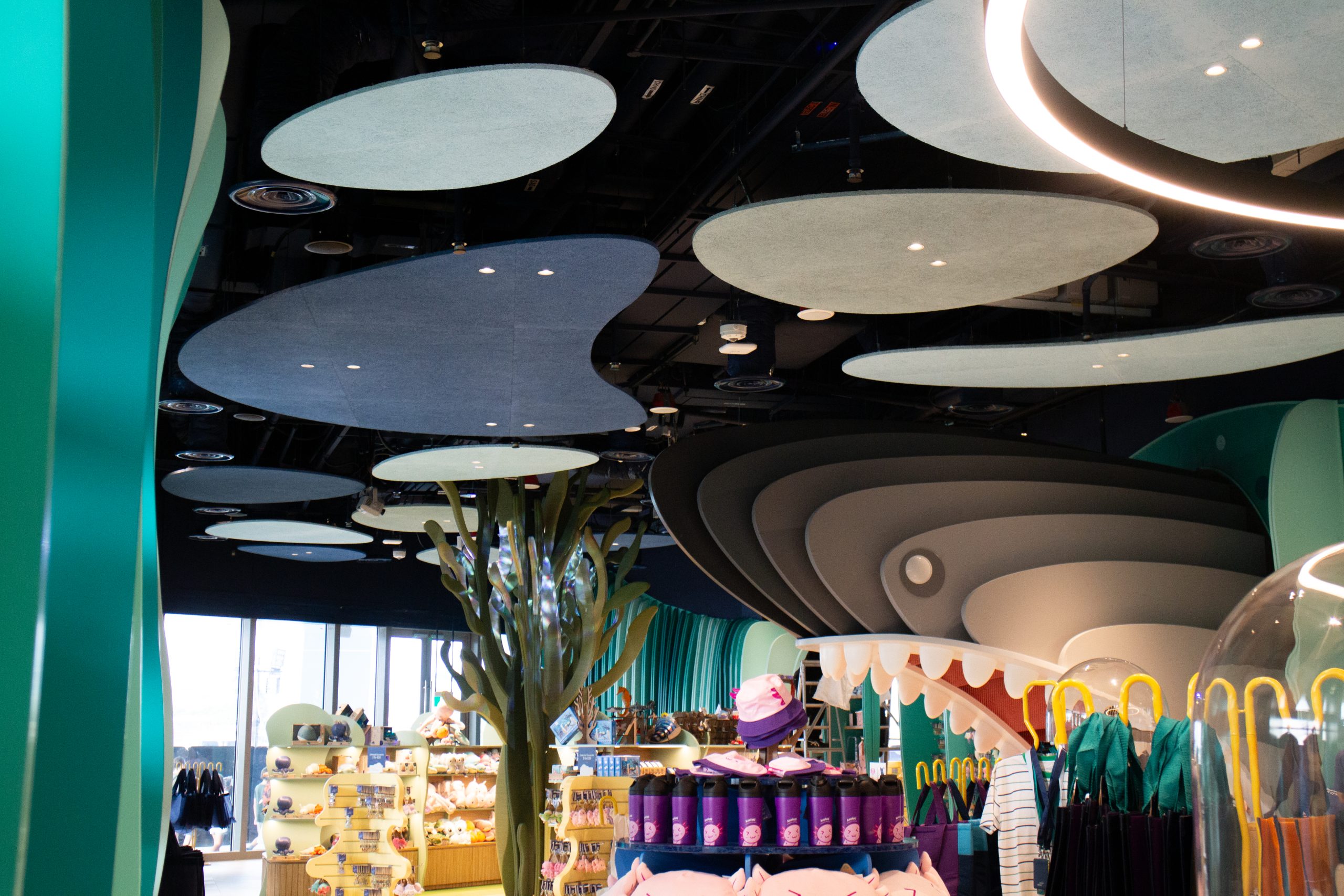
In a space where nature and architecture meet, the oceanarium project required more than just visual impact—it demanded acoustic precision. Designed for immersive learning and tranquil exploration, the venue integrated Ljuds™ panels to soften ambient noise and enrich the visitor experience.
A whimsical retail store interior with wavy ceiling panels, teal columns, merchandise displays with colorful plush toys, hats, and clothing, and bright natural light from large windows.

How Does Ljuds™ Wood Wool Acoustic Panel Work?

Ljuds™ Wood Wool Acoustic Panels enhance sound absorption through porous wood-fiber surfaces and high-density cement-bonded cores. These systems improve sound control, thermal insulation, and overall comfort in any space. Designed with natural textures and architectural versatility, they elevate interior expression, resist moisture and mold, and deliver long-lasting functional benefits. As an innovation-driven company, Ljuds™ develops wood wool solutions that balance acoustic performance, durability, and refined interior aesthetics.

Sound Absorption

In rooms with reflective surfaces and high ceilings, sound waves create echo and excessive reverberation that reduce speech clarity. Ljuds™ Wood Wool Acoustic Panels are engineered to absorb sound, helping control noise levels, improve sound quality and create a comfortable environment in offices, auditoriums, and commercial spaces.

Designed for Architects

Effective acoustics should blend seamlessly with interior design. Ljuds™ Wood Wool Acoustic Panels come in a wide range of natural textures, colors, and panel styles to suit modern offices and public spaces. These wood wool panels integrate sound control without disrupting the visual identity of the room and environment.

Warranty Guaranteed

High-use environments require acoustic systems that last. Ljuds™ Wood Wool Acoustic Panels are engineered with durable, fire-resistant, and eco-conscious materials to deliver consistent acoustic performance. Supported by reliable warranty protection, they provide long-term stability, thermal comfort, and peace of mind for customers.
Standards

Material: Recyclable Wood Fibres in Cement Matrix
Standard Dimension:
300mm x 300mm
600mm x 600mm
1200mm x 2400mm
Standard Thickness:
15mm, 20mm, 25mm
Bevel Dimension: 10mm, 45°

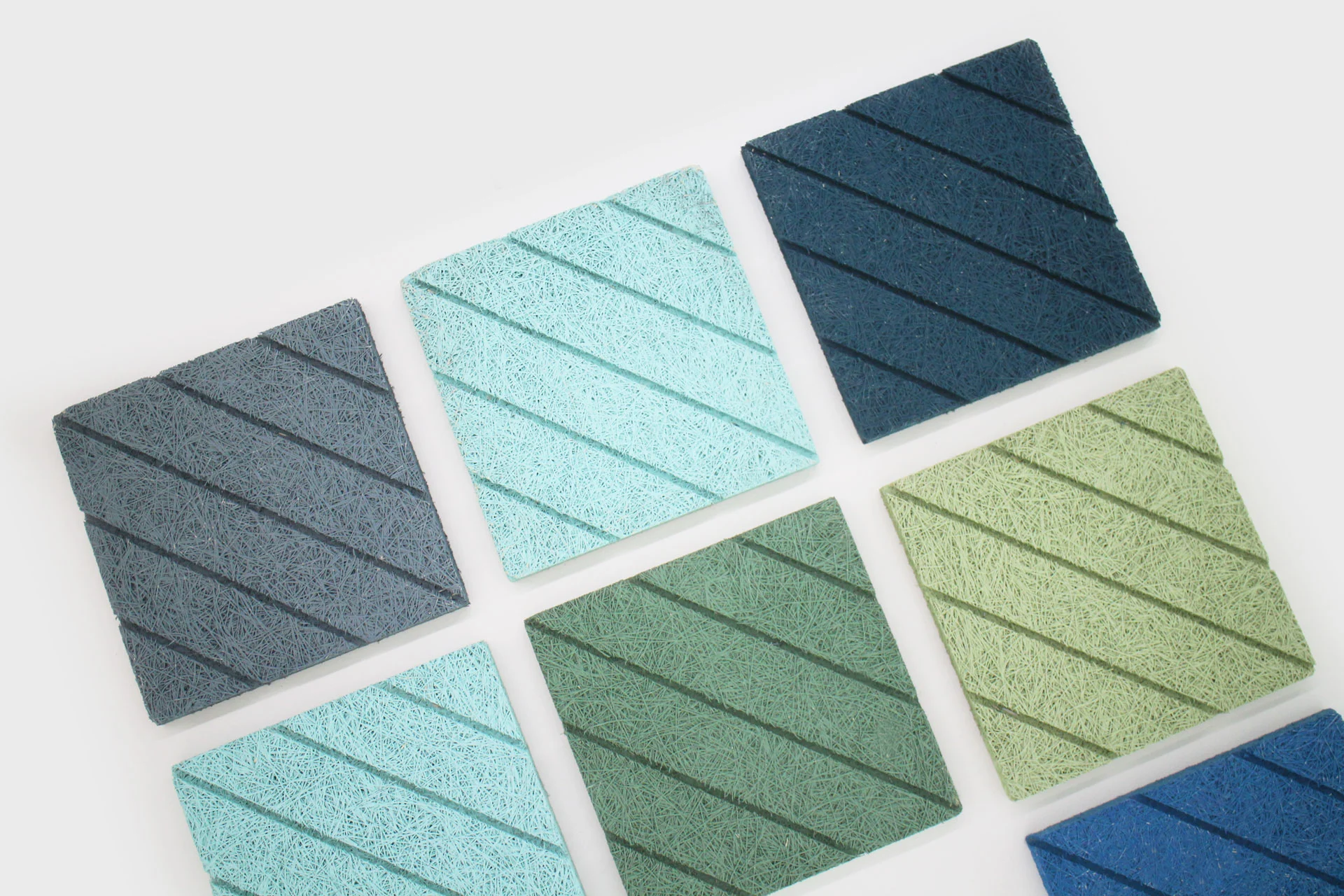
Eight square tiles in various shades of blue and green, each with a diagonal line pattern, are arranged on a white background in two rows.

Frequently Asked Questions

Ljuds™ panels are made from recyclable wood fibres combined with a cement matrix and water. This composition creates a sustainable, formaldehyde-free acoustic panel that absorbs sound effectively and regulates indoor moisture and air permeability.

Ljuds™ panels come as wall panels, ceiling tiles, or indoor cladding. Standard panel sizes include 300 × 300 mm or 300 × 600 mm, and standard thicknesses are 25 mm or 50 mm. Panels are also bevel-ed for a clean finish.

Because of their porous wood-fibre structure plus cement matrix, Ljuds™ panels absorb sound waves and reduce reverberation while helping regulate humidity. They thus improve acoustic comfort and support healthier indoor air conditions — useful in offices, homes, public spaces or commercial buildings.

Yes. Ljuds™ panels comply with environmental standard EN 13986 and are rated E1 for low emissions. For fire safety they meet EN 13501-1 Class B s1 d0. This makes them suitable for use as acoustic wall panels or ceiling tiles in residential, commercial or institutional settings in Singapore and elsewhere.

Ljuds™ panels are ideal for spaces needing sound control and a natural aesthetic: offices, conference rooms, schools, hospitality venues, lecture halls, auditoriums or renovation projects. They are effective when used on walls or ceilings to improve acoustics and indoor environmental comfort.
Keep up with our latest development?

This website uses cookies to ensure you get the best experience.