Sustainable Exterior Cladding for High-Rise Buildings: Balancing Performance and Aesthetics
High-Rise Facades in an Era of Environmental Accountability
Exterior cladding systems define both the environmental performance and visual identity of high-rise buildings. As urban density increases and sustainability targets tighten, façade design must reconcile thermal efficiency, fire safety, durability, and embodied carbon with architectural expression. Sustainable exterior cladding therefore operates at the intersection of engineering performance and aesthetic ambition, requiring integrated, evidence-based specification strategies.
Performance Drivers in High-Rise Cladding Systems
Thermal Performance and Energy Regulation
High-rise facades play a critical role in regulating heat gain and loss across large vertical envelopes. Insulated cladding assemblies, ventilated rainscreens, and double-skin façades reduce operational energy demand by controlling solar radiation and thermal bridging². In tall buildings, consistent façade performance across varying orientations and wind conditions is essential to maintaining whole-building energy efficiency.
Fire Safety and Vertical Risk Management
Fire performance remains a defining constraint for high-rise cladding. External wall assemblies must be evaluated as complete systems, considering core materials, insulation, fixings, and cavity barriers. Large-scale façade fire testing frameworks and reaction-to-fire classifications guide material selection, ensuring that sustainability objectives do not compromise life-safety requirements³.
Durability, Weathering, and Lifecycle Reliability
High-rise cladding systems are exposed to intensified wind loads, UV radiation, and driving rain. Sustainable specification therefore prioritises materials with proven long-term durability and low maintenance demands. Lifecycle reliability directly influences environmental impact, as premature replacement undermines embodied carbon savings achieved at installation.
Material Selection and Environmental Impact
Material choice determines much of a façade’s embodied carbon and circularity potential. Aluminium, steel, fibre cement, terracotta, and engineered timber systems each present distinct trade-offs between weight, recyclability, fire performance, and visual quality. Environmental assessment frameworks increasingly require designers to justify these choices using life-cycle data rather than aesthetic preference alone⁴.
Aesthetic Integration and Architectural Expression
Surface Articulation and Urban Identity
Cladding systems shape how high-rise buildings contribute to the urban skyline. Modular panels, perforated screens, and articulated geometries allow sustainable materials to deliver texture, depth, and shadow without excessive mass. Thoughtful façade composition enables visual richness while maintaining efficient material use.
Colour, Finish, and Perceived Material Quality
Advances in coatings, anodising, and surface treatments allow sustainable cladding materials to achieve refined finishes with improved longevity. These treatments influence not only appearance but also heat reflectance and weather resistance, reinforcing the link between aesthetic decisions and environmental performance.
Compliance, Circularity, and Integrated Design
Regulatory Alignment and Certification Pathways
High-rise façade specification must align with evolving building regulations and sustainability frameworks. Certifications and standards addressing fire performance, environmental impact, and responsible sourcing provide structured pathways for compliance. Early coordination between façade engineers, sustainability consultants, and architects reduces risk and supports transparent documentation⁵.
Circular Design and End-of-Life Considerations
Sustainable cladding strategies increasingly incorporate circular design principles, including material separability, recyclability, and reuse potential. Aluminium and steel systems offer high recycling rates, while emerging façade designs prioritise mechanical fixings over permanent bonding to support future material recovery⁶.
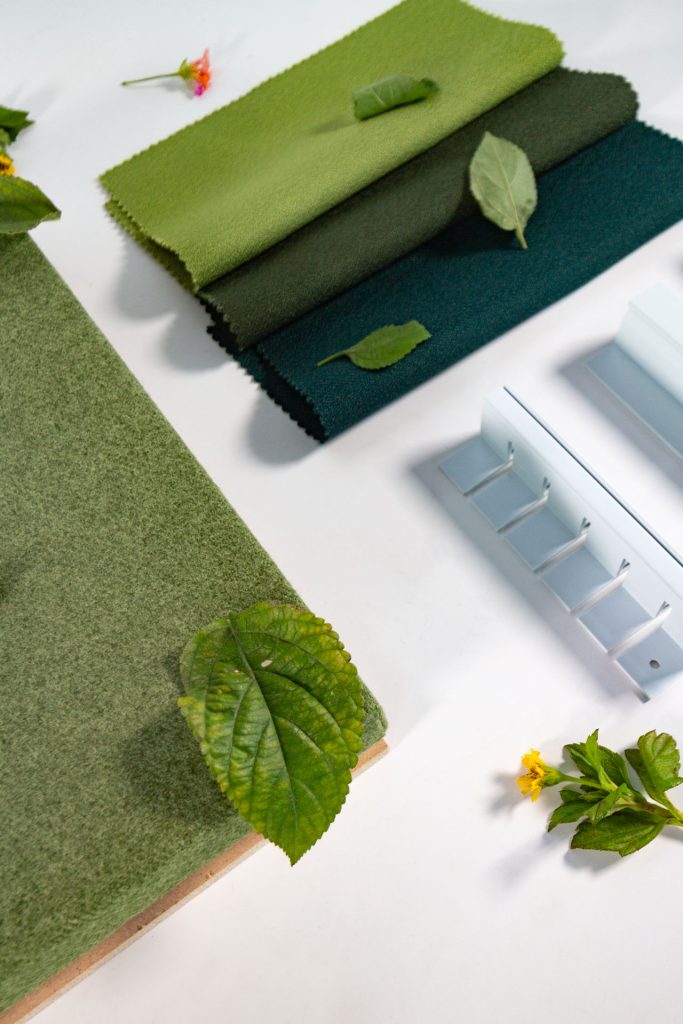
Balancing Performance and Expression in Vertical Architecture
Sustainable exterior cladding for high-rise buildings demands a holistic approach that integrates technical performance with architectural intent. By addressing thermal efficiency, fire safety, durability, and environmental impact at the system level, façade designers can deliver envelopes that perform reliably over decades. At the same time, advances in material technology and façade engineering allow sustainability objectives to enhance rather than constrain aesthetic expression. As cities continue to grow vertically, the ability to balance performance and appearance in exterior cladding will remain central to delivering resilient, responsible, and visually compelling high-rise architecture.
References
- International Organization for Standardization. (2006). ISO 14040: Environmental management — Life cycle assessment — Principles and framework. ISO.
- International Organization for Standardization. (2017). ISO 6946: Building components and building elements — Thermal resistance and thermal transmittance — Calculation methods. ISO.
- National Fire Protection Association. (2019). NFPA 285: Standard Fire Test Method for Evaluation of Fire Propagation Characteristics of Exterior Wall Assemblies. NFPA.
- Ellen MacArthur Foundation. (2019). Completing the picture: How the circular economy tackles climate change. EMF.
- Whole Building Design Guide. (2022). Building Enclosure Design Principles and Strategies. National Institute of Building Sciences.
- Pomponi, F., & Moncaster, A. (2017). Circular economy for the built environment: A research framework. Journal of Cleaner Production, 143, 710–718.
Share