Timberix

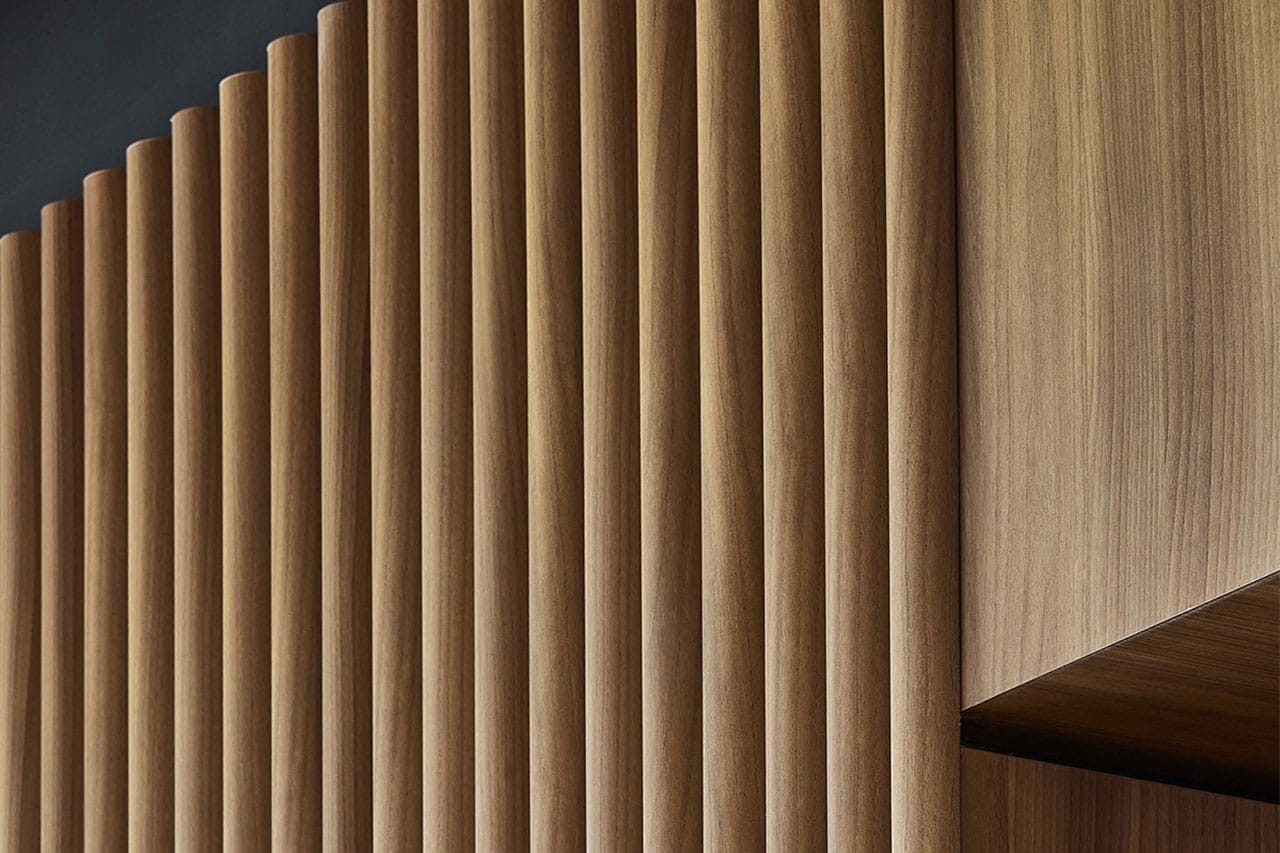
Timberix™ reduce echoes by trapping and diffracting sound in the grooves and perforation found on the surface. The sound that passes through the perforation is further absorbed by an acoustic substrate such as fibreglass or mineral wool, which reduces reverberation of the space.

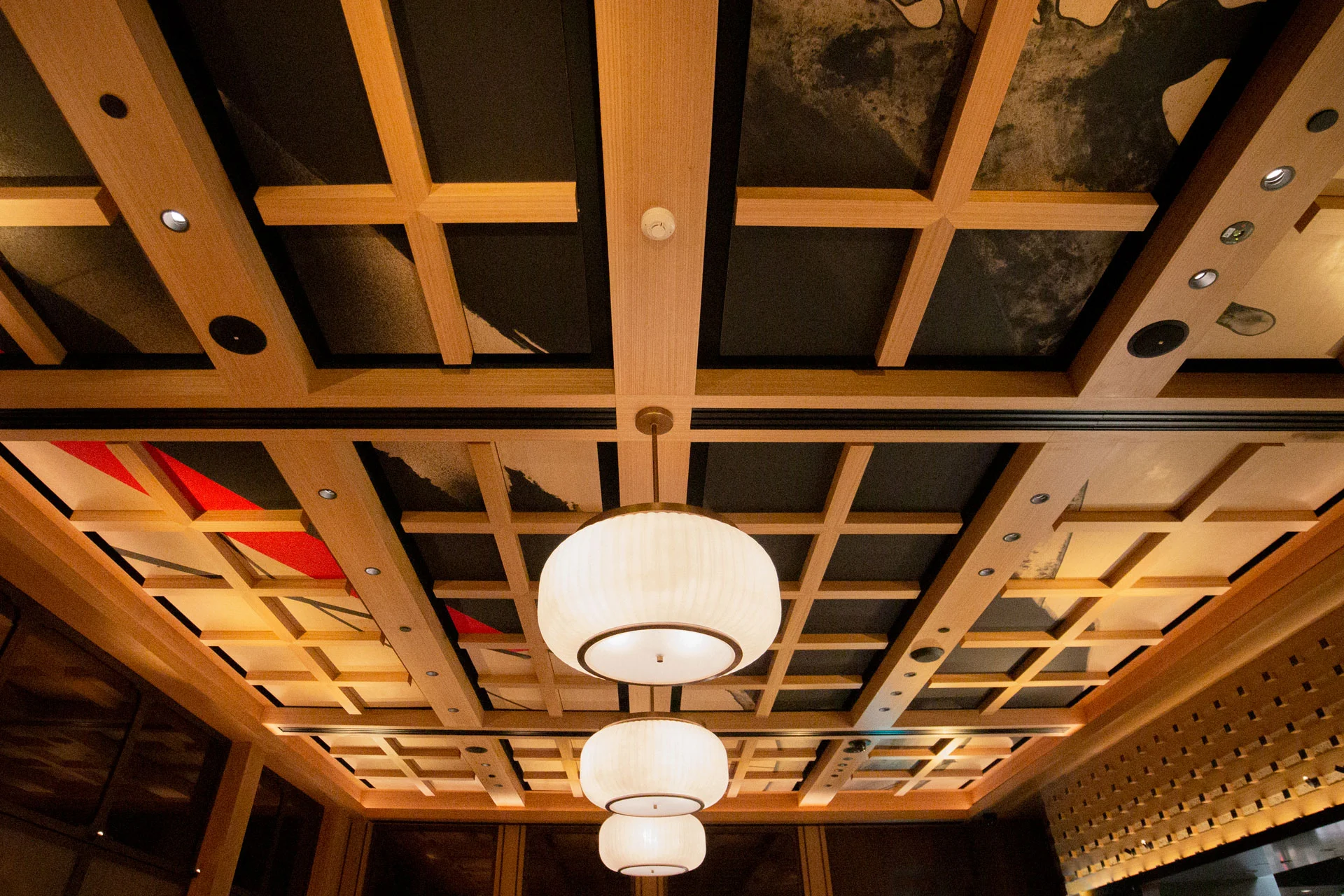
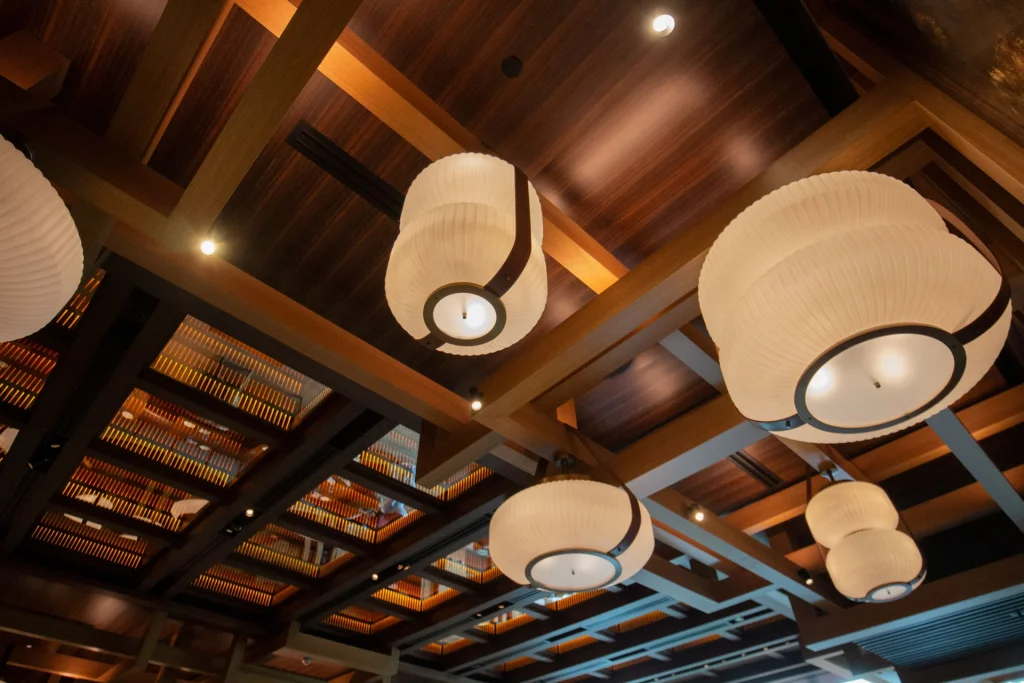
Large, round, white pendant lights hang from a wooden ceiling with geometric beams and recessed lighting, creating a warm and inviting atmosphere.

Most Popular

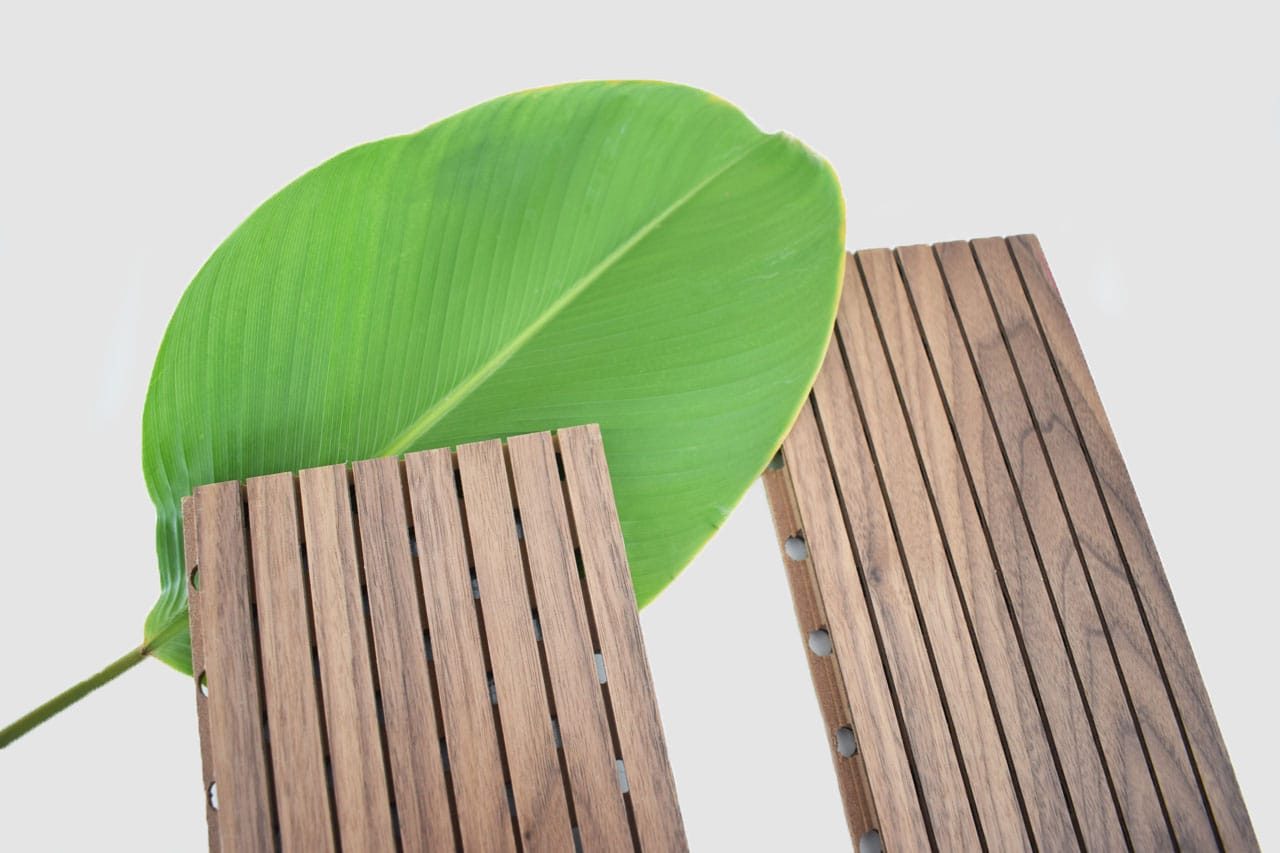
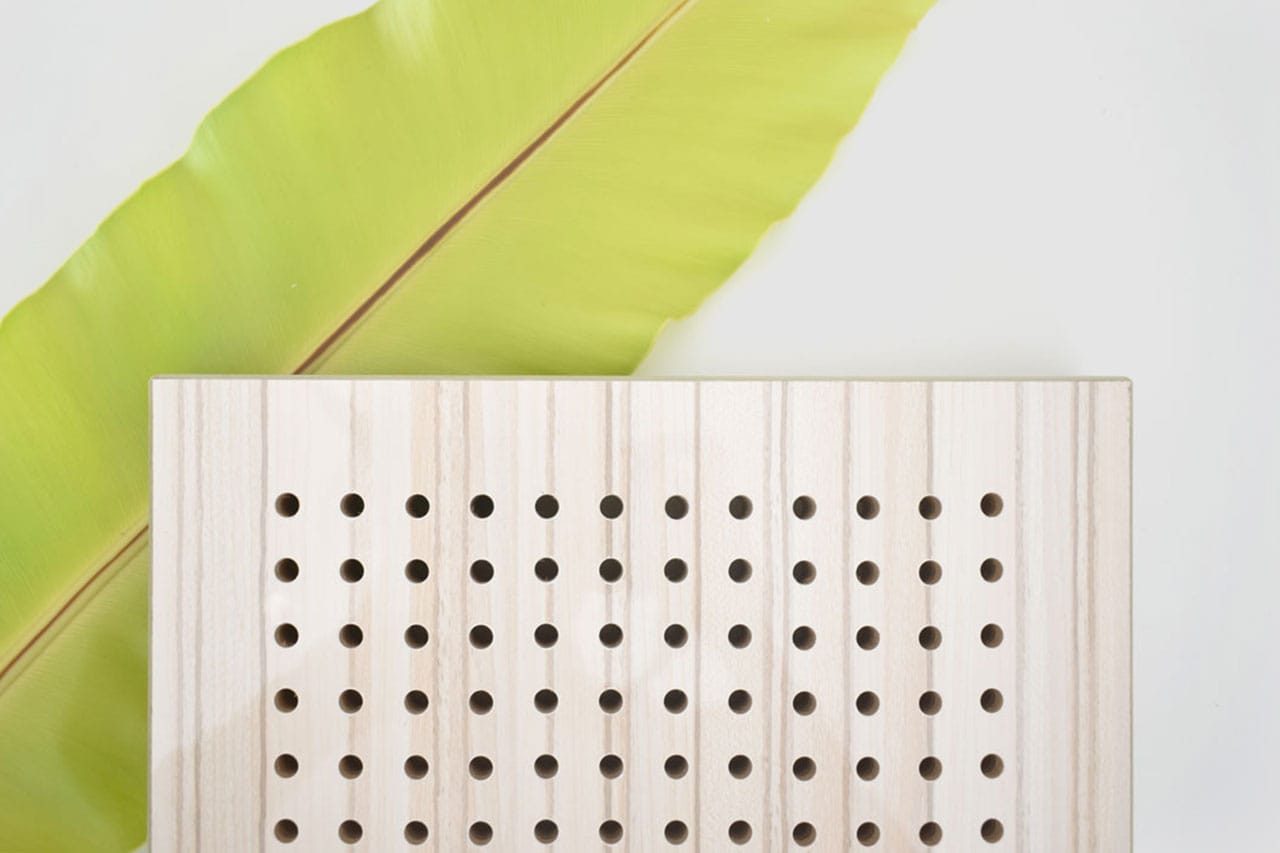
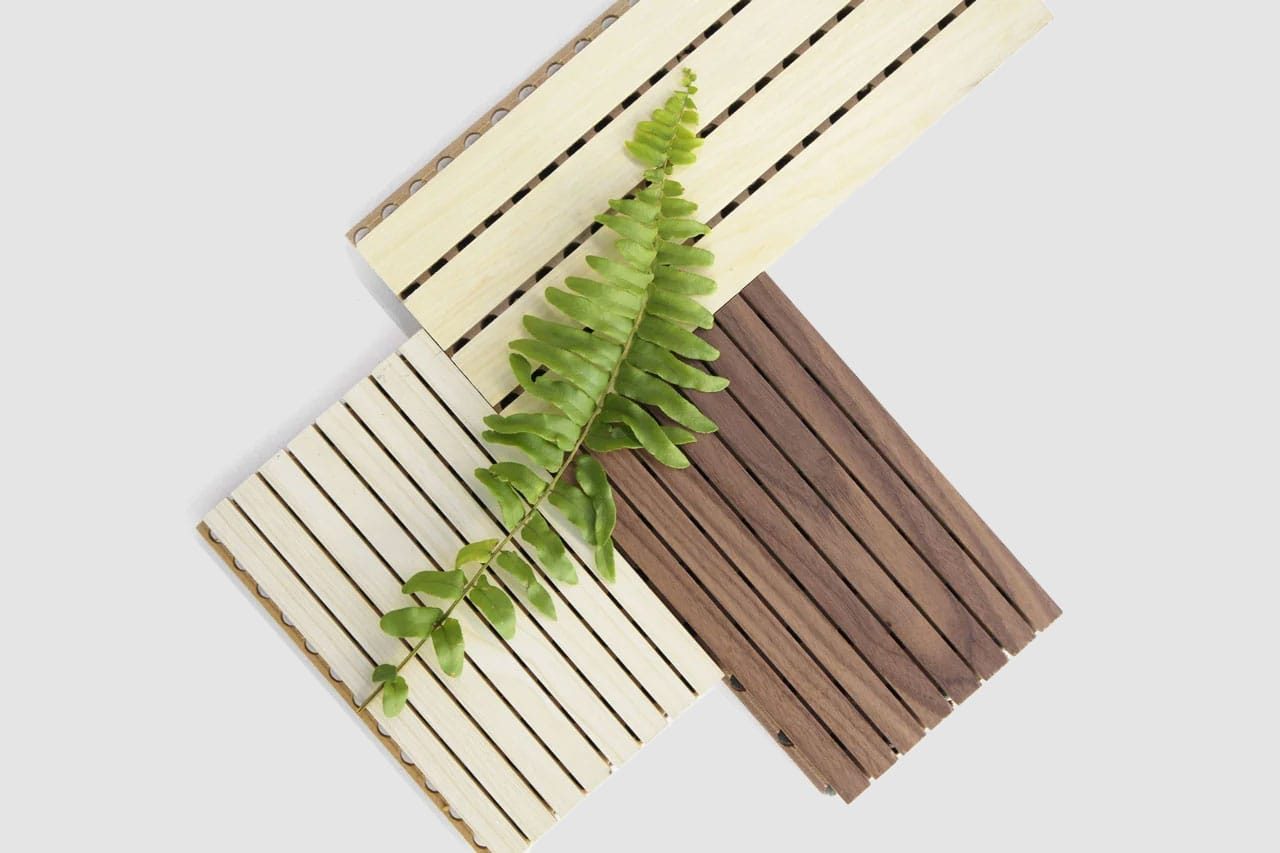
Three rectangular wooden slat panels—two light-colored and one dark—overlap on a white background. A green fern leaf is placed diagonally across the panels.

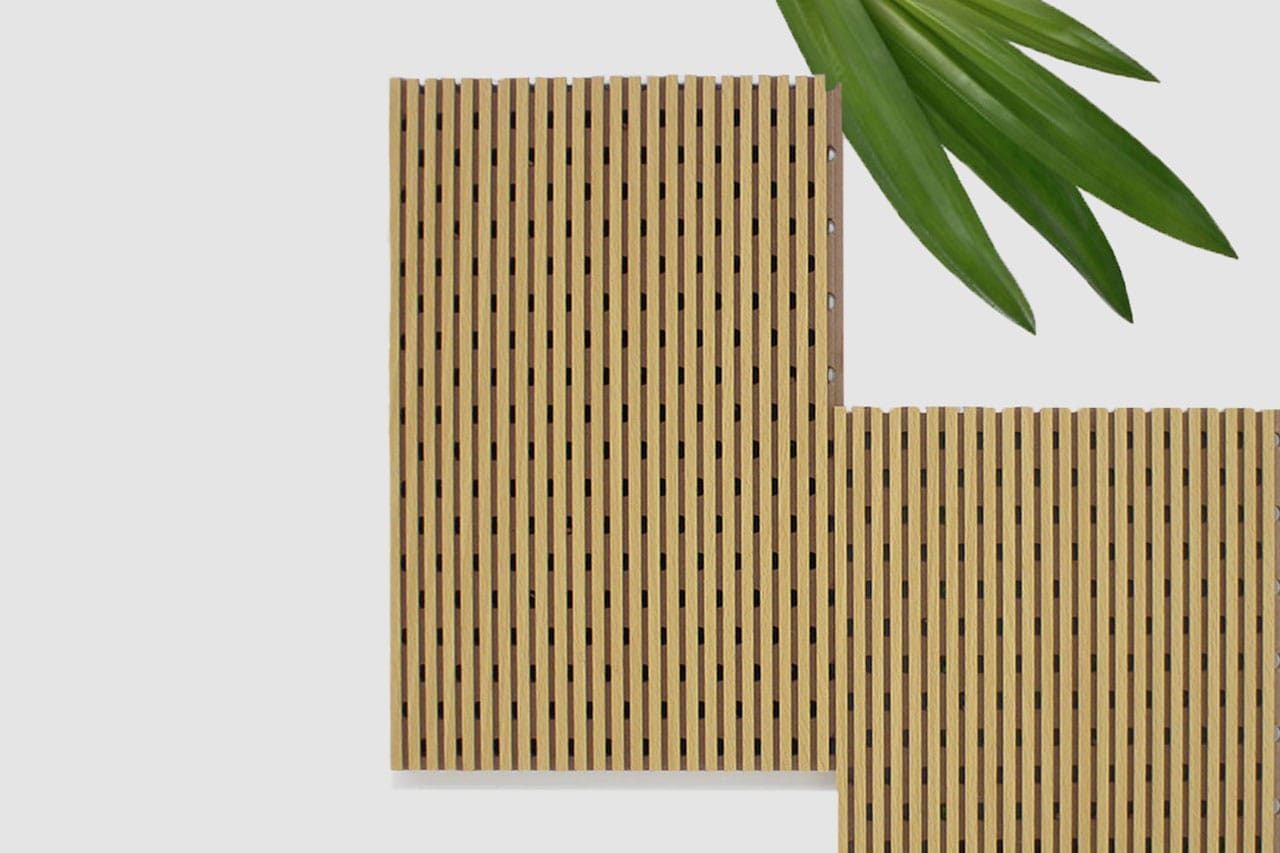
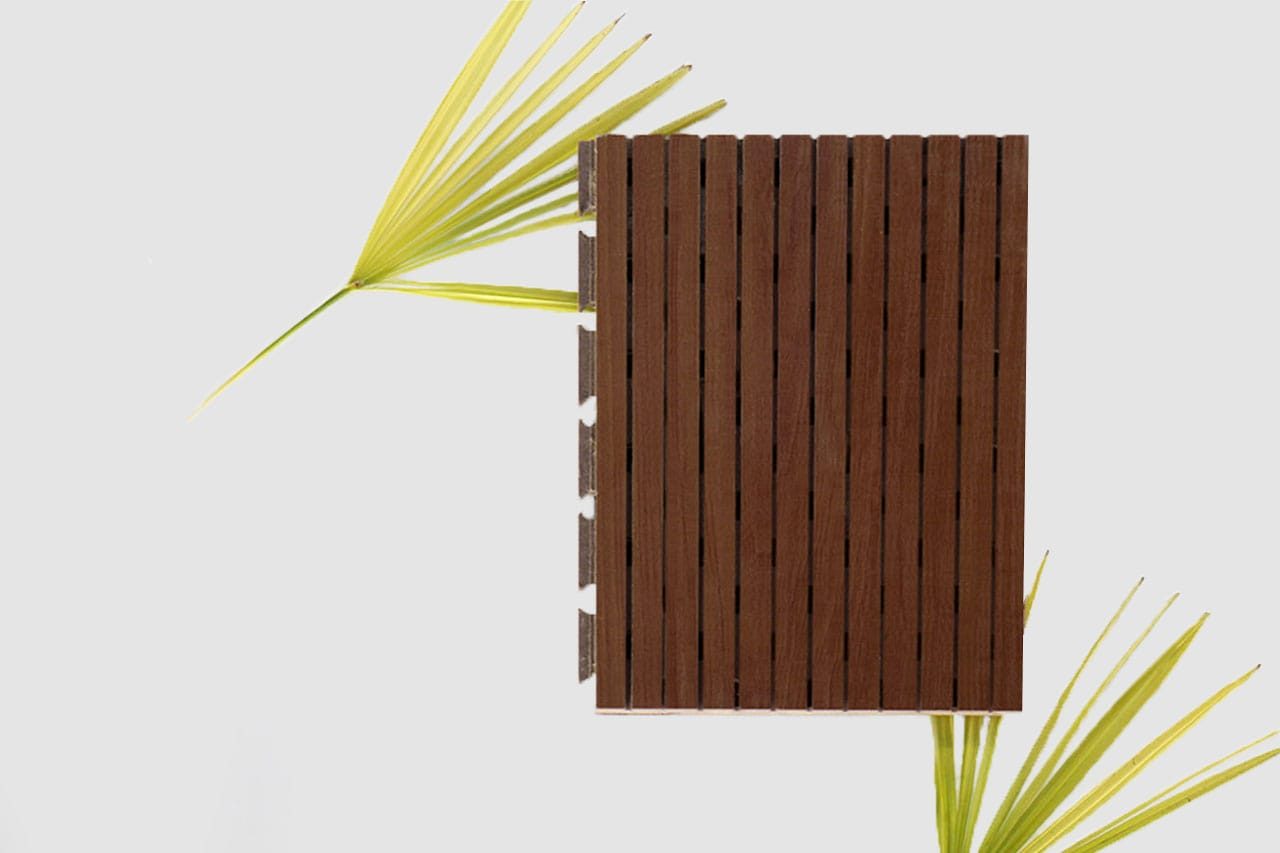
Grooved

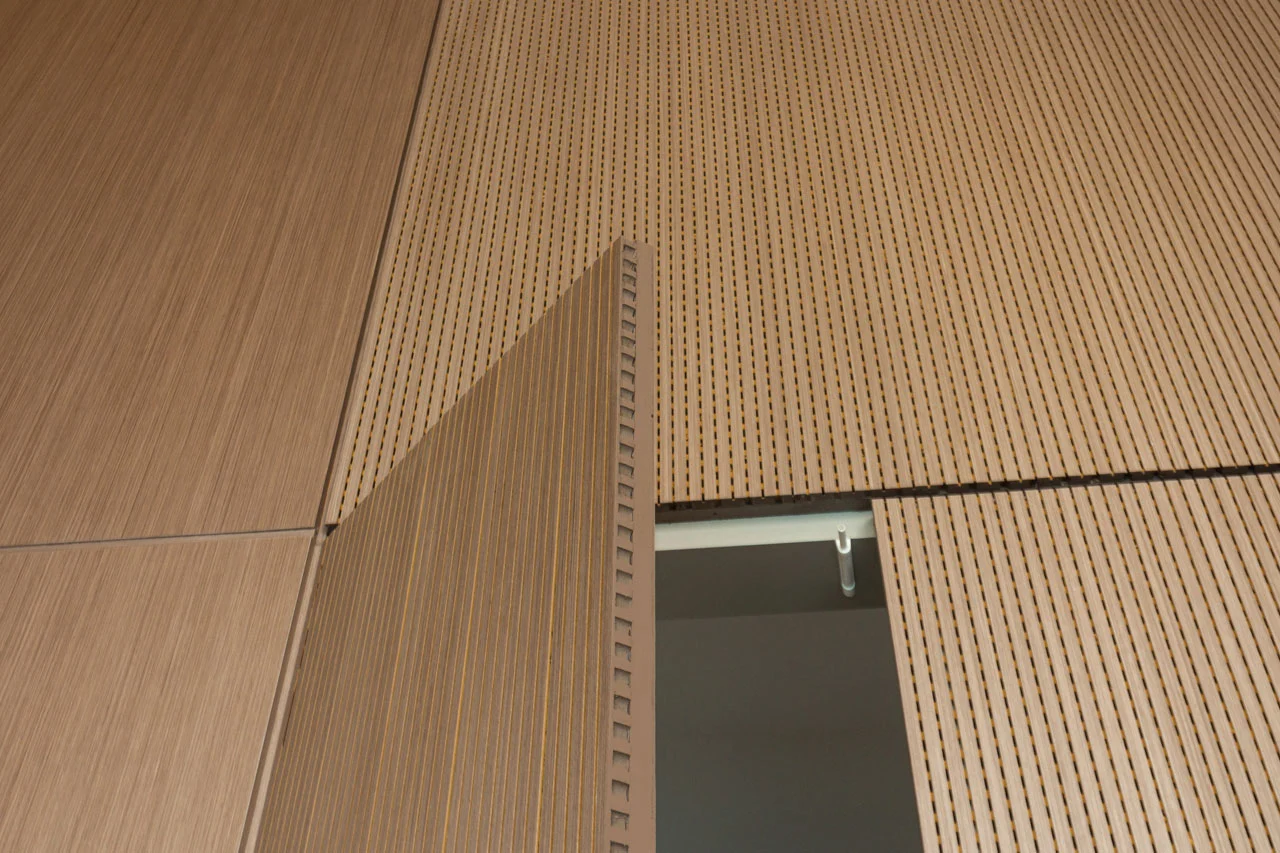
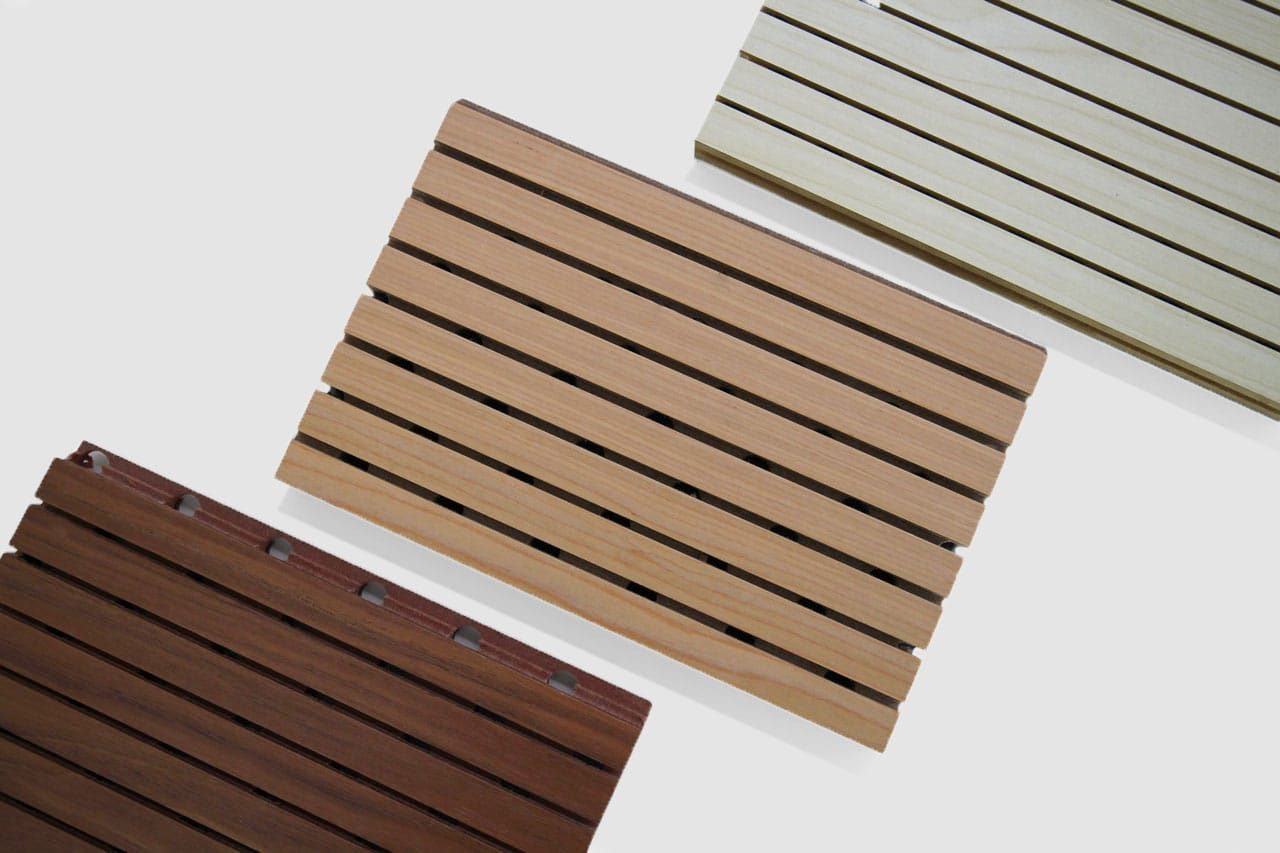
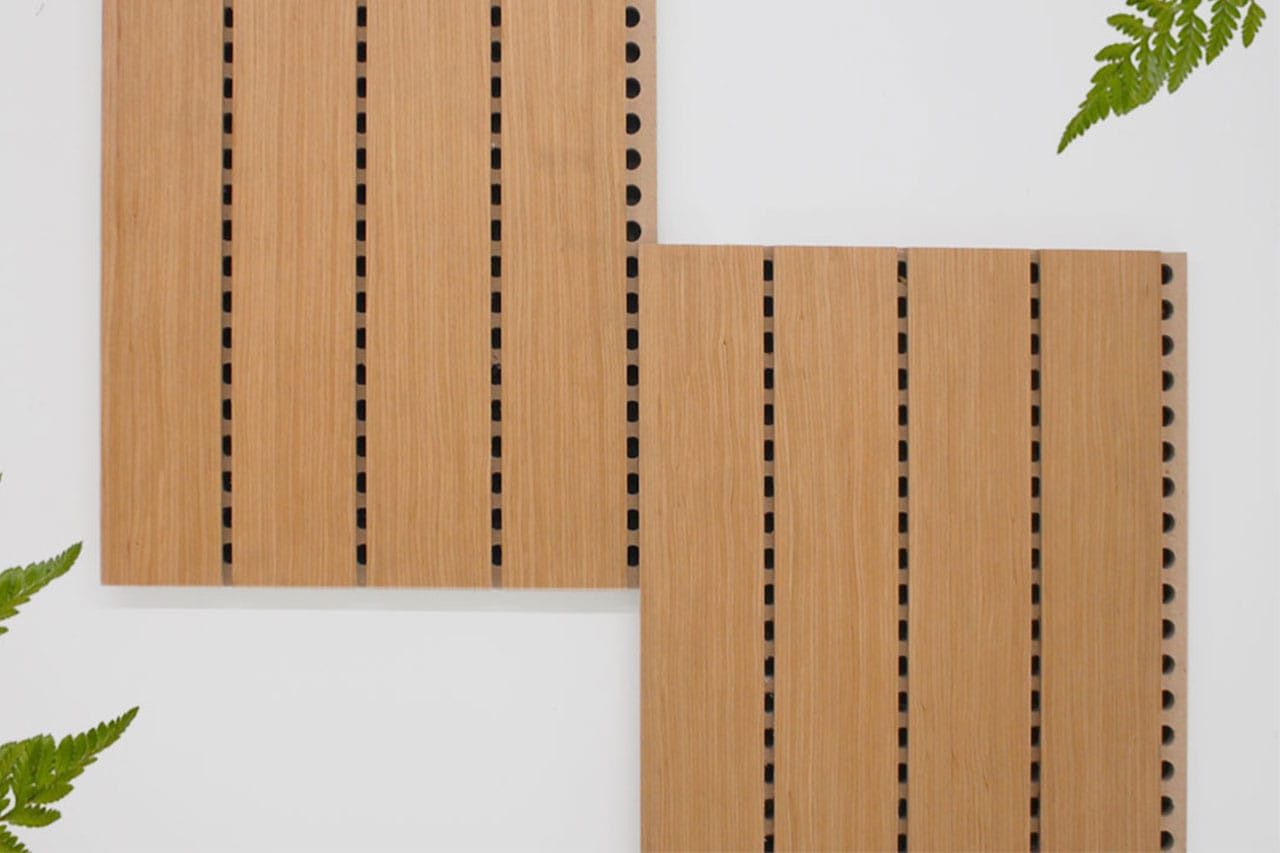
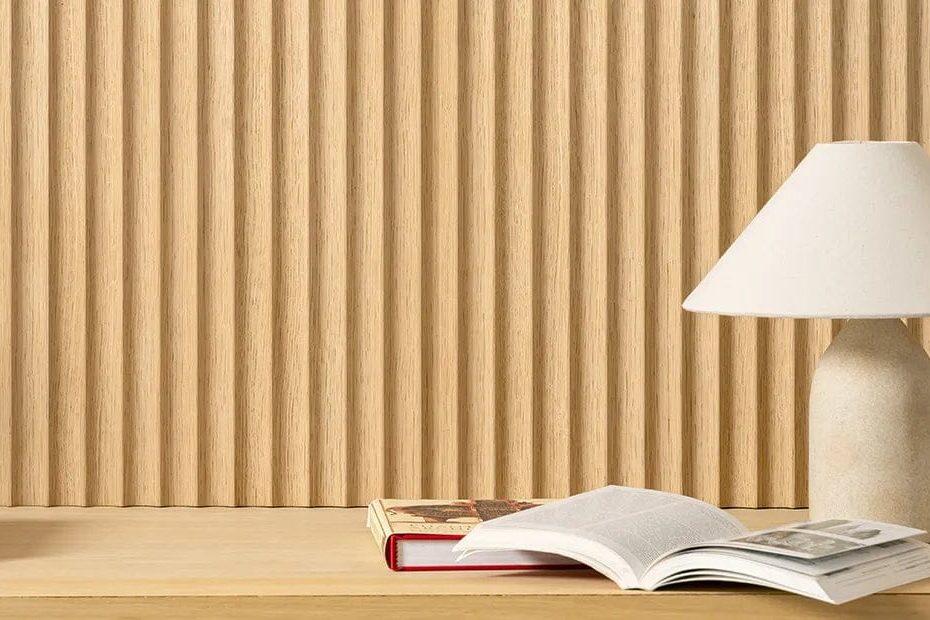
Timberix™ Grooved acoustic panel features slats and grooves with a machined tongue-and-groove joint for seamless joinery.

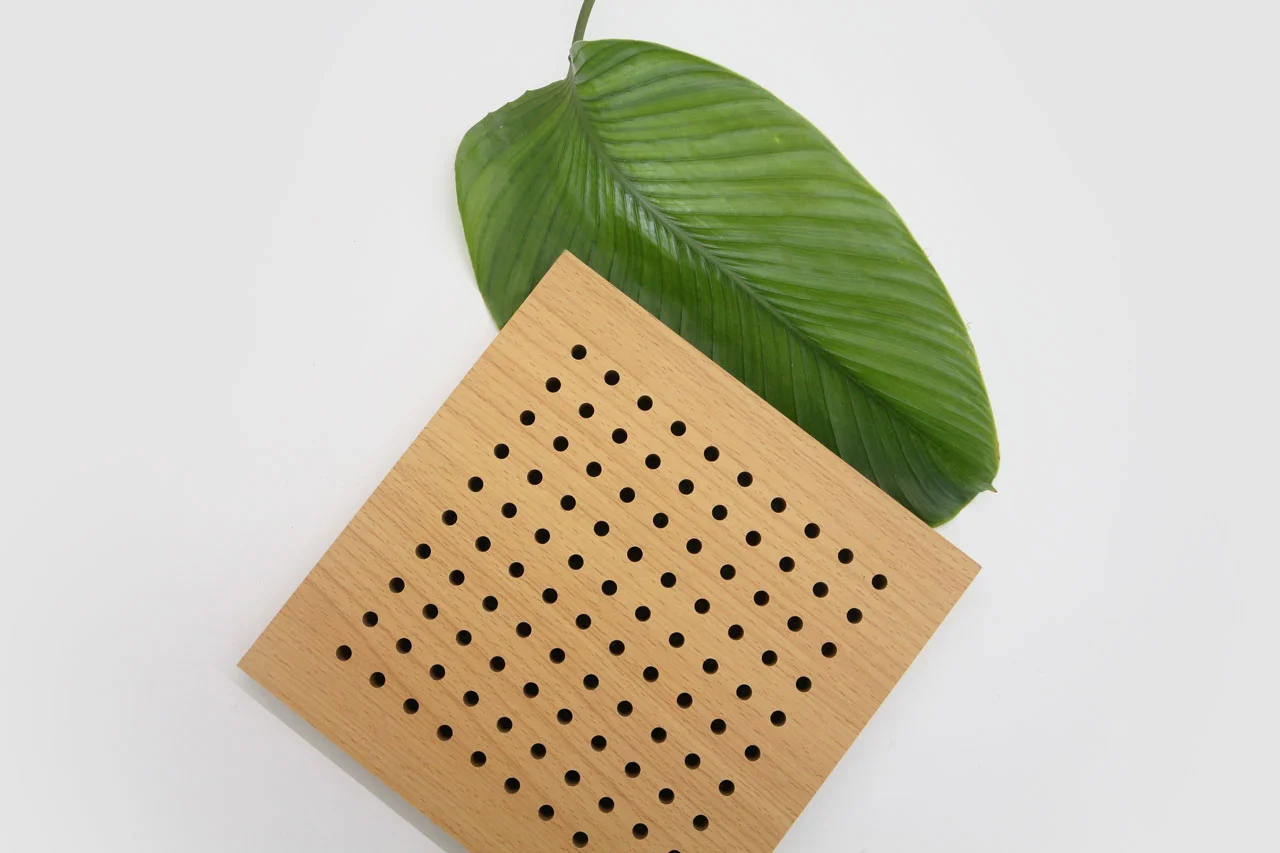
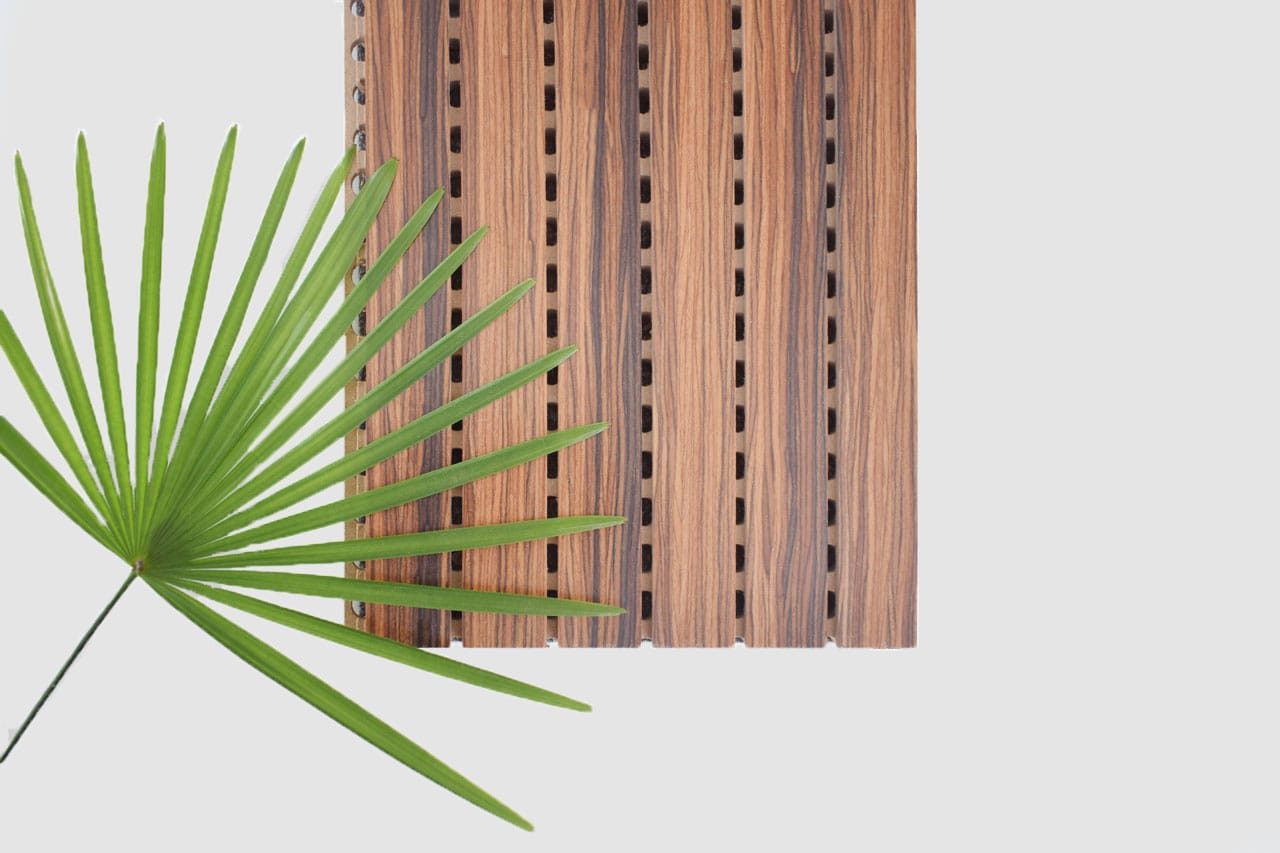
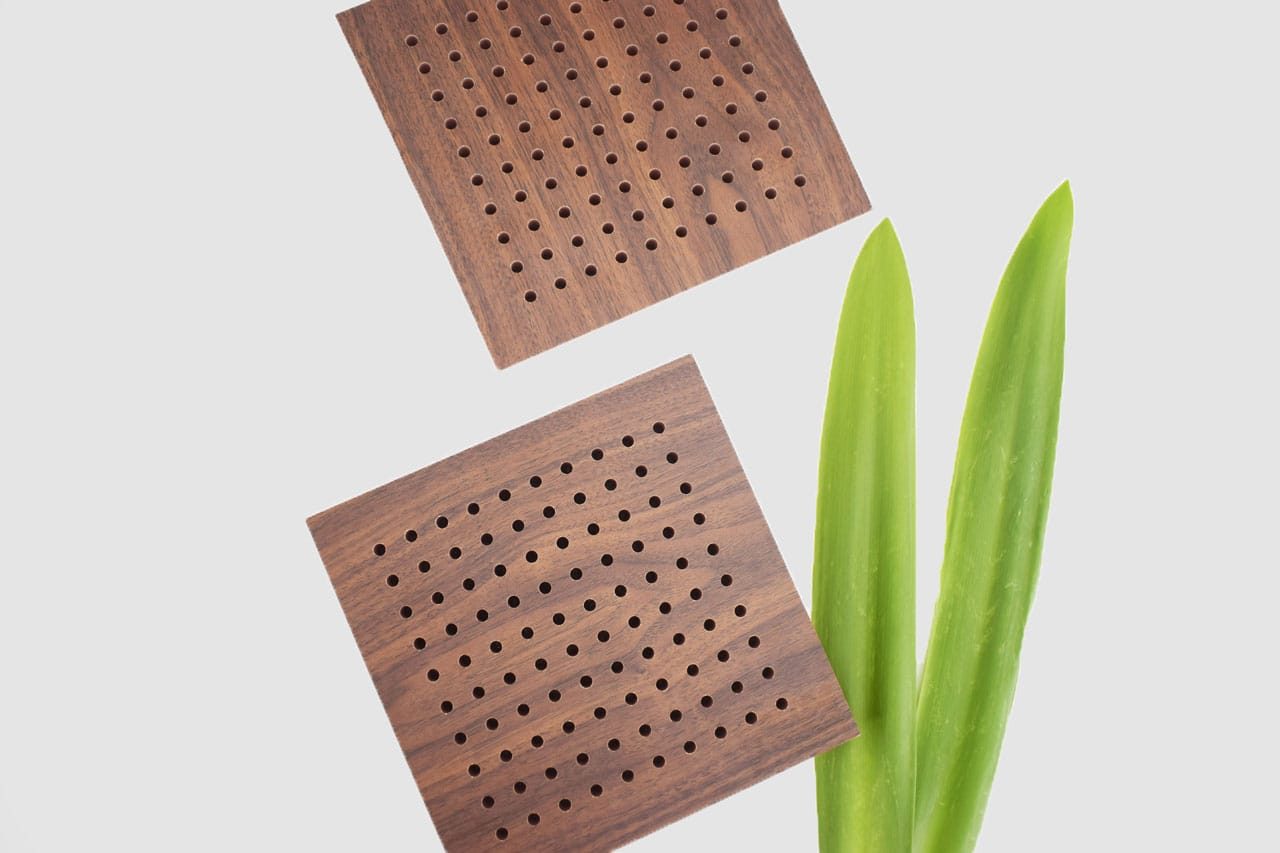
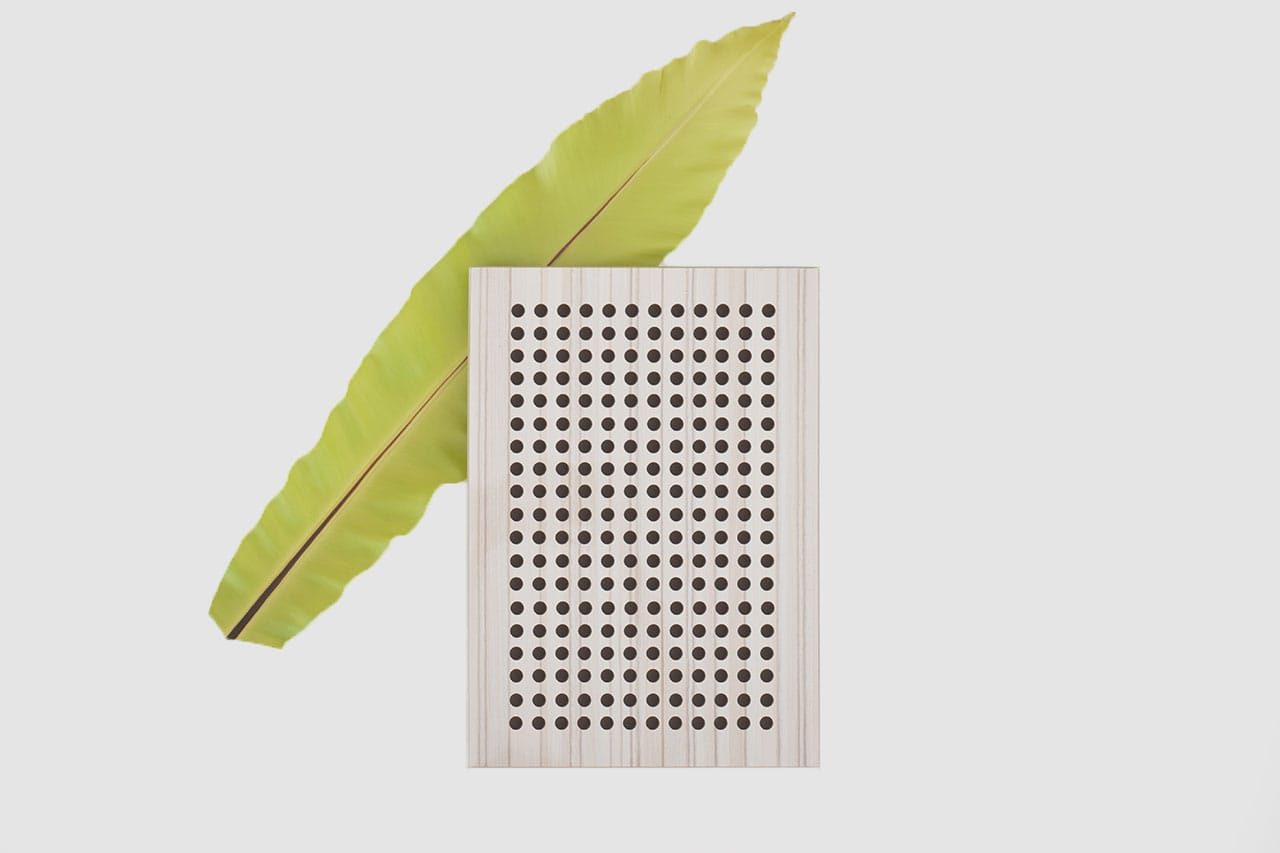
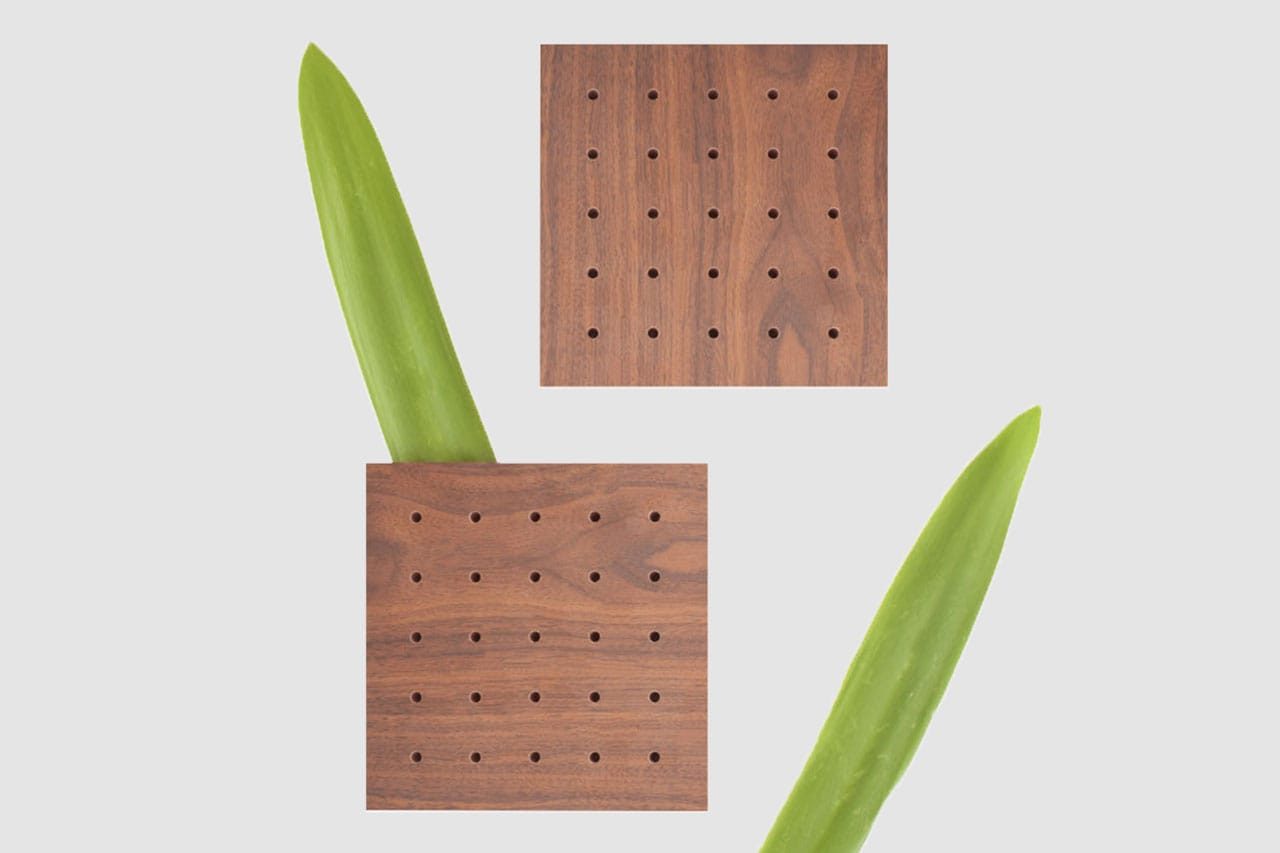
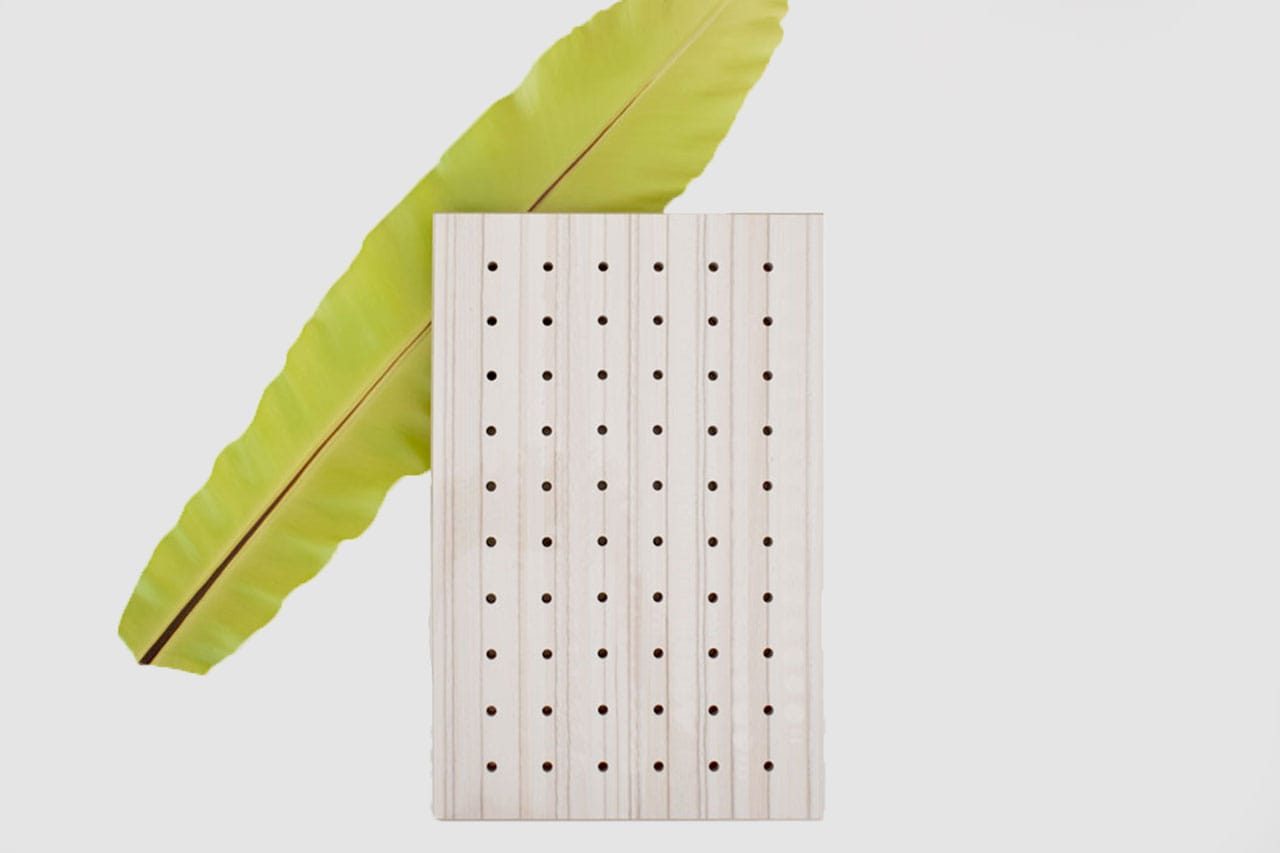
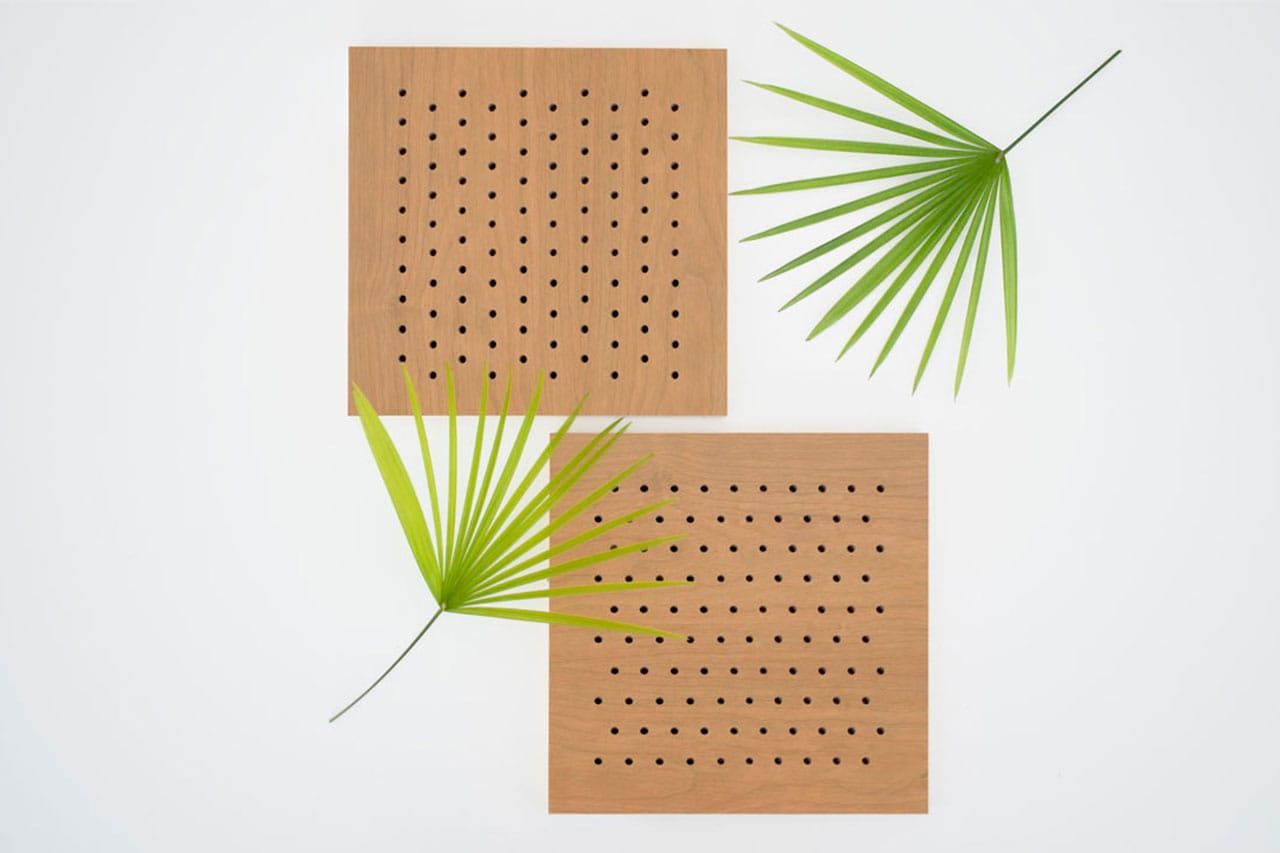
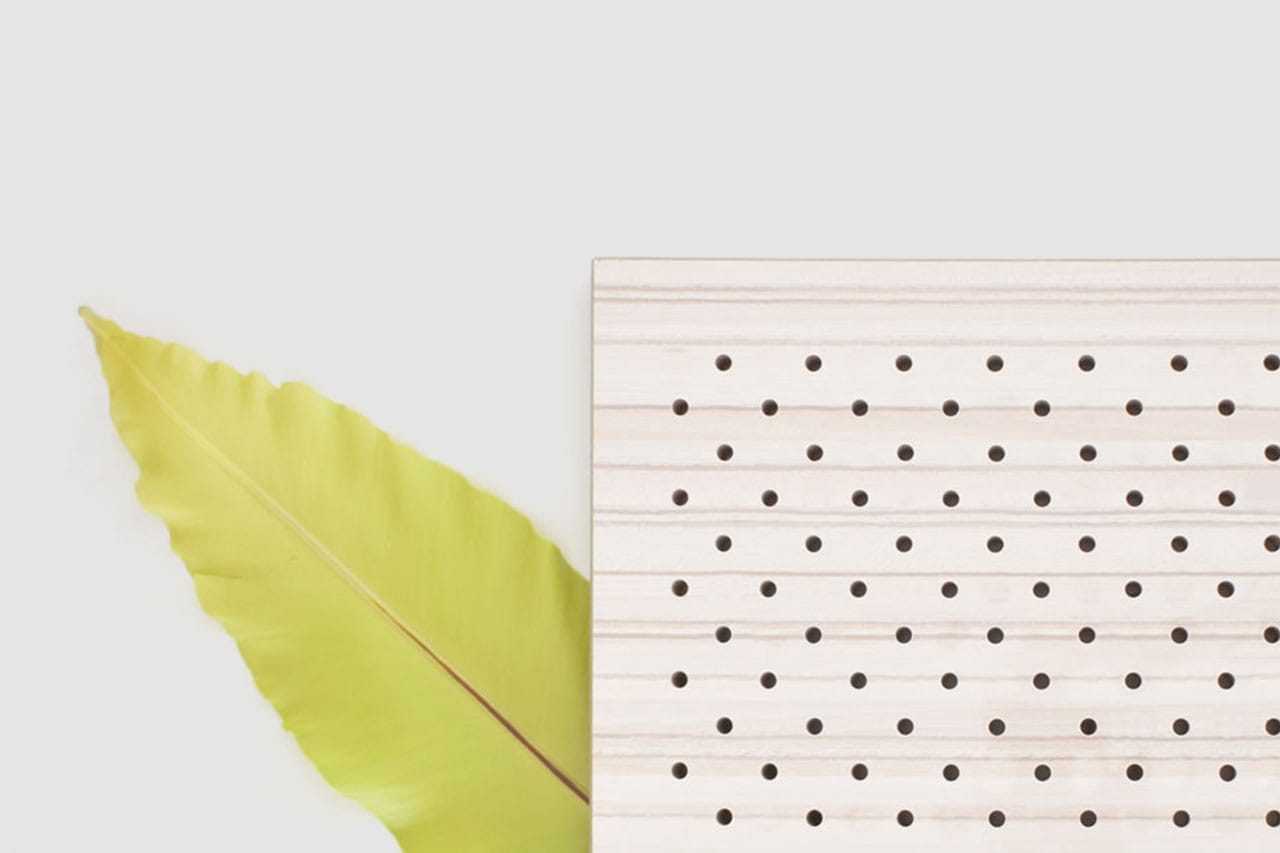
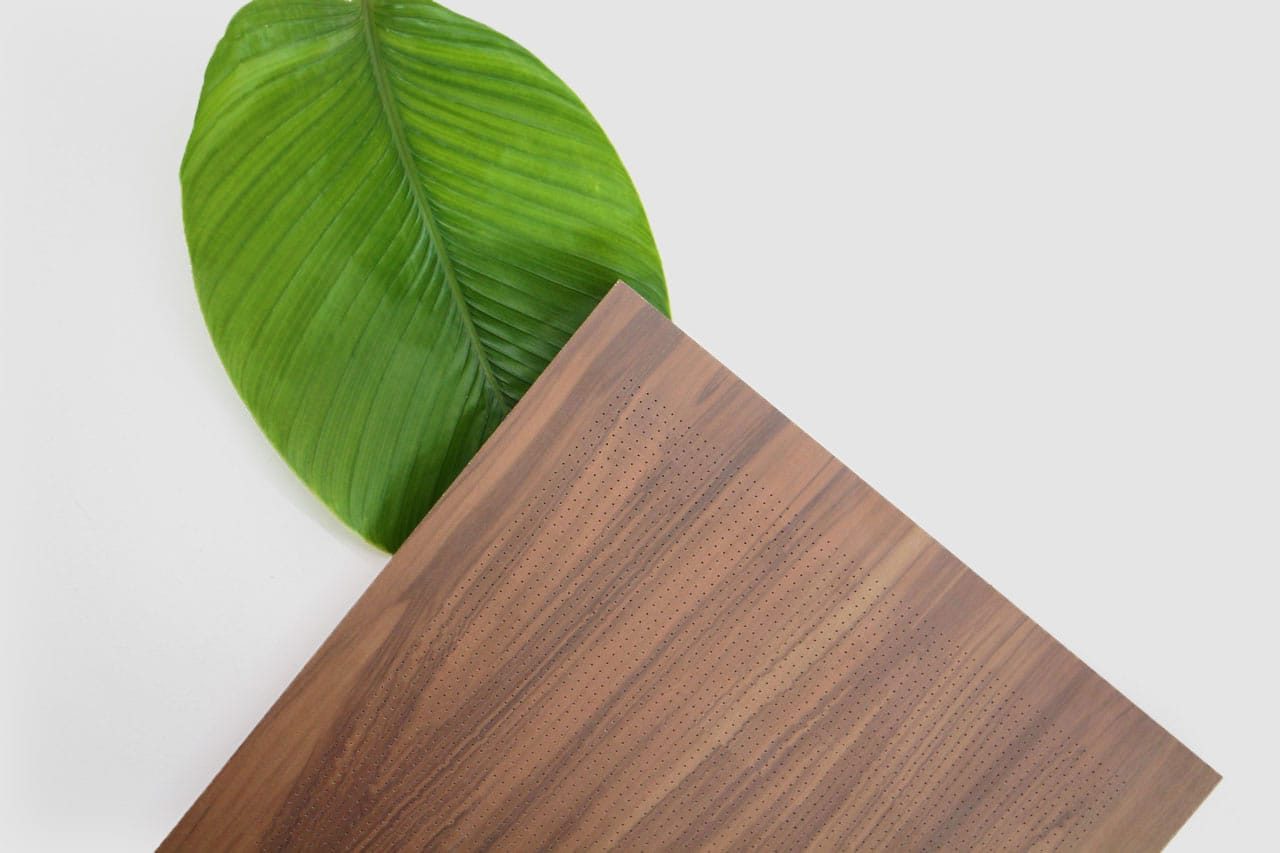
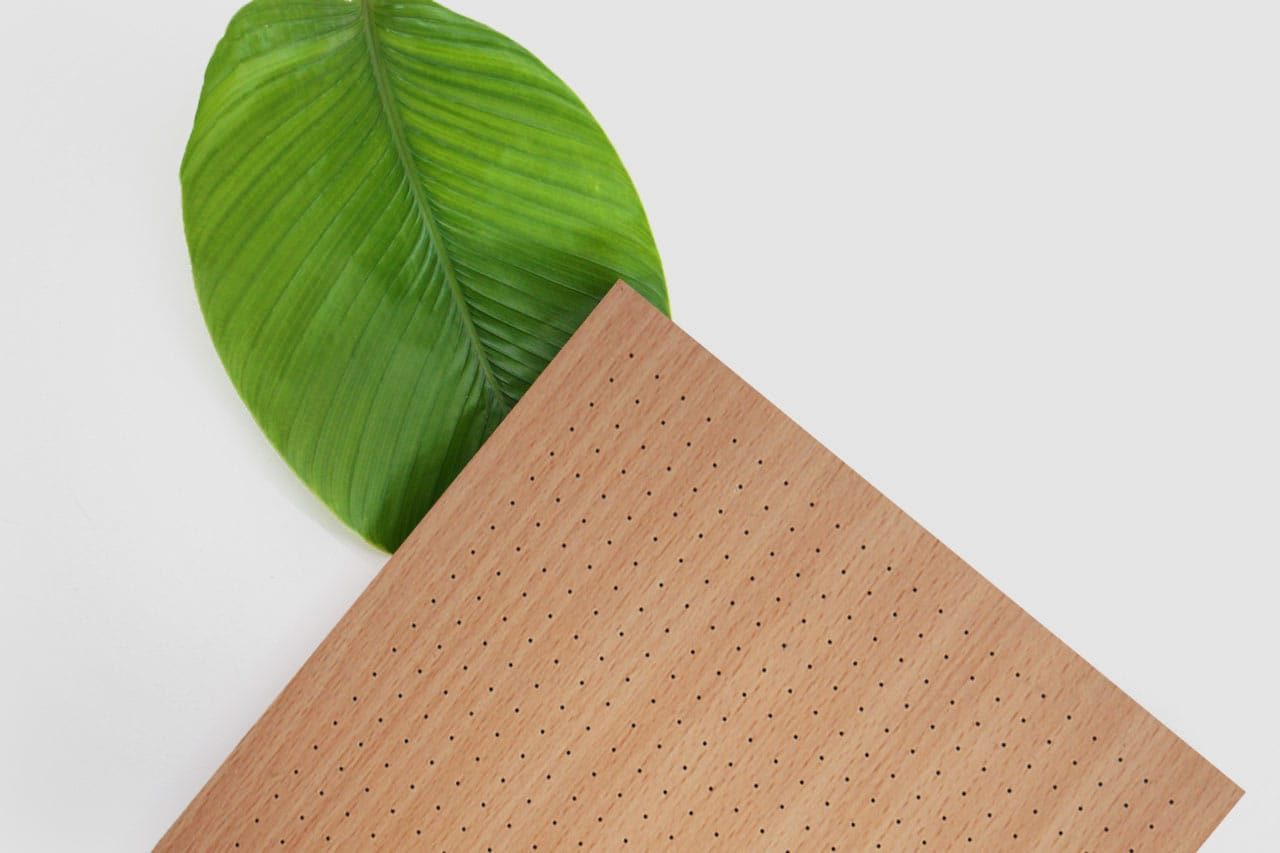
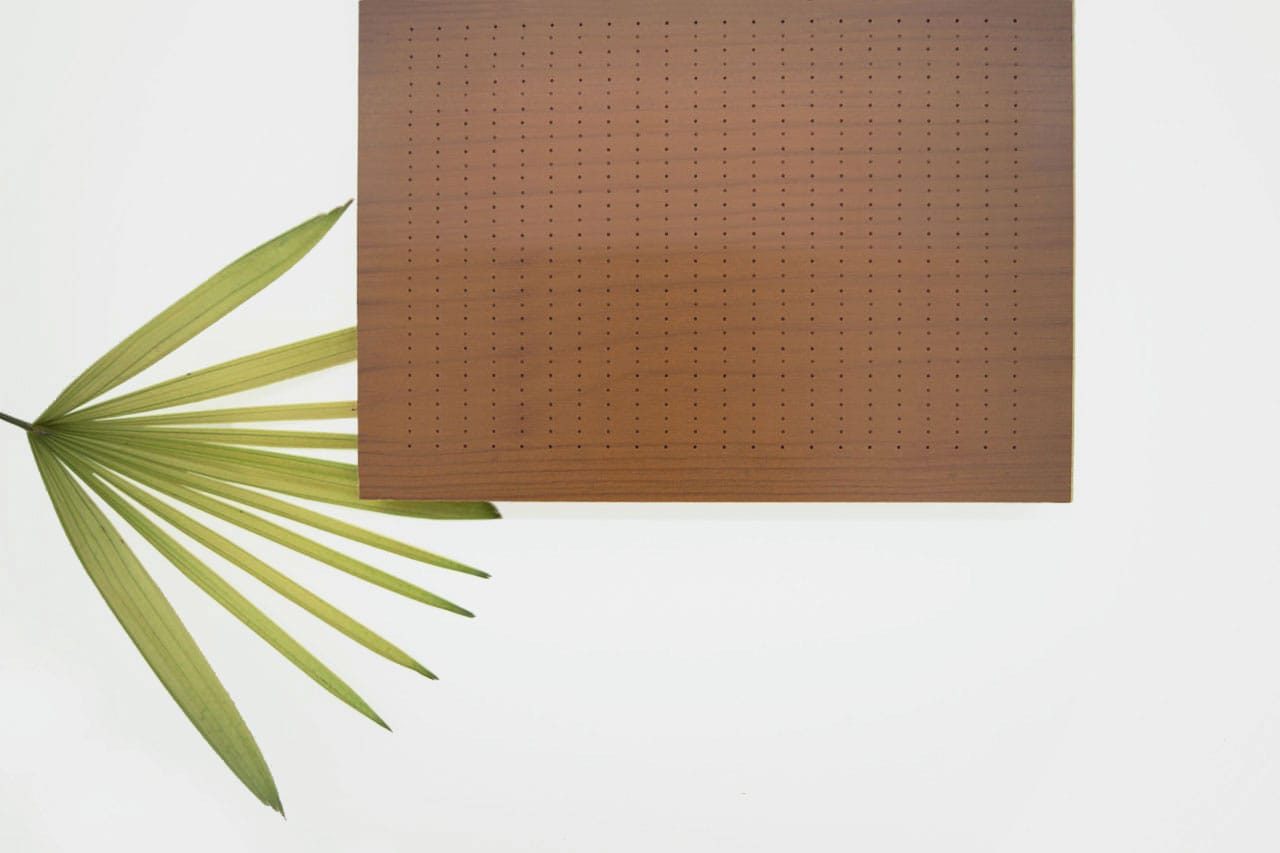
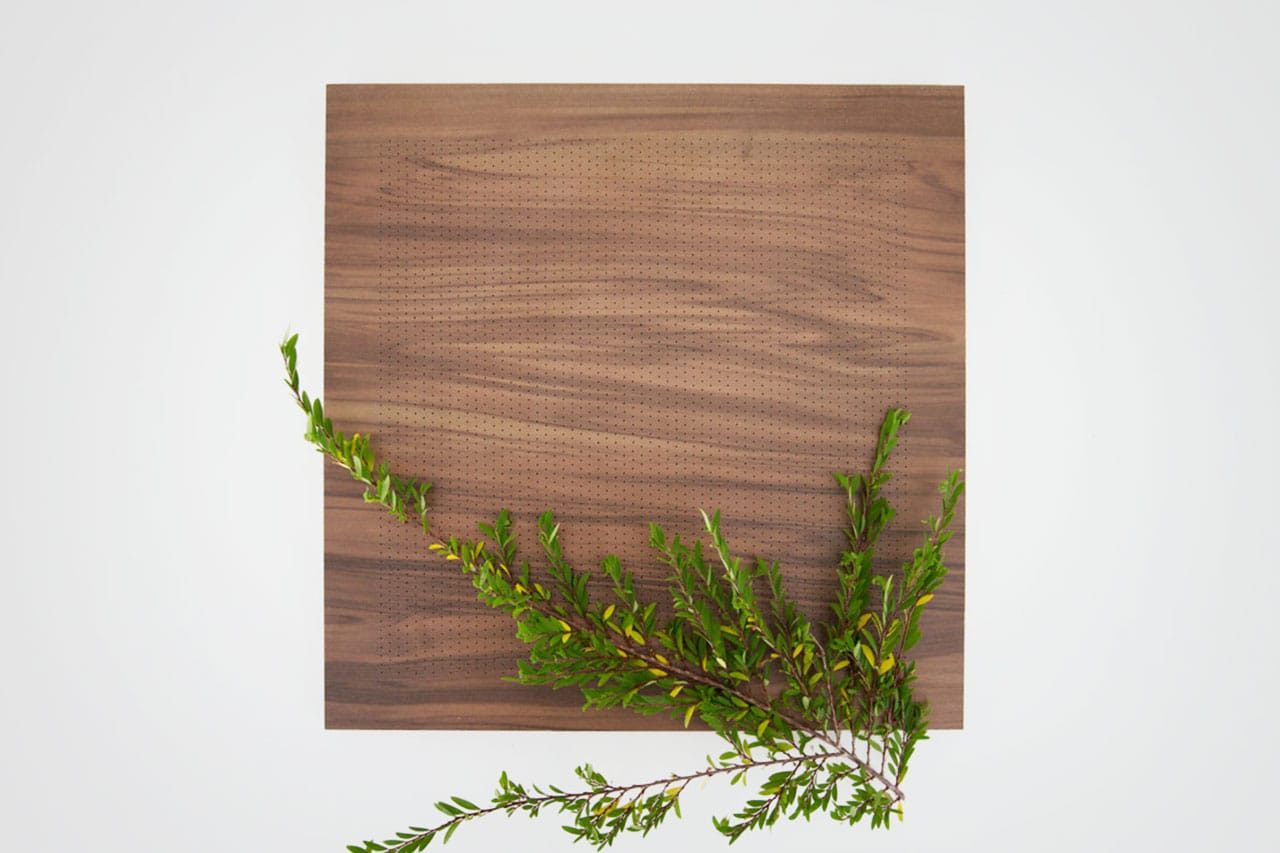
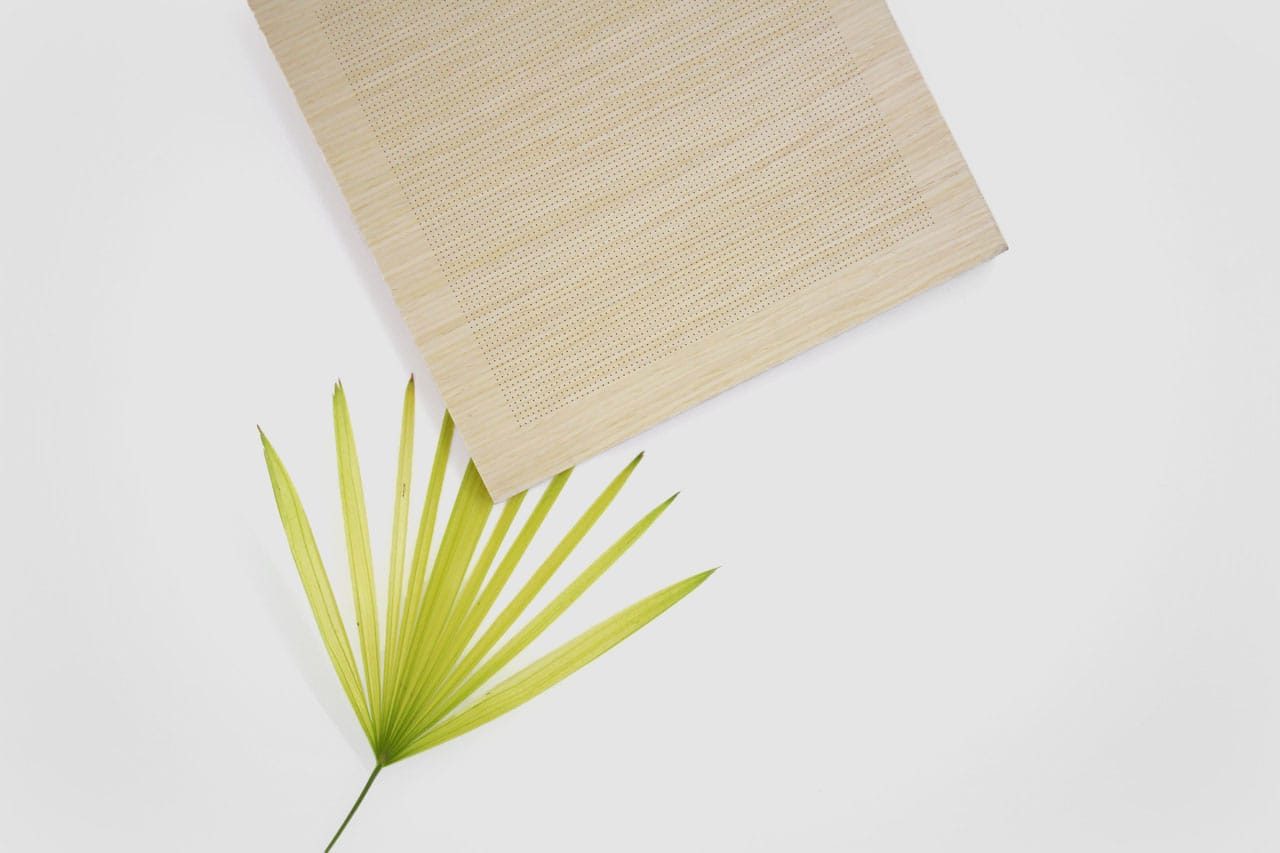
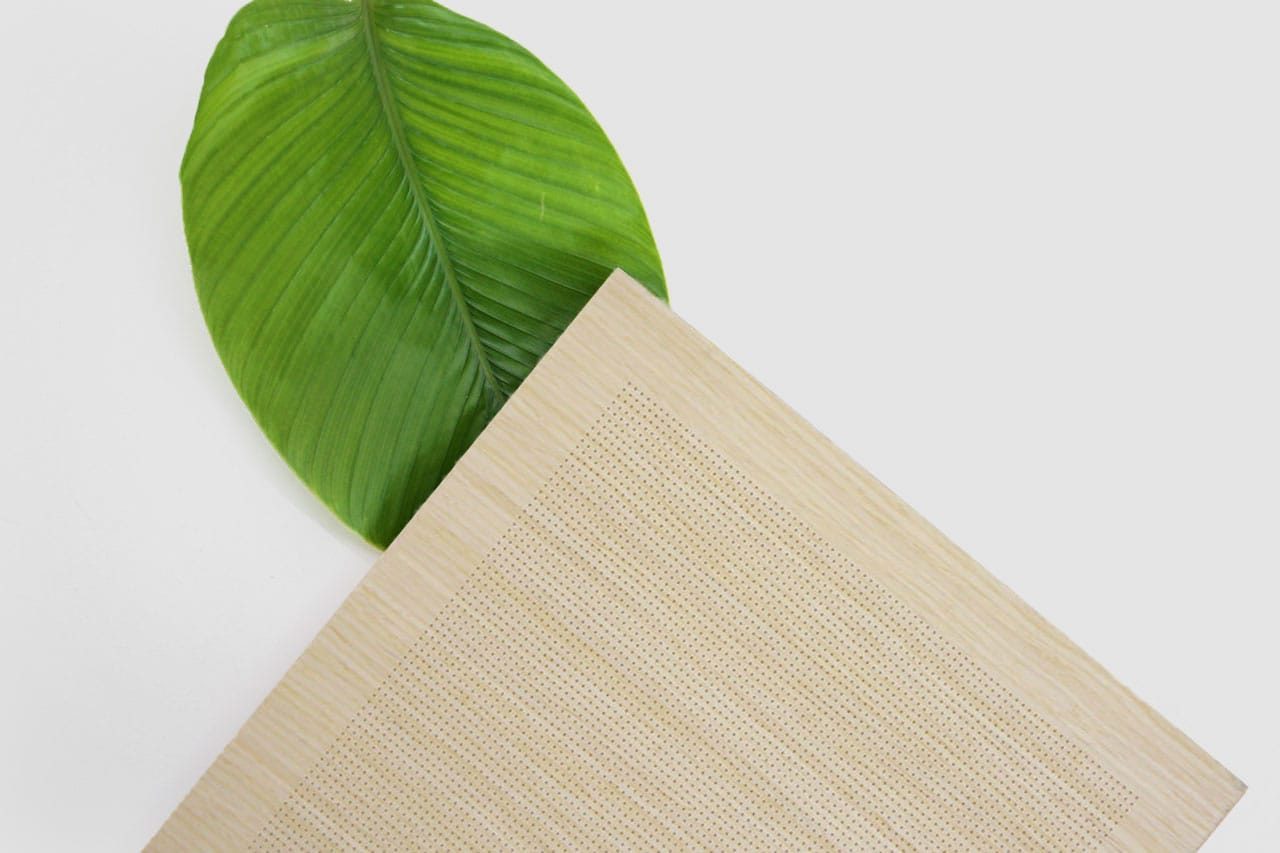
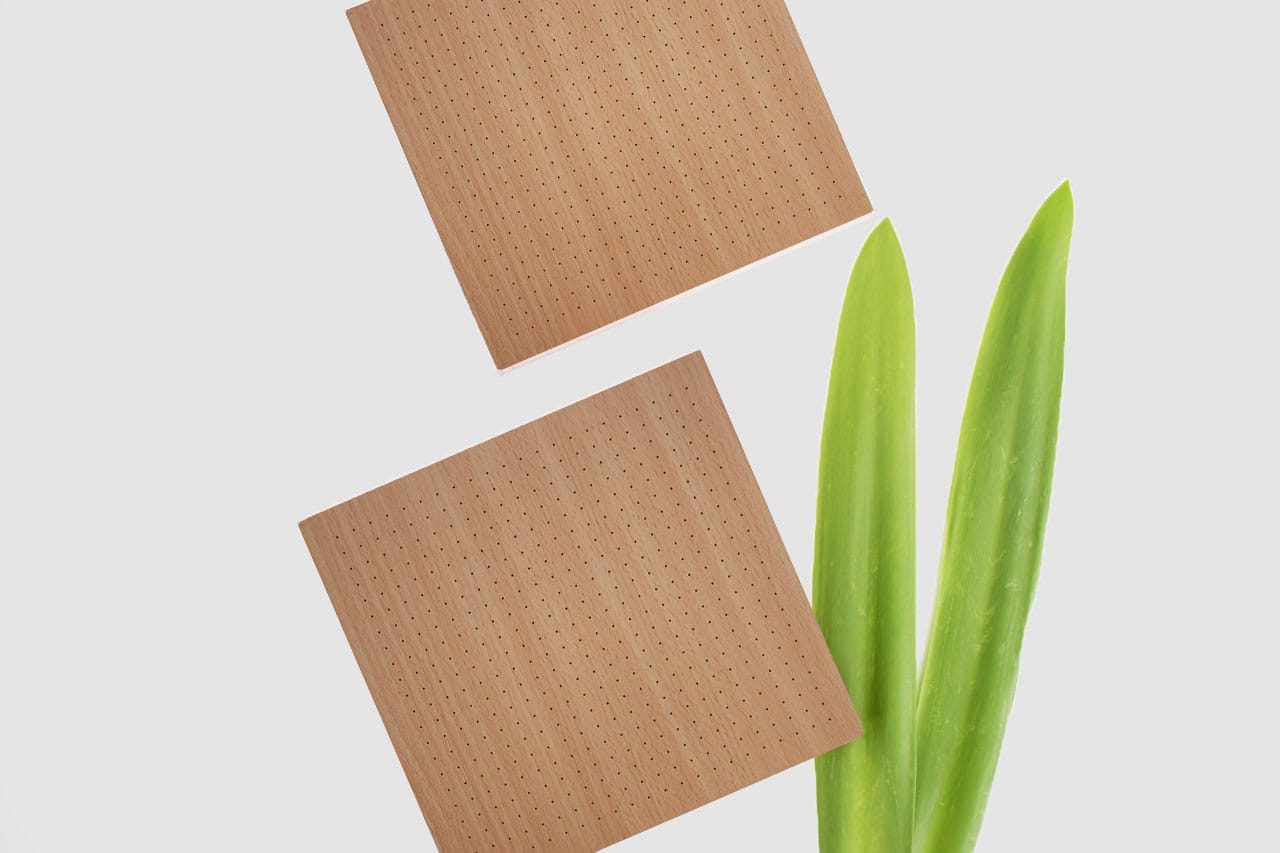
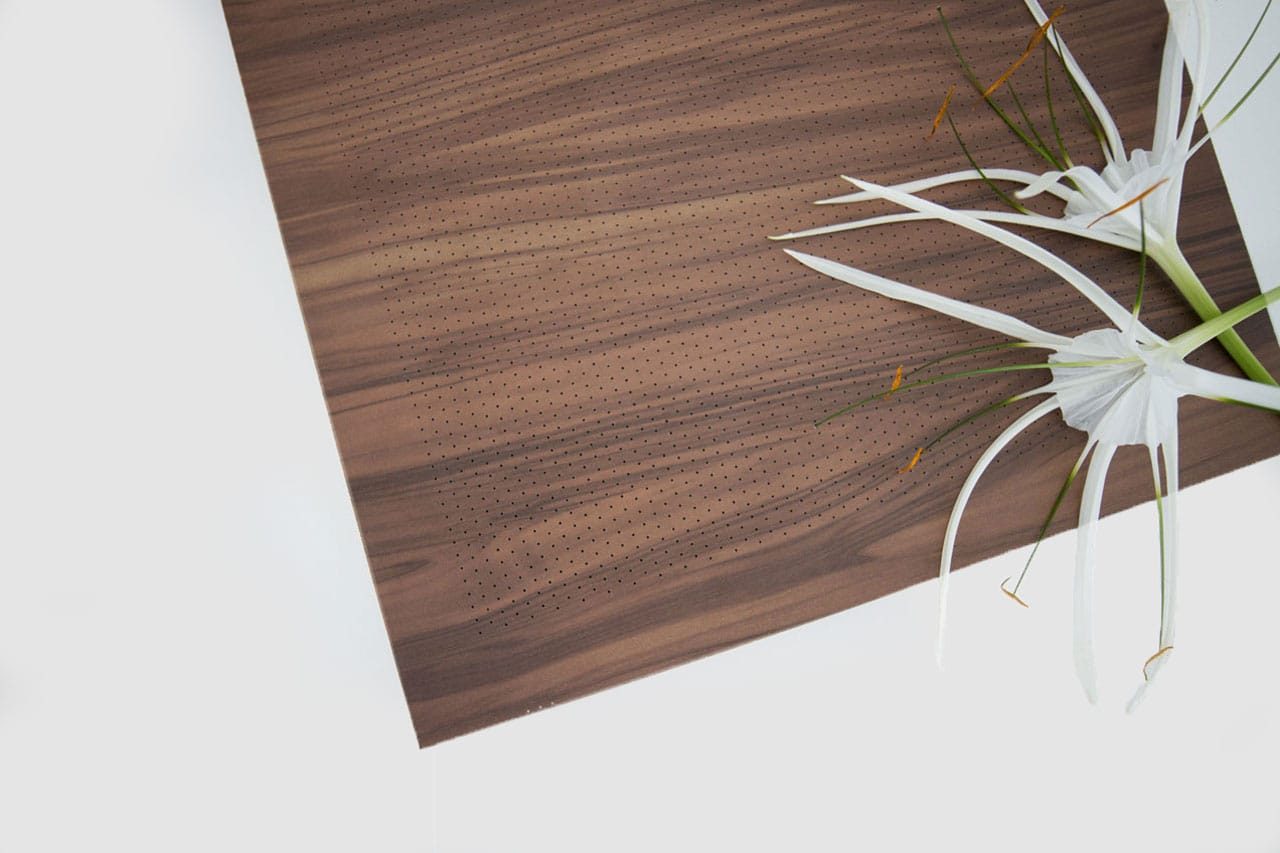
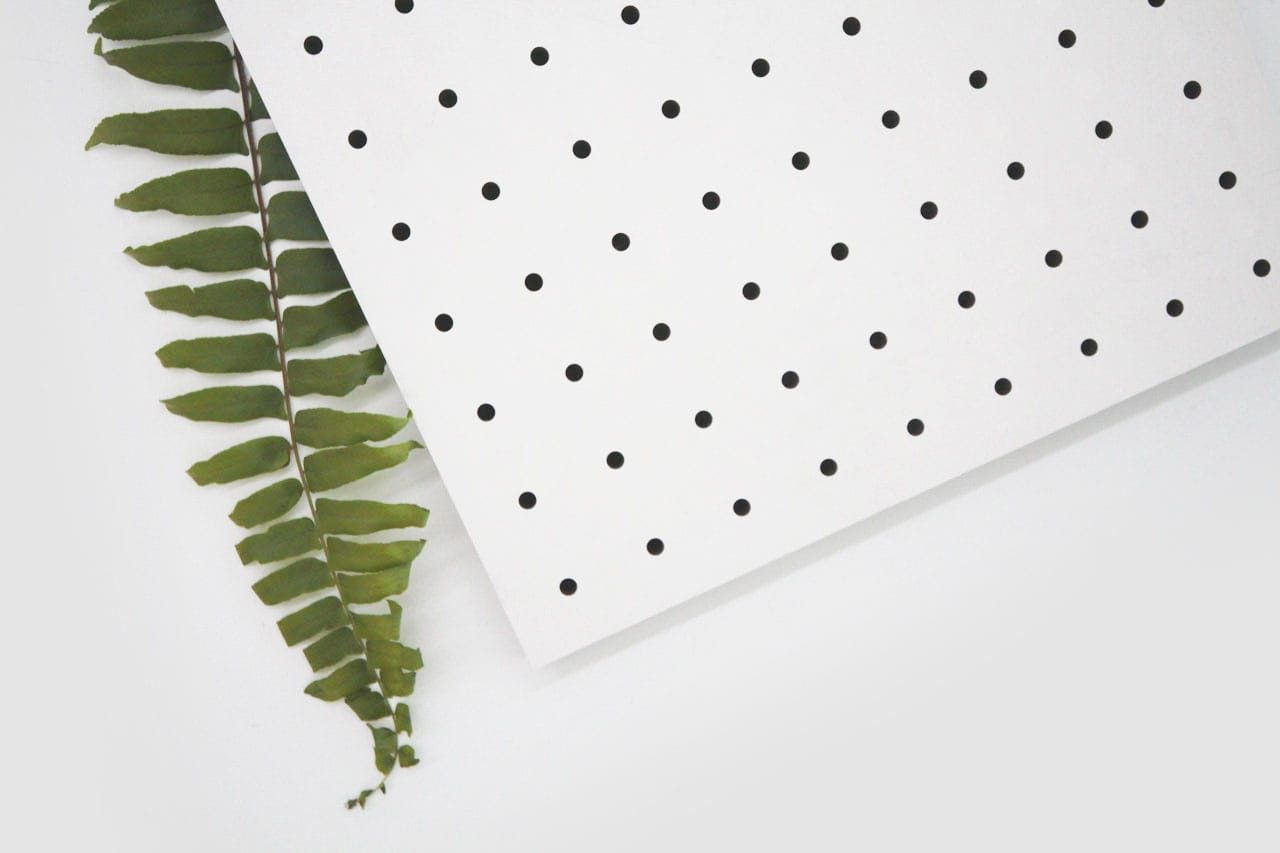
A large green leaf is partially covered by a square wooden board with evenly spaced small round holes, all set against a plain white background.

Perforated

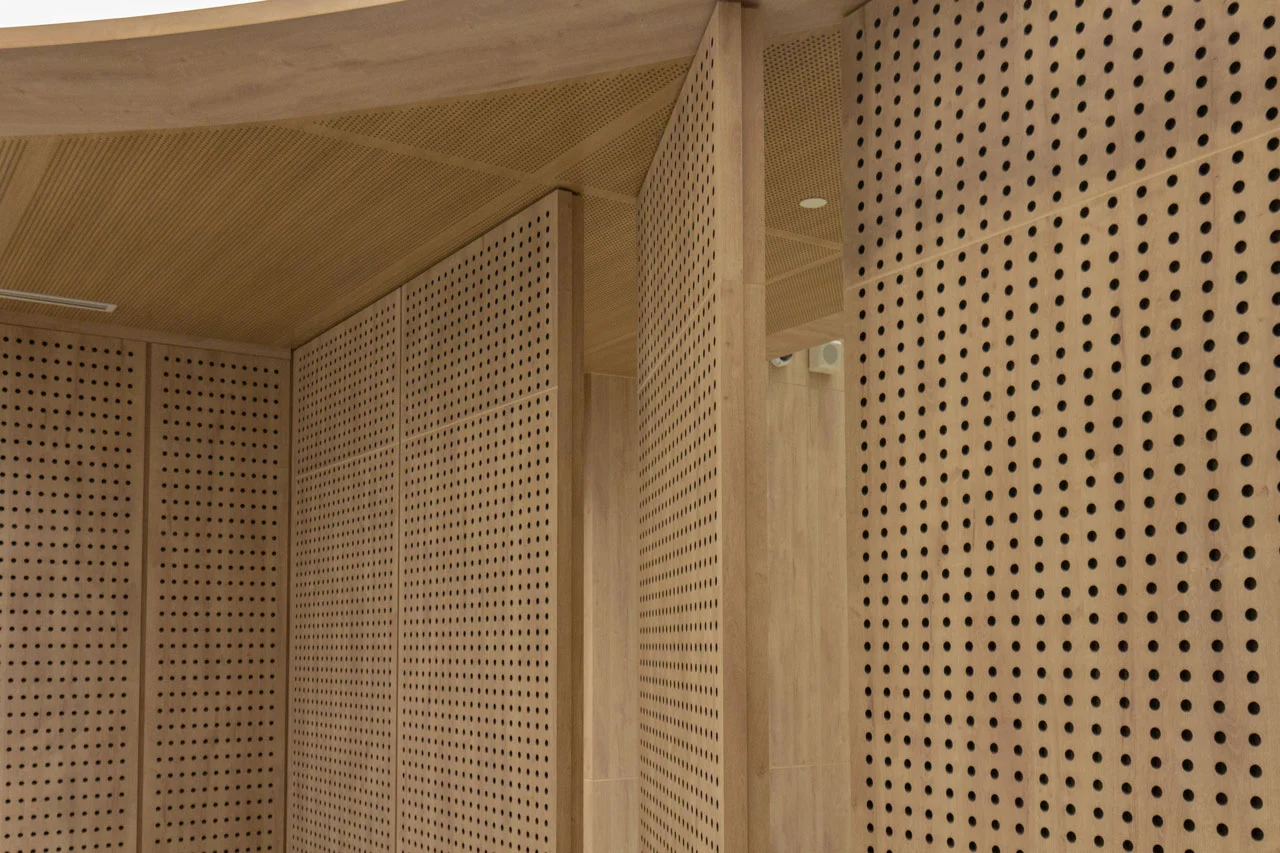
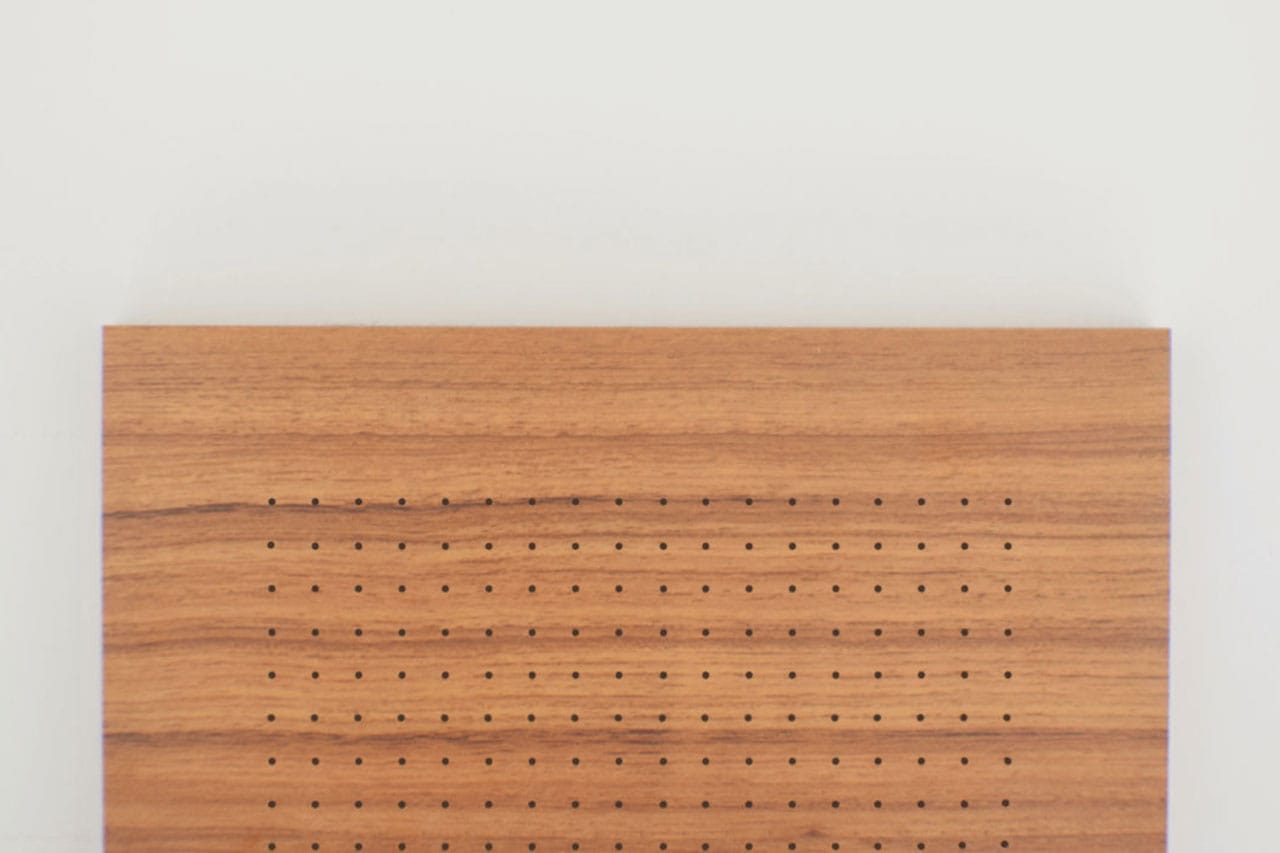
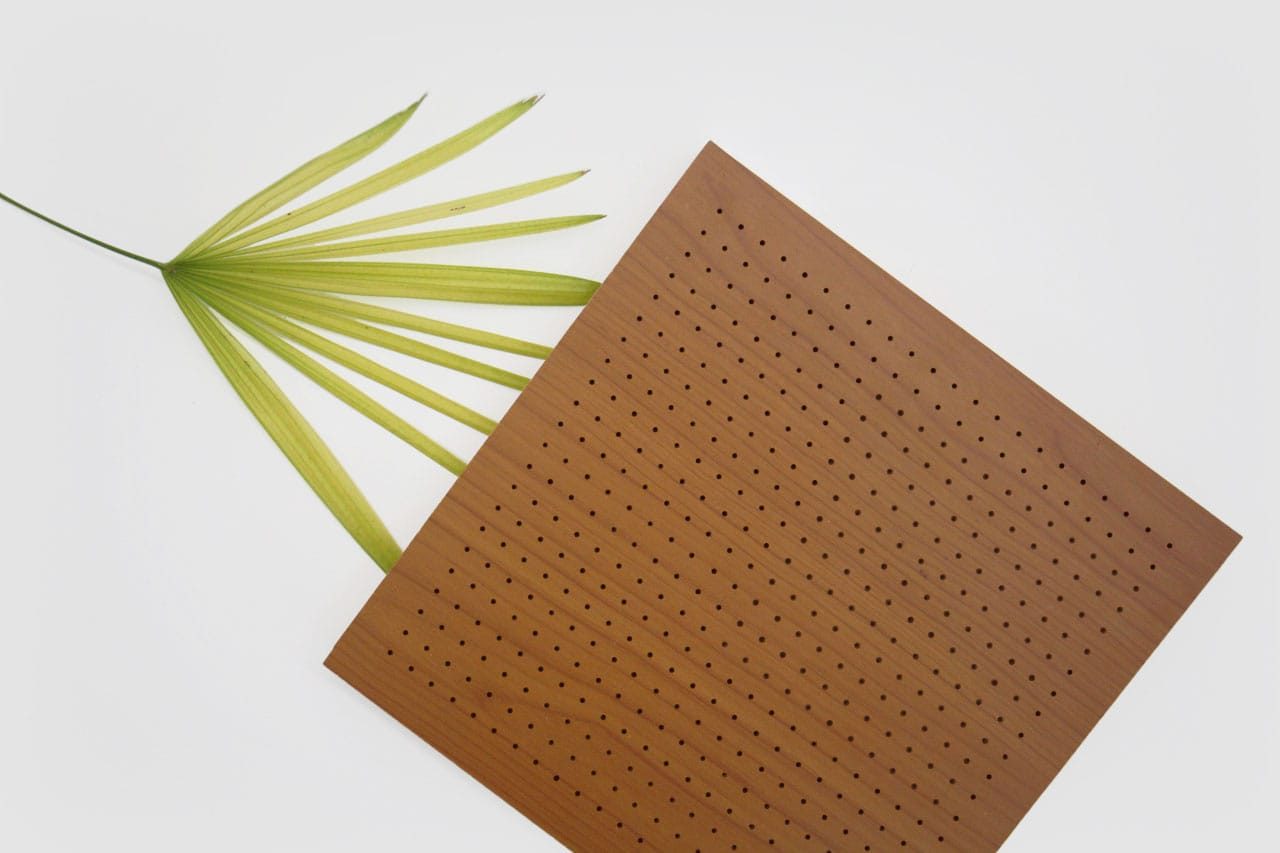
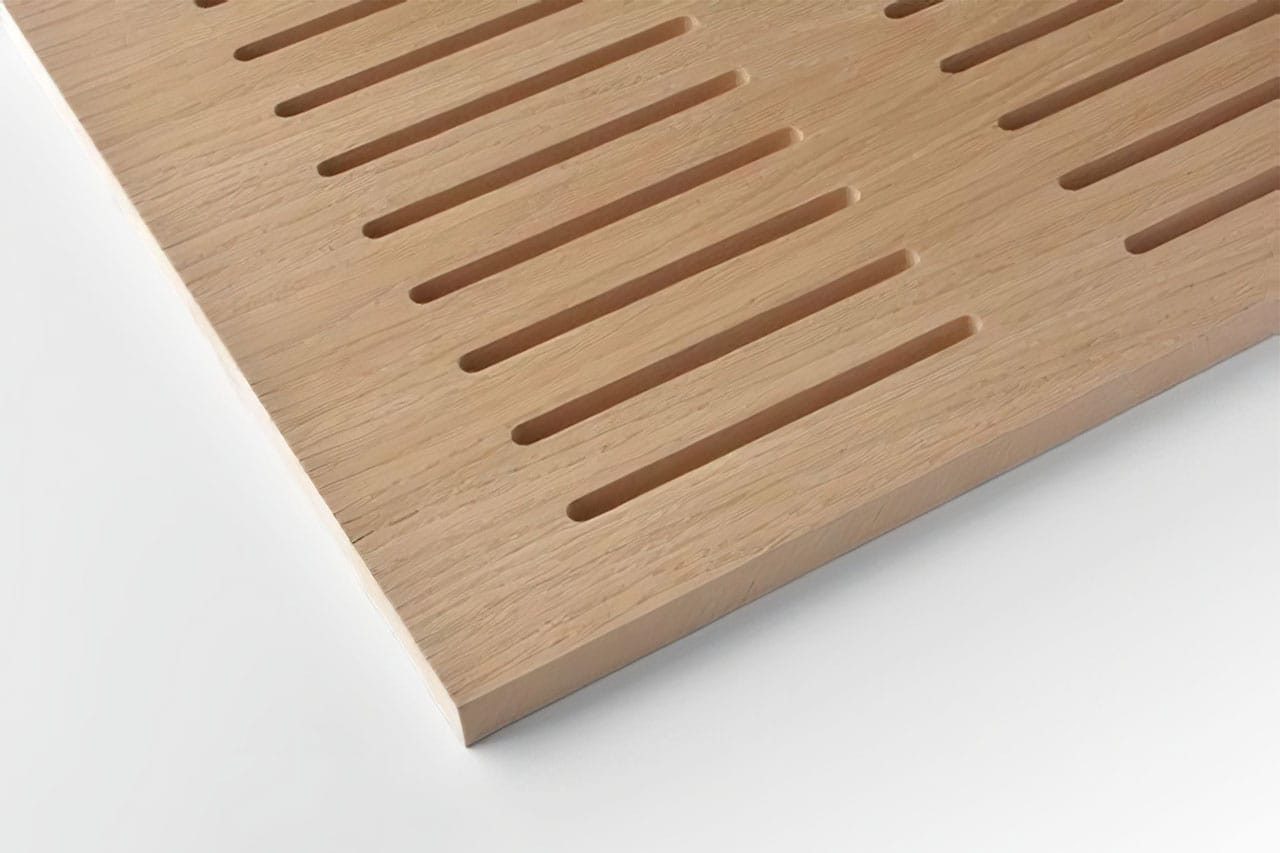
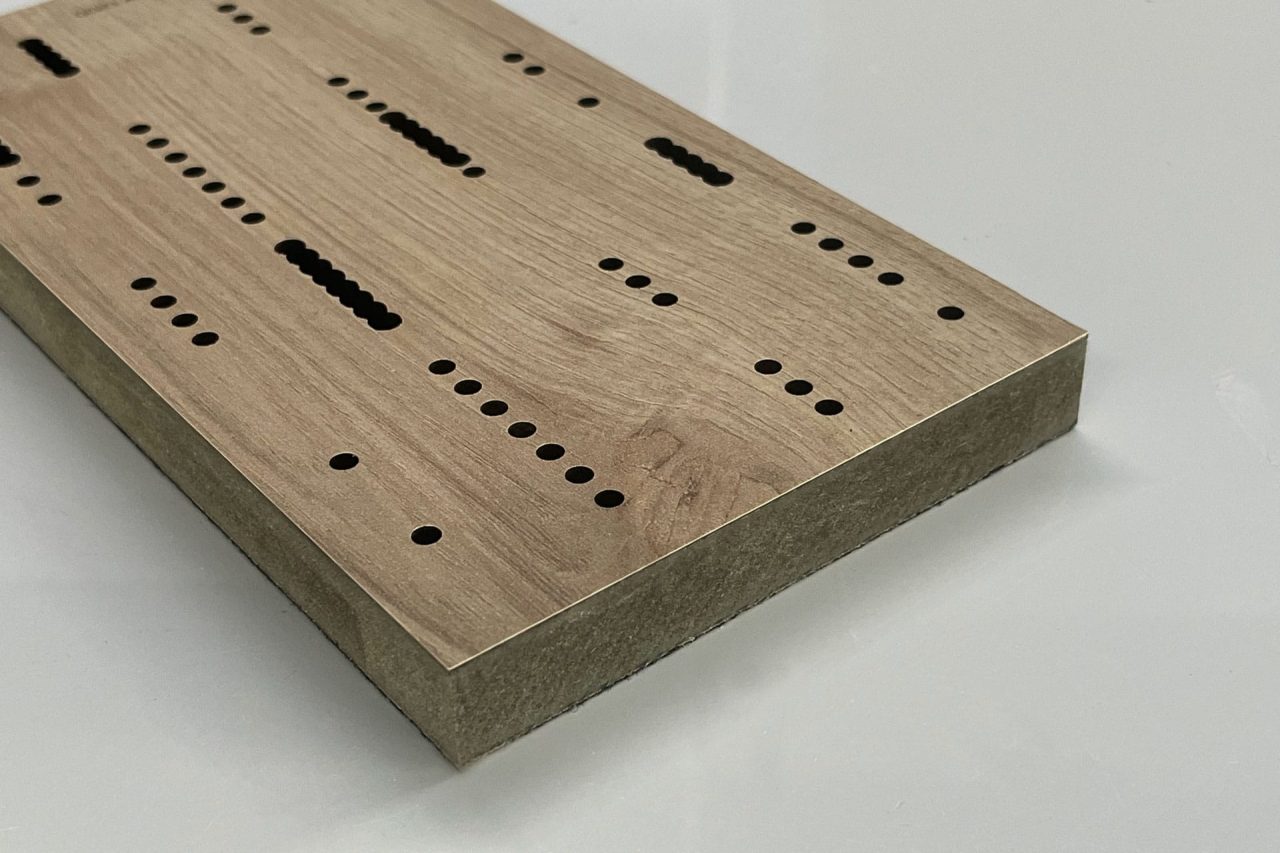
Timberix™ Perforated panels feature a 2-layer perforation to trap and diffuse sound for enhanced acoustic performance.

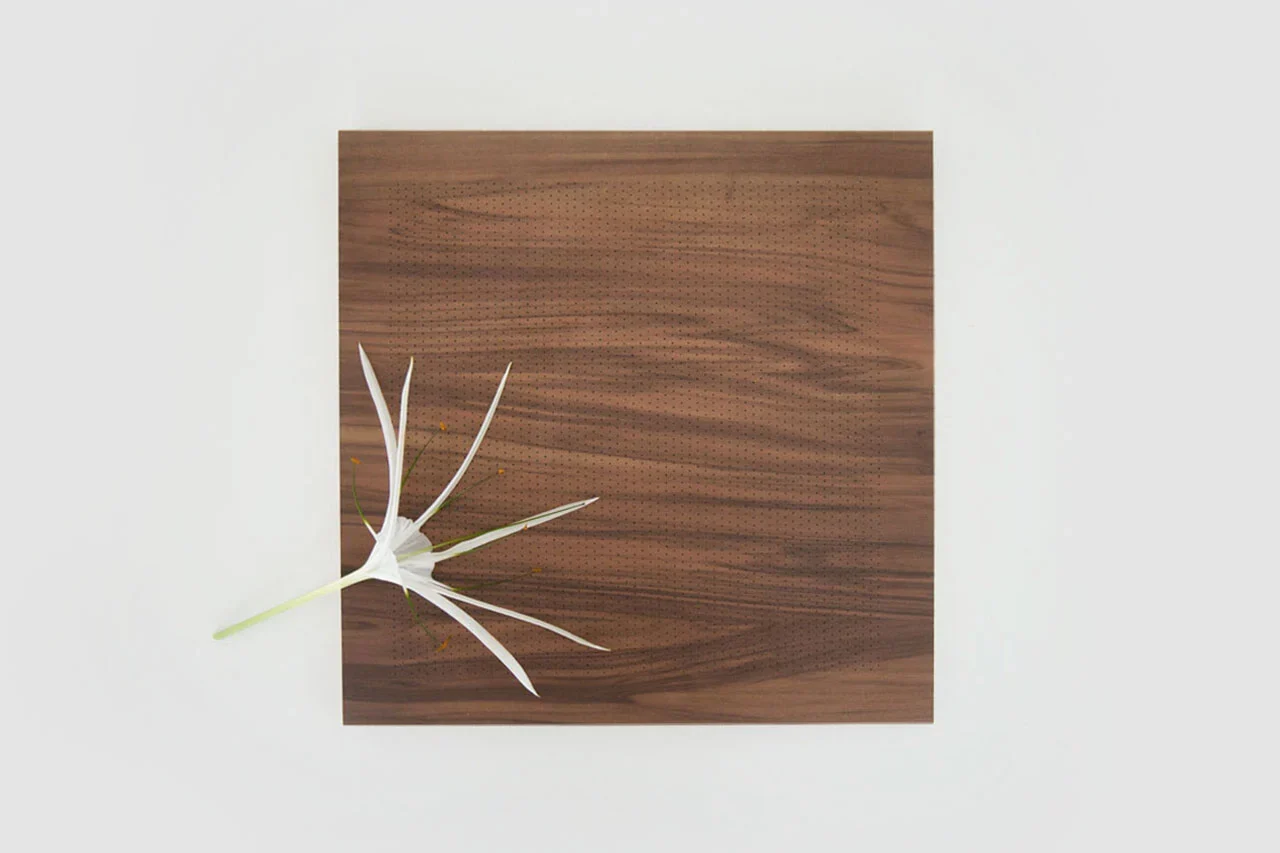
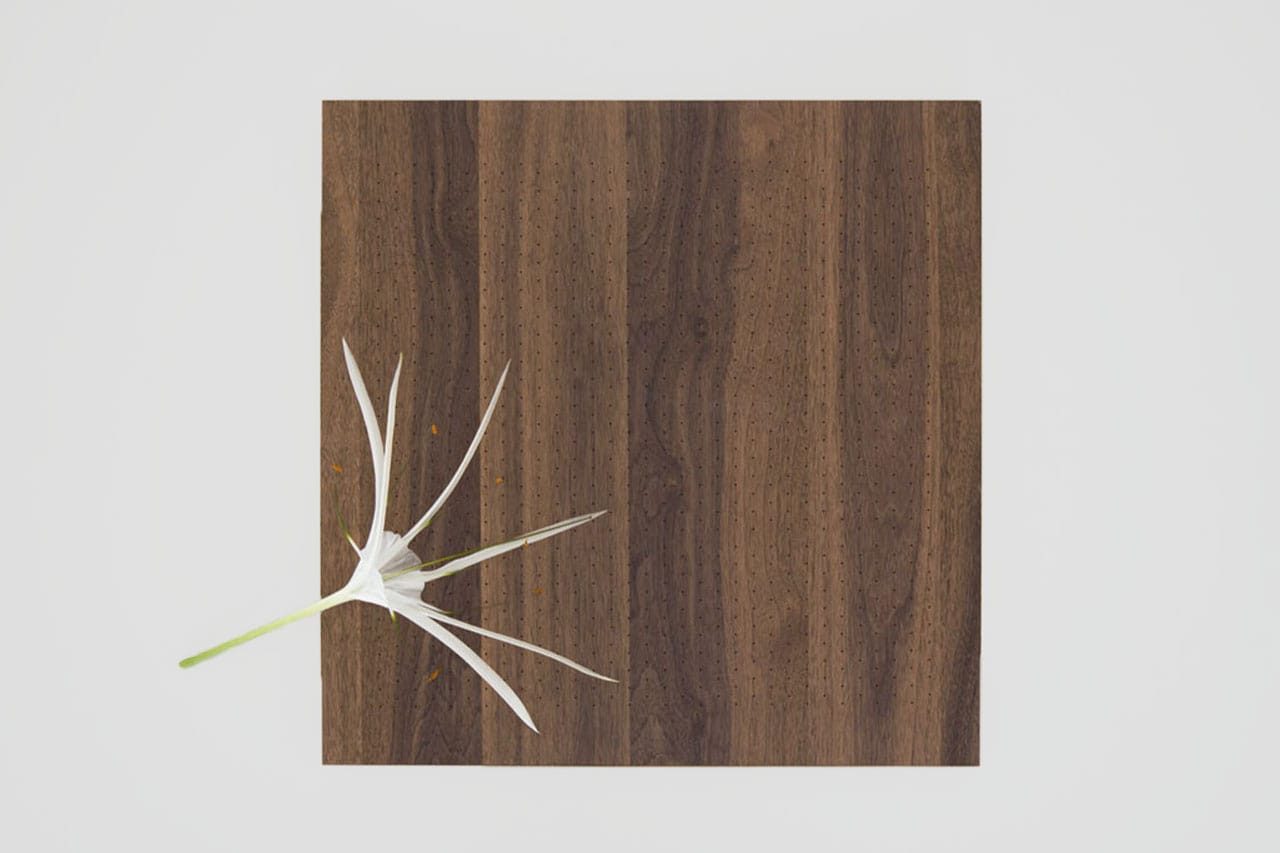
A single white flower with long, slender petals rests on the corner of a plain, square wooden surface against a white background.

Microperforated

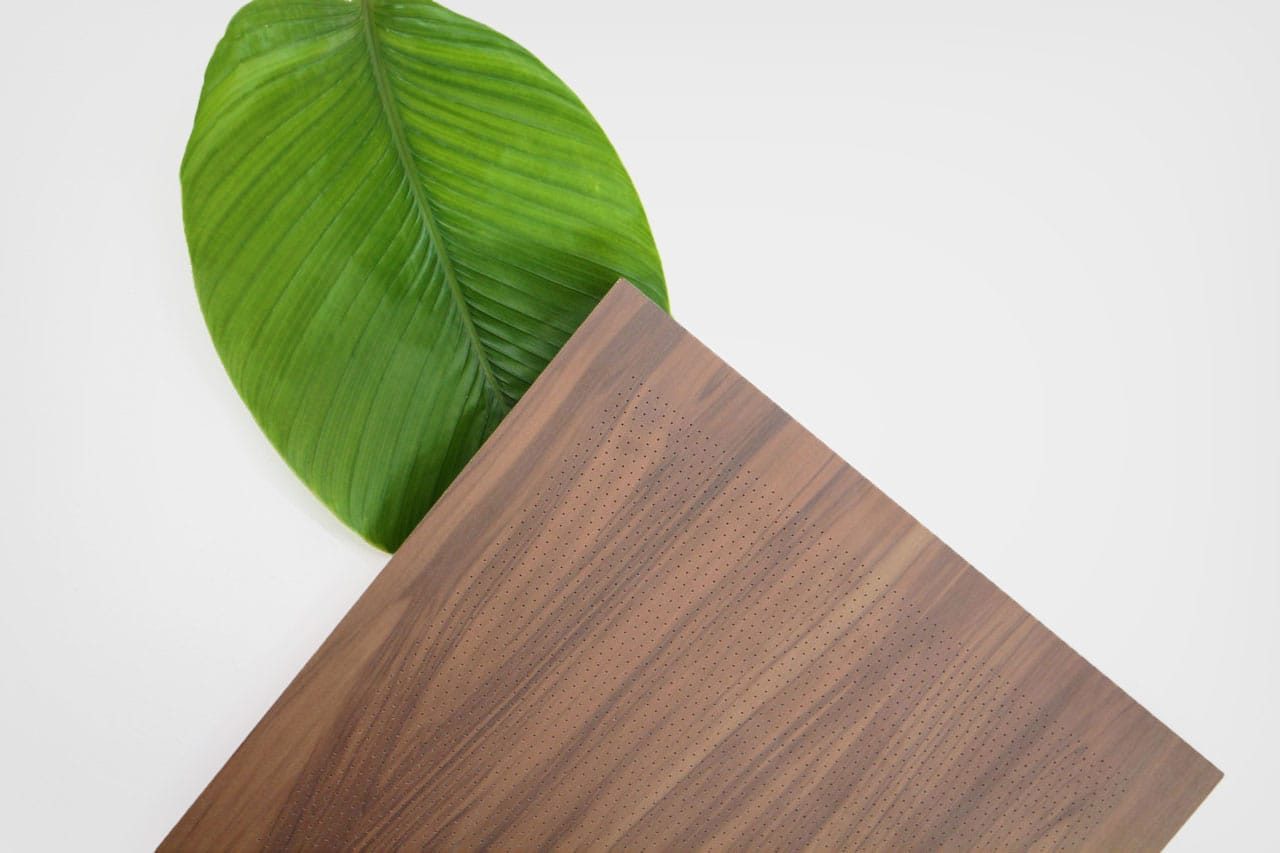
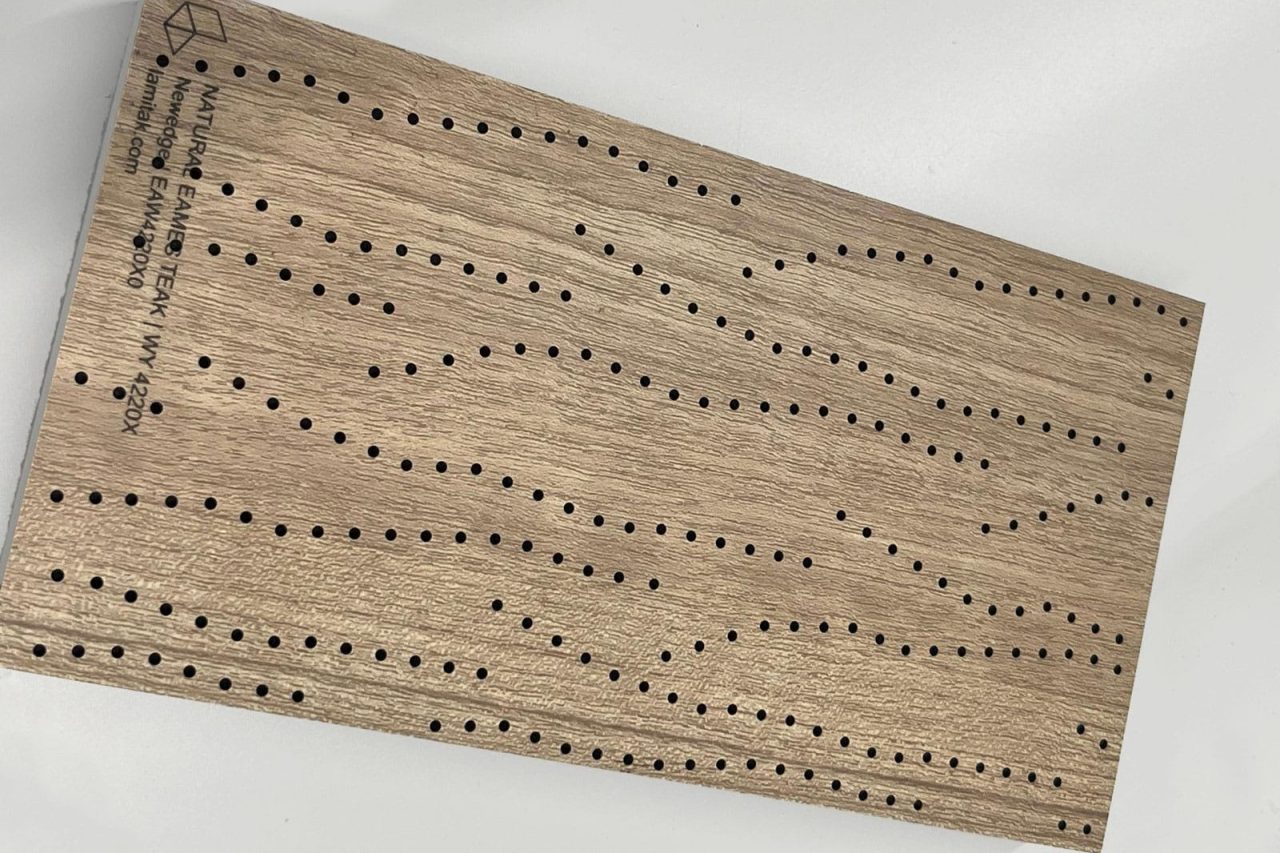
Timberix™ Microperforated are micro-holes only perceptible at short eye distance (+/- 250 000 holes/m2) and laminated on a 15mm thick MDF board.

Microperforated

Material: E1 MDF, FR MDF, MgO Composite Board
Structure: Base Material, Finishing & Fleece
Finishing: Melamine, Veneer, Laminate, Paint
Dimension: 2400mm x 128mm or 192mm
Standard Thickness: 12mm, 15mm, 18mm
Standard Pattern: 3.6-1.8-0.5, 8-8-1, etc.

Grooved

Material: E1 MDF, FR MDF, MgO Composite Board
Structure: Base Material, Finishing & Fleece
Finishing: Melamine, Veneer, Laminate, Paint
Dimension: 2420mm x 128mm or 192mm
Standard Thickness: 12mm, 15mm, 18mm
Standard Pattern: 13-3, 14-2, 28/4, 59/5

Perforated

Material: E1 MDF, FR MDF, MgO Composite Board
Structure: Base Material, Finishing & Fleece
Finishing: Melamine, Veneer, Laminate, Paint
Dimension: 2400mm x 128mm or 192mm
Standard Thickness: 12mm, 15mm, 18mm
Standard Pattern: 16-16-6, 32-32-6, etc.

Grooved

Grooved 12/4

Line graph showing absorption coefficient versus center frequency for 25mm rockwool (60kg/m³) per ISO 354. The coefficient peaks around 0.9 near 700 Hz and decreases towards higher and lower frequencies.

Timberix™ 12-4 panels reduce echoes by trapping sound and absorbing high and low frequencies.

Grooved 13/3

A graph shows absorption coefficient versus frequency for 25mm rockwool, peaking near 1000 Hz. Absorption increases from 315 Hz, peaks near 1.0, then decreases by 5000 Hz.

Timberix™ 13-3 panels reduce echoes by trapping sound and absorbing high and low frequencies.

Grooved 14/2

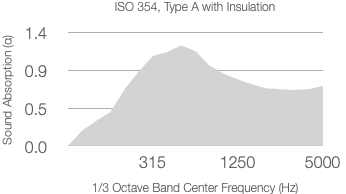
A graph showing absorption coefficient versus frequency for 50mm rockwool. The absorption rises from 0 at low frequencies, peaks above 1 near 500 Hz, then gradually decreases towards 0.7 at 5000 Hz.

Timberix™ 14-2 panels reduce echoes by trapping sound, with 50mm rockwool absorbing high and low frequencies.

Grooved 28/4

Line graph showing absorption coefficient versus center frequency for 25mm rockwool (60kg/m³) per ISO 354. The coefficient peaks around 0.9 near 700 Hz and decreases towards higher and lower frequencies.

Timberix™ 28-4 panels reduce echoes by trapping sound, with 50mm rockwool absorbing high and low frequencies.

Grooved 59/5

A line graph showing absorption coefficient vs. octave center frequency for 25mm Rockwool. Absorption peaks around the 1250 Hz range and drops off at lower and higher frequencies.

Timberix™ 59-5 panels reduce echoes by trapping sound and absorbing high and low frequencies.

V-Grooved

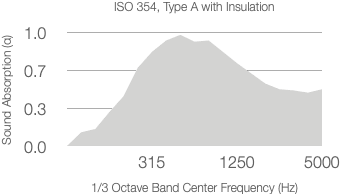
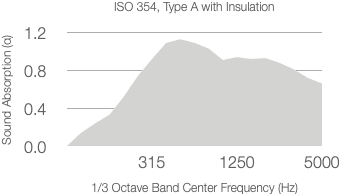
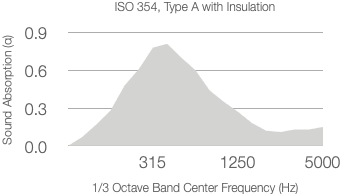
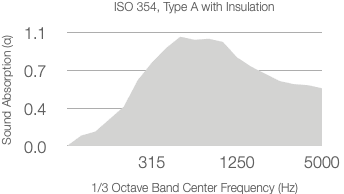
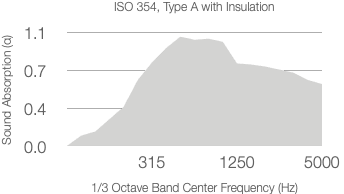
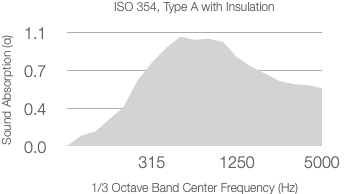
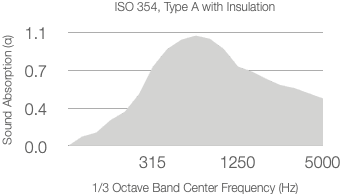
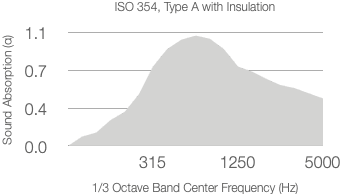
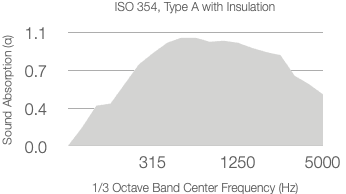
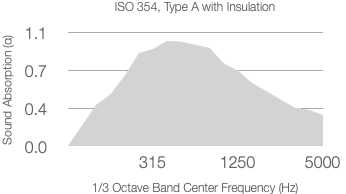
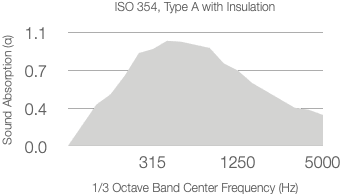
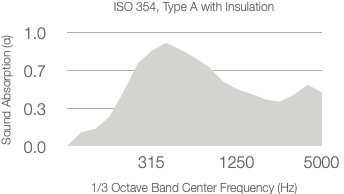
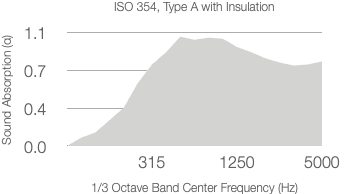
A shaded area graph shows absorption coefficient (α) on the y-axis and 1/3 octave center frequency (Hz) on the x-axis. The coefficient peaks above 0.7 across frequencies from 315 Hz to 5000 Hz.

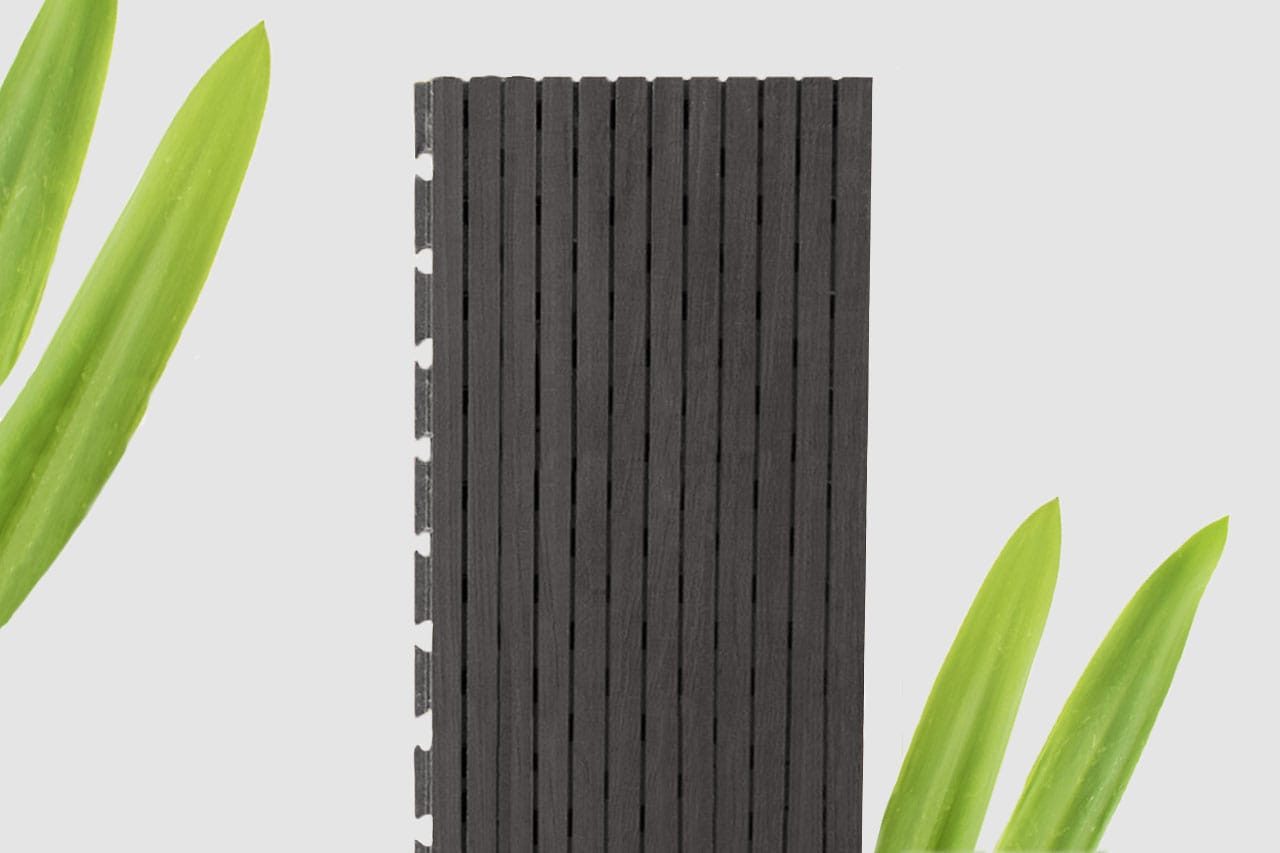
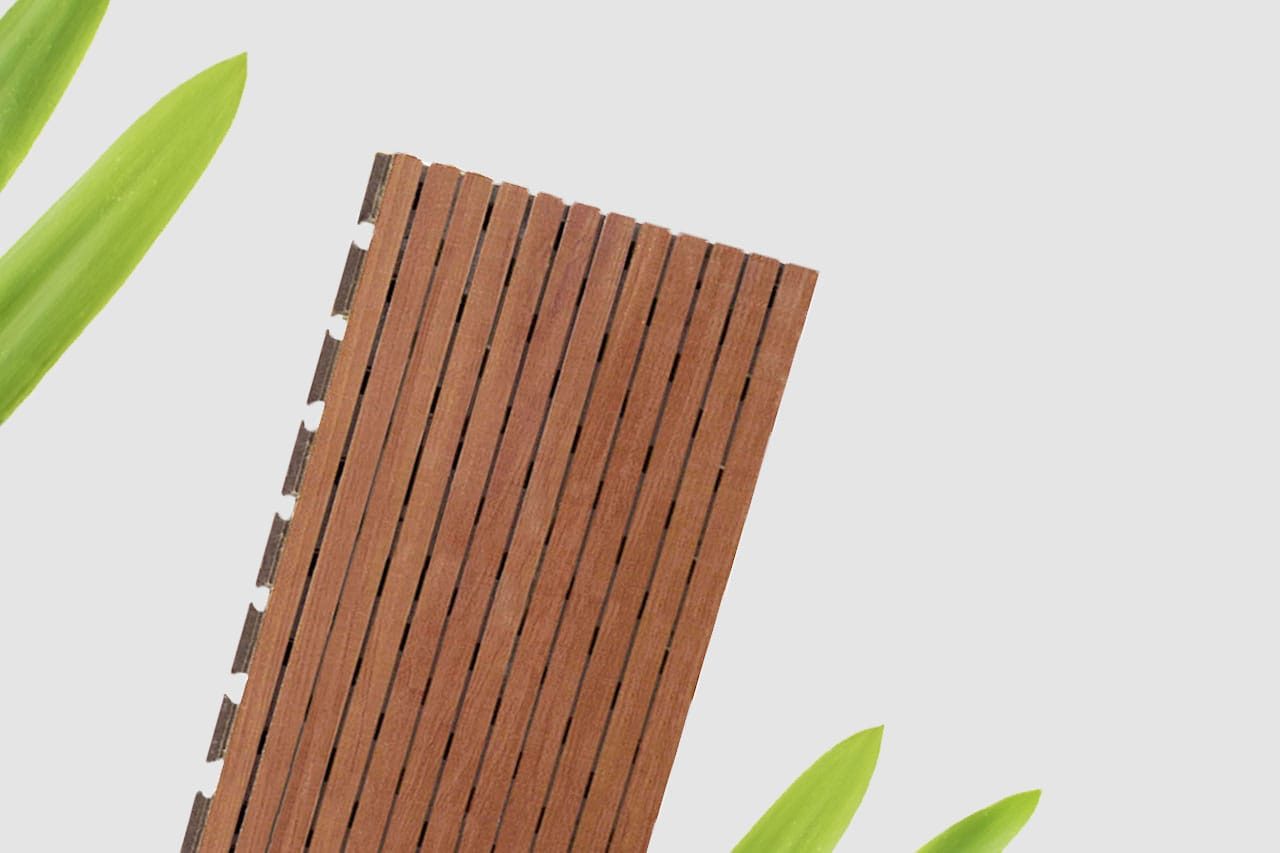
Timberix™ V-grooved panels reduce echoes by trapping sound and absorbing high and low frequencies.

Perforated

Perforated E 16/16/6

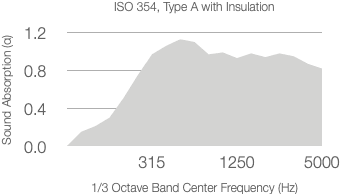
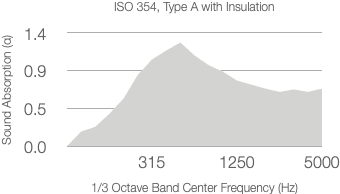
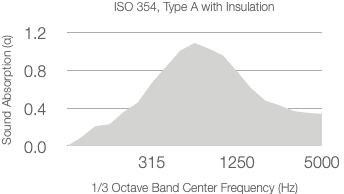
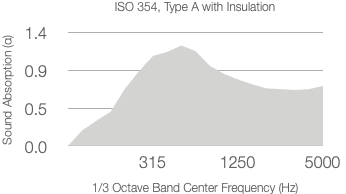
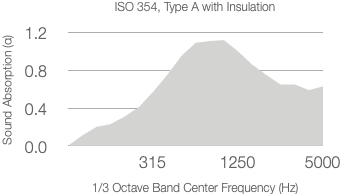
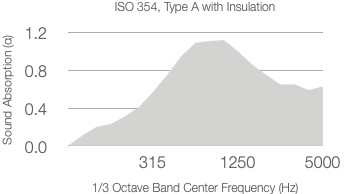
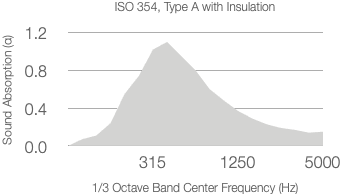
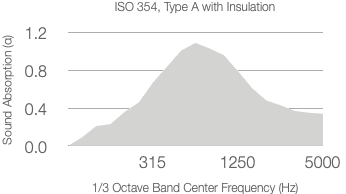
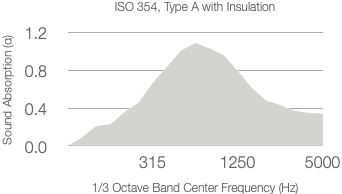
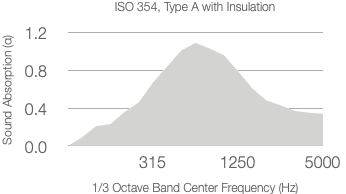
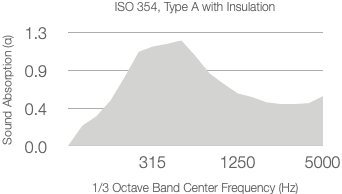
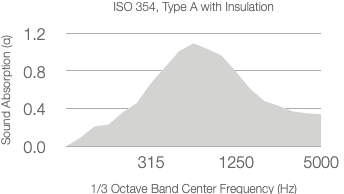
Line graph showing absorption coefficient (α) versus 1/3 octave center frequency (Hz) for 25mm Rockwool, peaking around 1250 Hz at about 1.2, then decreasing towards 5000 Hz.

Timberix™ E 16/16/6 panels trap sound with a 2-layer perforation, while an acoustic substrate reduces reverberation.

Perforated E 16/16/8

A graph showing absorption coefficient (α) versus 1/3 octave center frequency (Hz) for 25mm Rockwool. The curve peaks above 1.0 around 1250 Hz, then gradually decreases towards 5000 Hz.

Timberix™ E 16/16/8 panels trap sound with a 2-layer perforation, while an acoustic substrate reduces reverberation.

Perforated E 16/16/10

A graph showing absorption coefficient (α) versus 1/3 octave center frequency (Hz). The curve peaks around 0.8 at 1250 Hz, using ISO 354 with 25mm Rockwool (60kg/m³), and decreases towards 0.4 at 5000 Hz.

Timberix™ E 16/16/10 panels trap sound with a 2-layer perforation, while an acoustic substrate reduces reverberation.

Perforated E 32/32/6

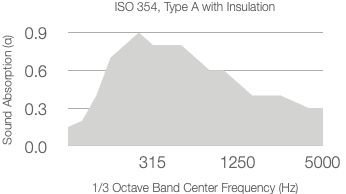
A graph showing absorption coefficient versus frequency for 25mm Rockwool. Absorption peaks around 0.9 between 315 and 1250 Hz, then decreases toward 5000 Hz.

Timberix™ E 32/32/6 panels trap sound with a 2-layer perforation, while an acoustic substrate reduces reverberation.

Perforated E 32/32/8

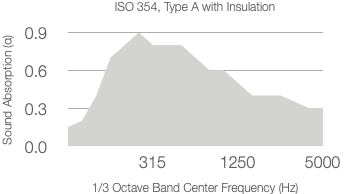
A graph showing absorption coefficient (α) vs. 1/3 octave center frequency (Hz) for 25mm Rockwool (60kg/m³). Peak absorption near 315 Hz (about 0.9 α), then decreases toward 5000 Hz.

Timberix™ E 32/32/8 panels trap sound with a 2-layer perforation, while an acoustic substrate reduces reverberation.

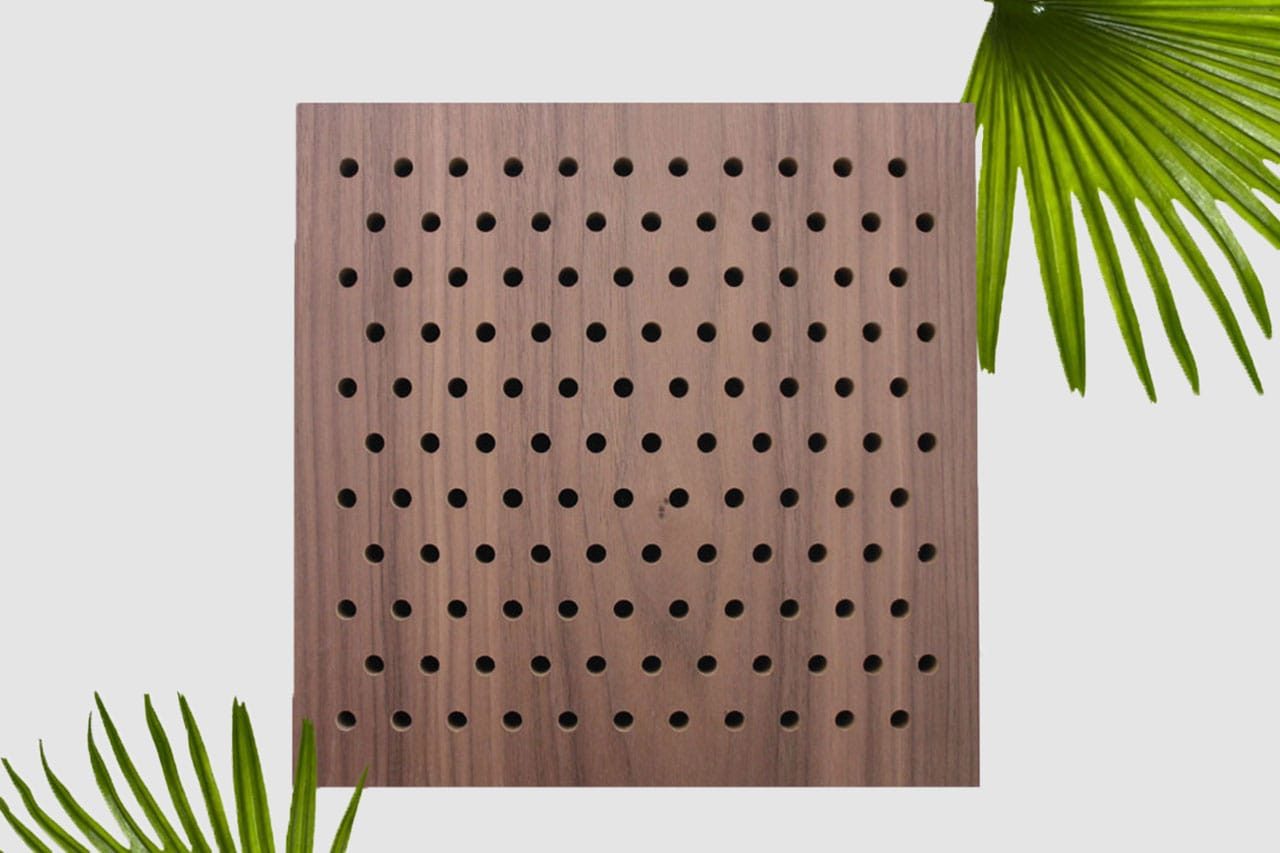
Perforated V 16/16/6

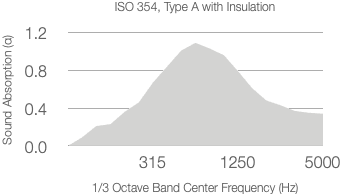
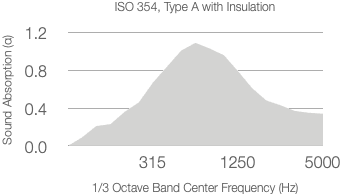
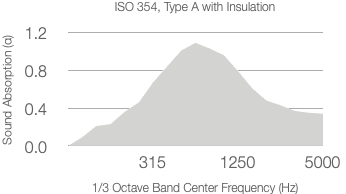
A graph showing absorption coefficient versus frequency for 25mm Rockwool (60kg/m³). The curve peaks near 1250 Hz at about 1.1 and ranges from 0.2 at 315 Hz to 0.4 at 5000 Hz.

Timberix™ V 16/16/6 panels trap sound with a 2-layer perforation, while an acoustic substrate reduces reverberation.

Perforated V 16/16/8

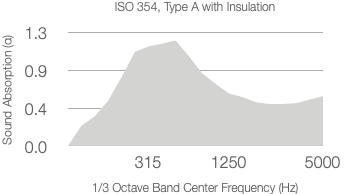
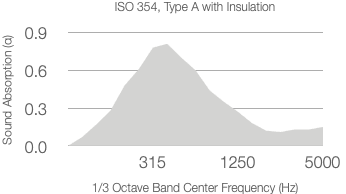
A graph showing absorption coefficient (0 to 1.2) versus 1/3 octave center frequency (Hz, 100 to 5000) for 25mm rockwool; absorption peaks above 0.8 between ~500 Hz and ~2500 Hz, then decreases.

Timberix™ V 16/16/8 panels trap sound with a 2-layer perforation, while an acoustic substrate reduces reverberation.

Perforated V 32/32/6

A graph shows absorption coefficient versus frequency for 25mm rockwool (60kg/m³). The absorption peaks around 0.9 at 315 Hz, then gradually decreases to about 0.4 at 5000 Hz.

Timberix™ V 32/32/6 panels trap sound with a 2-layer perforation, while an acoustic substrate reduces reverberation.

Perforated V 32/32/8

A graph showing absorption coefficient (y-axis) versus 1/3 octave center frequency in Hz (x-axis) for 50mm Rockwool. The peak absorption is near 315 Hz, then gradually decreases toward 5000 Hz.

Timberix™ V 32/32/8 panels trap sound with a 2-layer perforation, while an acoustic substrate reduces reverberation.

Microgrooved

Microgrooved 5/3

A graph showing absorption coefficient (α) versus 1/3 octave center frequency (Hz) for 25mm Rockwool. The absorption rises, peaks between 315 and 1250 Hz, then tapers off by 5000 Hz.

Timberix™ 5-3 Microgrooved panels use smaller grooves to reduce echoes and absorb high-frequency sound.

Microgrooved 8/2

A graph showing sound absorption coefficient (α) versus octave center frequency (Hz) for 25mm Rockwool. Absorption peaks above 1.0 between 315 Hz and 1250 Hz, then drops as the frequency approaches 5000 Hz.

Timberix™ 8-2 Microgrooved panels use smaller grooves to reduce echoes and absorb high-frequency sound.

Microgrooved 8/3

A graph showing sound absorption coefficient versus frequency for 25mm Rockwool. Absorption rises from low at 315 Hz, peaks above 1.0 between 1000–2000 Hz, then gradually decreases by 5000 Hz.

Timberix™ 8-3 Microgrooved panels use grooves to reduce echoes and absorb frequencies.

Microgrooved 9/2

A graph showing absorption coefficient versus frequency for 25mm rockwool (60kg/m³). The coefficient peaks above 1.0 between 315 and 1250 Hz, then declines toward 5000 Hz.

Timberix™ 9-2 Microgrooved panels use smaller grooves to reduce echoes and absorb high-frequency sound.

Milliperforated

Milliperforated E 4/4/1

Graph showing absorption coefficient (α) versus 1/3 octave center frequency (Hz) for ISO 354 with 25mm Rockwool (60kg/m³). The coefficient peaks above 1.0 near 1250 Hz and decreases at higher frequencies.

Timberix™ E 4/4/1 Milliperforated panels trap sound with a 2-layer perforation and an acoustic substrate to reduce reverberation.

Milliperforated E 8/8/1

A graph showing absorption coefficient versus frequency for 25mm Rockwool. The coefficient peaks around 1.2 near 630 Hz, then declines steadily as the frequency increases to 5000 Hz.

Timberix™ E 8/8/1 Milliperforated panels trap sound with a 2-layer perforation and an acoustic substrate to reduce reverberation.

Milliperforated E 8/8/2

Line graph showing absorption coefficient (α) versus 1/3 octave center frequency (Hz) for 25mm Rockwool, peaking around 1250 Hz at about 1.2, then decreasing towards 5000 Hz.

Timberix™ E 8/8/2 Milliperforated panels trap sound with a 2-layer perforation and an acoustic substrate to reduce reverberation.

Milliperforated E 8/8/3

Line graph showing absorption coefficient (α) versus 1/3 octave center frequency (Hz) for 25mm Rockwool, peaking around 1250 Hz at about 1.2, then decreasing towards 5000 Hz.

Timberix™ E 8/8/3 Milliperforated panels trap sound with a 2-layer perforation and an acoustic substrate to reduce reverberation.

Milliperforated E 16/16/3

Line graph showing absorption coefficient (α) versus 1/3 octave center frequency (Hz) for 25mm Rockwool, peaking around 1250 Hz at about 1.2, then decreasing towards 5000 Hz.

Timberix™ E 16/16/3 Milliperforated panels trap sound with a 2-layer perforation and an acoustic substrate to reduce reverberation.

Milliperforated V 4/4/1

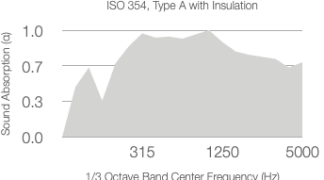
A graph showing absorption coefficient (α) increasing with frequency using 50mm rockwool. The curve peaks above 0.7 from 315 Hz to 5000 Hz on a scale of 0–1.0 on the y-axis.

Timberix™ V 4/4/1 Milliperforated panels trap sound with a 2-layer perforation and 50mm insulation to reduce reverberation.

Milliperforated V 8/8/1

A graph showing absorption coefficient (α) versus 1/3 octave center frequency (Hz) for 25mm Rockwool (60kg/m³). The shaded area rises from 0.2 at 125 Hz, peaks above 1.0, and declines after 2000 Hz.

Timberix™ V 8/8/1 Milliperforated panels trap sound with a 2-layer perforation and an acoustic substrate to reduce reverberation.

Milliperforated V 8/8/3

A graph showing absorption coefficient versus 1/3 octave center frequency (Hz) for ISO 354 with 25mm Rockwool. The coefficient peaks around 1250 Hz and declines at higher and lower frequencies.

Timberix™ V 8/8/3 Milliperforated panels trap sound with a 2-layer perforation and an acoustic substrate to reduce reverberation.

Microperforated

Microperforated E 2/2/0.5

A graph shows absorption coefficient (α) versus 1/3 octave center frequency (Hz) for a 25mm substrate. The shaded area peaks between 315 Hz and 1250 Hz and decreases towards 5000 Hz.

Timberix™ E 2/2/0.5 Microperforated panels trap sound with a 2-layer perforation and reduce reverberation using an acoustic substrate.

Microperforated E 3/3/0.5

A gray area chart shows absorption coefficient (α) versus 1/3 octave center frequency (Hz), peaking between 315 and 1250 Hz, then tapering off by 5000 Hz. Title: EN ISO 354 with 25mm Substrate.

Timberix™ E 3/3/0.5 Microperforated panels trap sound with a 2-layer perforation and reduce reverberation using an acoustic substrate.

Microperforated E 8/8/0.5

A graph shows absorption coefficient (α) on the y-axis versus 1/3 octave center frequency (Hz) on the x-axis, ranging from 315 to 5000 Hz, with values peaking around 0.7 and declining at higher frequencies.

Timberix™ E 8/8/0.5 Microperforated panels trap sound with a 2-layer perforation and reduce reverberation using an acoustic substrate.

Microperforated V 1.8/1.8/0.5

A graph showing absorption coefficient versus 1/3 octave center frequency (Hz) for 50mm Rockwool, with absorption rising to about 1 from 315 Hz to 1250 Hz, then tapering off before 5000 Hz.

Timberix™ V 1.8/1.8/0.5 Microperforated panels trap sound with a 2-layer perforation and reduce reverberation using an acoustic substrate.

Microperforated V 3.6/1.8/0.5

A graph shows the absorption coefficient versus 1/3 octave center frequency (Hz) for 50mm Rockwool. The absorption coefficient ranges up to about 1.0, peaking between 315 Hz and 1250 Hz, then gradually declines.

Timberix™ V 3.6/1.8/0.5 Microperforated panels trap sound with a 2-layer perforation and reduce reverberation using an acoustic substrate.

Microperforated V 4/4/0.5

A graph shows the absorption coefficient of 25mm rockwool (60kg/m³) versus frequency, peaking near 315 Hz and then gradually decreasing from about 0.9 to 0.3 as frequency increases to 5000 Hz.

Timberix™ V 4/4/0.5 Microperforated panels trap sound with a 2-layer perforation and reduce reverberation using an acoustic substrate.

Special

Ribbed

Line graph showing absorption coefficient (α) versus 1/3 octave center frequency (Hz) for 25mm Rockwool (60kg/m³). Absorption peaks around 0.9 between 315 Hz and 1250 Hz, then decreases toward 5000 Hz.

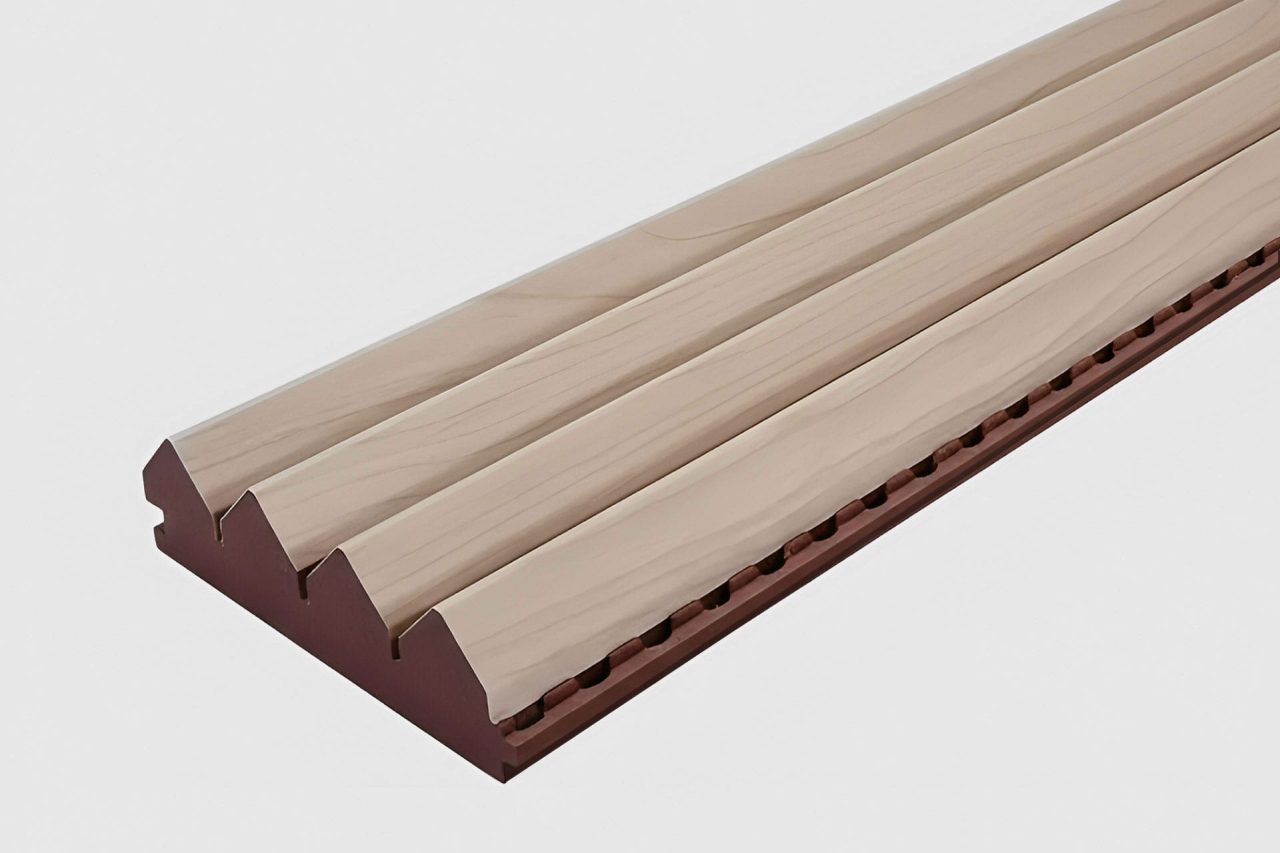
Timberix™ Wooden Ribbed panels trap sound in slots, with an acoustic substrate reducing reverberation for high and low frequencies.

Fluted

Line graph showing absorption coefficient (α) versus 1/3 octave center frequency (Hz) for 25mm Rockwool (60kg/m³). Absorption peaks around 0.9 between 315 Hz and 1250 Hz, then decreases toward 5000 Hz.

Timberix™ Wooden Fluted Panels diffuse sound through surface slots, while an acoustic substrate absorbs noise to reduce reverberation.

Slotted

A graph shows absorption coefficient versus frequency for 25mm Rockwool. The curve rises from 0.2, peaks above 1.2 near 1000 Hz, then falls toward 0.4 at 5000 Hz. X-axis: frequency (Hz). Y-axis: absorption coefficient (α).

Timberix™ Wooden Slotted panels trap sound in surface slots, with an acoustic substrate reducing high and low frequency reverberation.

Baffle

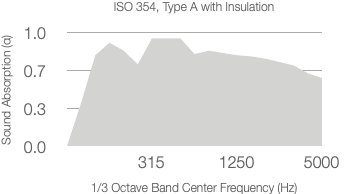
Gray area graph showing absorption coefficient (α) versus frequency (Hz) for 25mm Rockwool. Absorption increases, peaking above 0.7 between 315–1250 Hz, then slightly decreases but remains above 0.6 up to 5000 Hz.

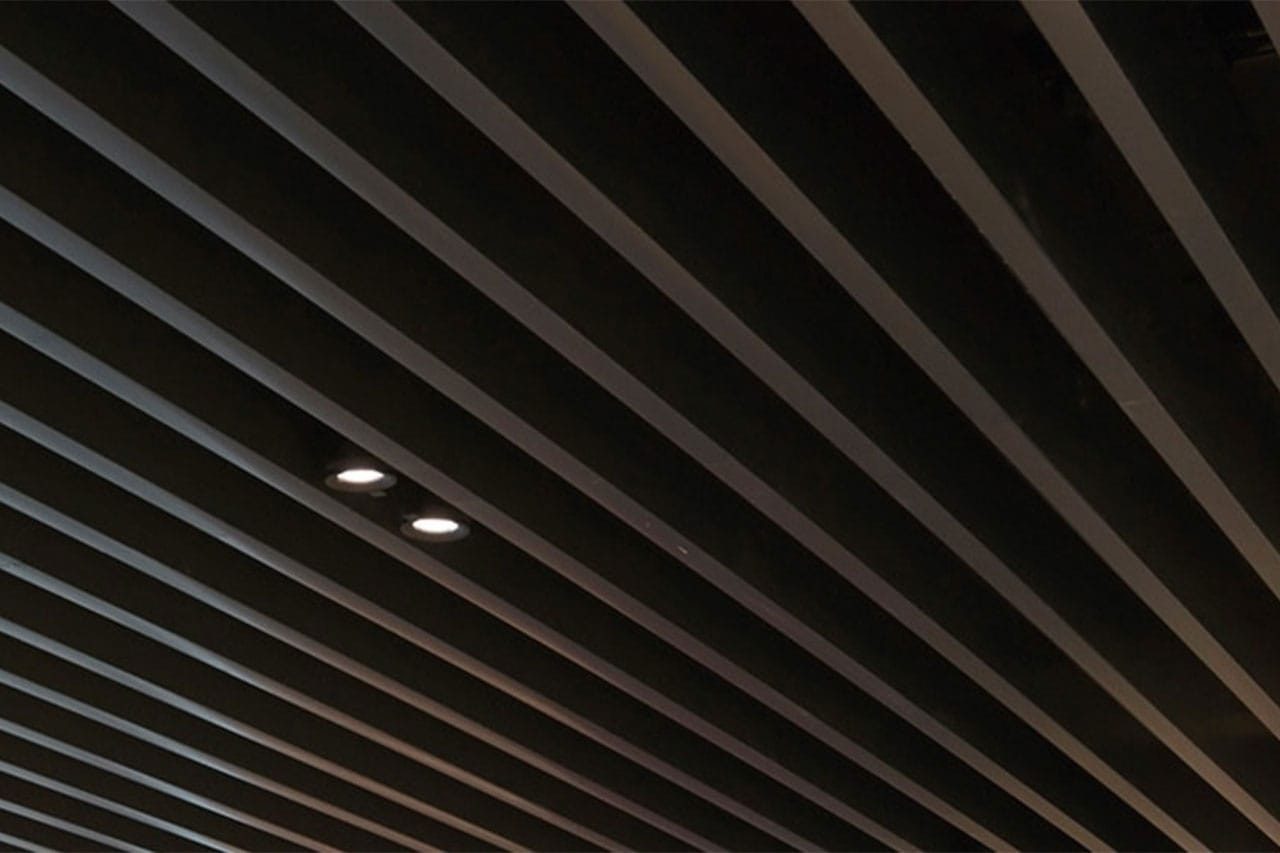
Timberix™ Baffle reduces echoes by trapping sound in baffle gaps, with an acoustic substrate absorbing high and low frequency reverberation.

Dew

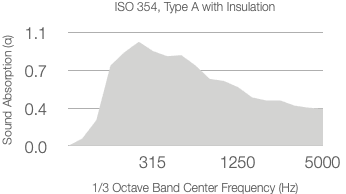
Line graph showing absorption coefficient (α) versus 1/3 octave center frequency (Hz) for 25mm Rockwool (60kg/m³). Absorption peaks around 0.9 between 315 Hz and 1250 Hz, then decreases toward 5000 Hz.

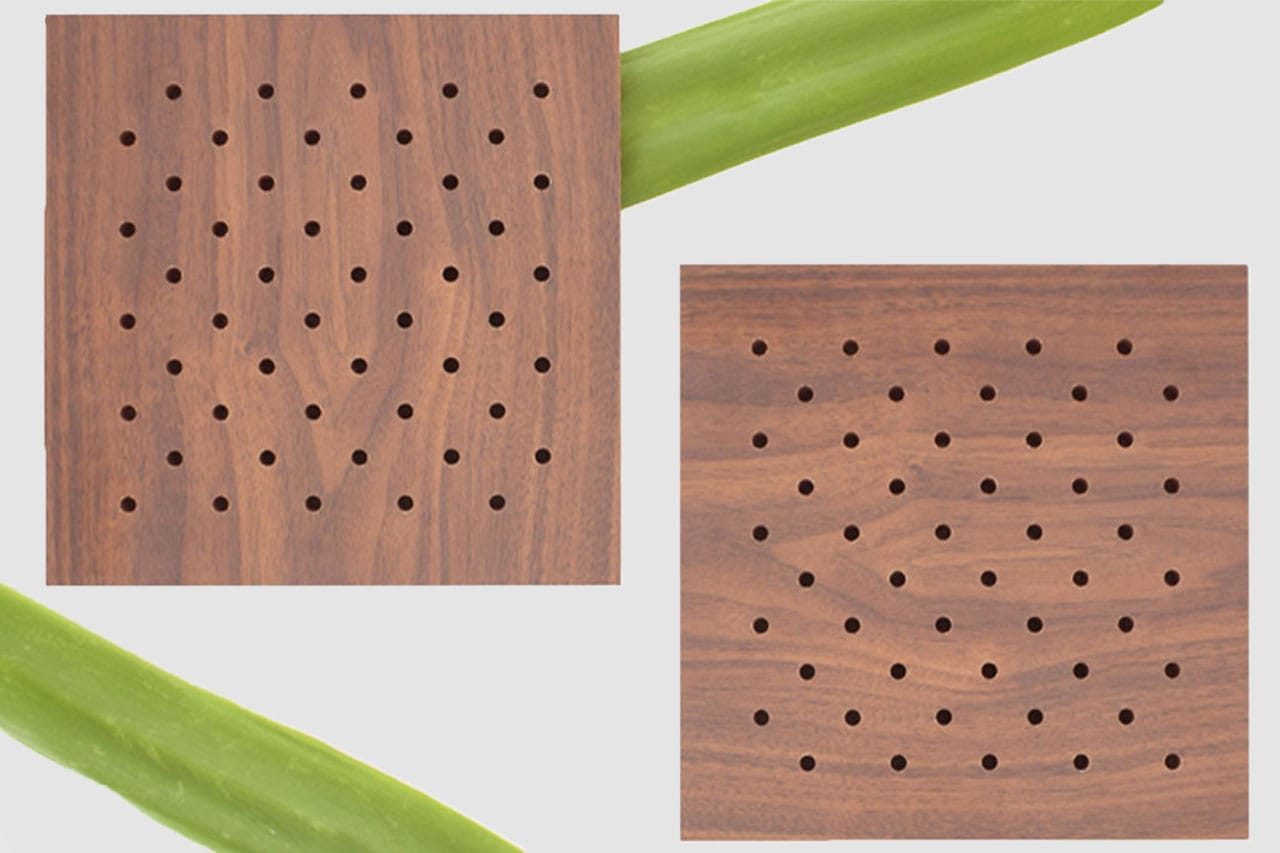
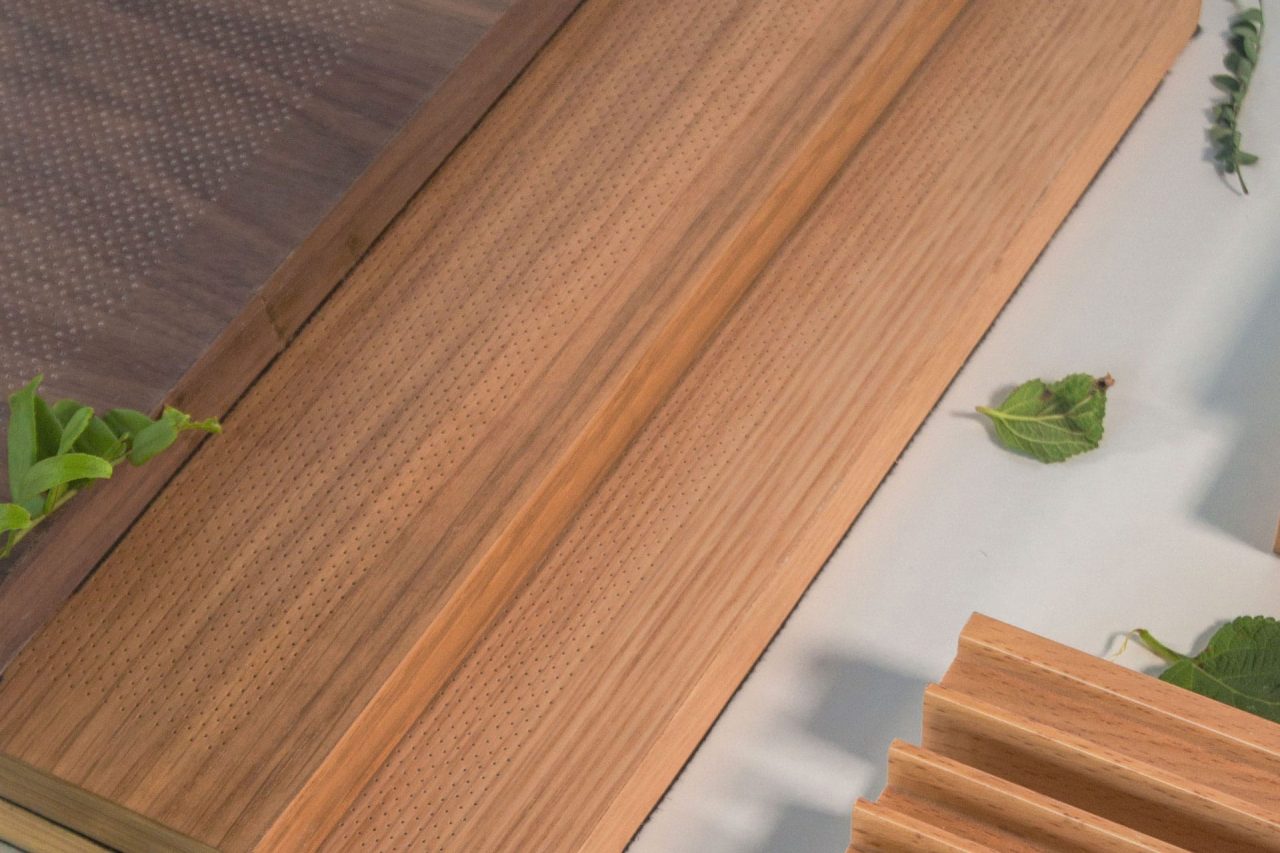
Timberix™ Dew Perforated wood panels have structured patterns designed for mid-range frequency absorption. Ideal for various spaces.

Fern

Line graph showing absorption coefficient (α) versus 1/3 octave center frequency (Hz) for 25mm Rockwool (60kg/m³). Absorption peaks around 0.9 between 315 Hz and 1250 Hz, then decreases toward 5000 Hz.

Timberix™ Fern perforated panels combine natural design with effective sound absorption, controlling echoes for optimal acoustic comfort.

Project Highlight

Timberix™ 20/4

The University Cultural Centre, is a world class performing arts centre that facilitates 22 student arts excellence groups in music, dance, theatre and film. The performance hall was designed to achieve an RT60 time of 1.8 – 2.5 seconds. Timberix grooved panels with grooves 20/4, and ugyen and walnut finish were installed onto the walls to achieve the reverberation time.

A spacious, modern theater auditorium with multiple balconies, curved architecture, and rows of bright blue seats, viewed from an upper level. The stage is not visible.

How Does Timberix™ Timber Acoustic Panel Work?

Timberix™ Timber Acoustic Panels enhance sound absorption using engineered timber slats, perforated wood surfaces, and high-quality natural wood cores. These systems improve sound control, thermal comfort, and overall acoustic quality in every room. Designed in line with architectural interiors, they elevate office and residential décor, resist moisture and mold risk, and deliver practical benefits for customers. As an innovation-driven company, Timberix™ develops timber acoustic solutions that balance acoustic performance, durability, and refined interior aesthetics.

Sound Absorption

In rooms with reflective surfaces and high ceilings, sound waves create echo and excessive reverberation that reduce speech clarity. Timberix™ Timber Acoustic Panels are engineered to absorb sound at the source, helping to control noise levels, improve sound quality, and create a more comfortable environment in offices, auditoriums, and other spaces.

Designed for Architects

Effective acoustics should blend seamlessly with interior design. Timberix™ Timber Acoustic Panels come in a wide range of wood finishes, groove profiles, and panel styles to suit modern offices and public spaces. These timber panels integrate sound control without disrupting the natural warmth and visual identity of the room.

Warranty Guaranteed

High-use environments require acoustic systems that last. Timberix™ Timber Acoustic Panels are engineered with durable, fire-rated, and eco-conscious materials to deliver consistent acoustic performance. Supported by reliable warranty protection, they provide long-term stability, thermal comfort, and peace of mind for customers.

Frequently Asked Questions

Timberix™ is a range of timber acoustic panels engineered to reduce echoes and reverberation. The panels use carefully designed grooves or perforations on their surface. When sound hits the panel, some of it is trapped or diffracted by the grooves or holes. The sound then passes through to an internal acoustic substrate, which absorbs the sound energy — thereby reducing noise and improving acoustic comfort.

There are multiple varieties of Timberix™ panels including grooved wood panels, perforated wood panels, and micro-perforated wood panels. Each type can be used for wall cladding or ceiling installations depending on the project. The panels are available in various standard dimensions and finishes, allowing them to serve as acoustic wall panels or ceiling tiles depending on design and acoustic needs.

Timberix™ panels, when installed with an acoustic substrate, achieve a Noise Reduction Coefficient (NRC) in the range of roughly 0.3 to 0.75. This means they provide effective sound absorption and can significantly reduce reverberation, making them suitable for environments needing clearer speech, better sound control, or reduced echo.
Yes. Timberix™ uses base materials such as E1-rated MDF or fire-rated MDF, or composite boards, which comply with eco-friendly and safety standards. The product also meets fire-rated testing (EN 13501-1 Class B s1 d0) which makes it safer for indoor installations. These characteristics make Timberix™ suitable for homes, offices, and public buildings in Singapore or other humid urban environments.
For proper installation, the environment must be dry (temperature ≥ 10 °C and humidity between 40–60%). Panels should acclimatise on-site for at least 48 hours before installation. When installing, acoustic substrate is first applied, then panels are joined top-to-bottom and left-to-right. For veneer or wood-laminate finishes, care must be taken to match grain direction. After installation, it’s recommended to clean surface dust with compressed air or dry cloth. These steps help ensure long-term acoustic performance and avoid warping or moisture issues.

Keep up with our latest development?

This website uses cookies to ensure you get the best experience.